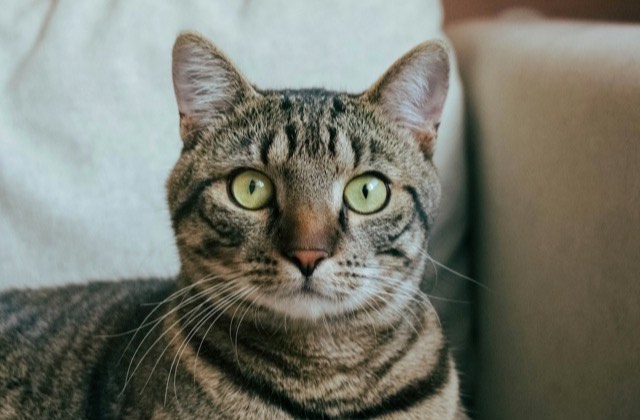
Best bowl for a flat-faced cat (Persian, Exotic Shorthair): avoiding discomfort at every meal
Published by Planète Pets · managing editor: Clément Lacaille · how our guides are written
A flat-faced cat like the Persian or the Exotic Shorthair can struggle to pick up kibble from a deep, narrow bowl: it pushes the food around with its nose, eats more slowly, or even skips some meals. A wide, shallow bowl, almost a plate, makes eating noticeably easier without changing the food itself. Discover our cat guide and the cat food section for the rest of the bowl lineup.
Contents · 4 sections
Why does the shape of the muzzle complicate meals?
In the Persian, the Exotic Shorthair or the Himalayan, the nose sits very high and the jaw is shortened: the brachycephalic build reduces the room to grab kibble at the bottom of a classic bowl. Professional feline environment guidelines, published by a North American feline veterinary college, note that feeding areas should be designed for comfort and to limit stress at every meal, regardless of the animal's build (see the study). A poorly suited bowl can turn a meal into a daily chore for these breeds.
Which bowl should you actually pick?
For these breeds, favour a wide, shallow plate (a rim of 2 to 3 cm at most) rather than a deep bowl, made of ceramic or stainless steel rather than plastic, which traps odours and can encourage feline acne. Expect to pay 8 to 20 € for a good-quality suitable bowl, a bit more for a non-slip model in thick ceramic. The kibble itself matters too: our article on grain-free cat food explains how to compare two bags. A few pointers for choosing the bowl:
- A low rim and a wide base so kibble stays within easy reach
- Enough weight or a non-slip base so the bowl doesn't slide during the meal
- A smooth material that's easy to clean, to limit the chin acne common in these breeds
- A slightly raised height if the cat is elderly or has arthritis
Should the water bowl be adapted too?
Yes: the same constraint applies to water, and it's often overlooked. A wide dish rather than a narrow glass keeps the cat from dipping its whiskers and nose with every sip, which discourages some flat-faced cats from drinking enough. For more on this, our guide on the cat water fountain covers the models best suited to this.
Frequently asked questions
Is a raised bowl useful for a Persian?
It can help an elderly or arthritic cat eat without straining its neck, but for a young cat the priority criterion remains the bowl's width and shallow depth.
Should plastic be avoided for these breeds?
It's better avoided: plastic scratches quickly, harbours bacteria, and is often blamed for the feline acne that frequently affects the chin of short-haired breeds like the Exotic Shorthair.
Does a Persian kitten need a different bowl?
A slightly narrower dish with a very low rim helps a kitten easily spot its food while it grows and gains confidence at mealtime.
An accessory from our shop for this use: Raised-edge silicone feeding mat for cats (€25.90) · the whole shop
For the gear, at Le Félin (same family, zero commission): Arbre à chat pour chaton (from €69.99)
This guide is part of Planète Pets’s Cats universe. Our advice is general in nature: for any health concern, your veterinarian remains the only reference.