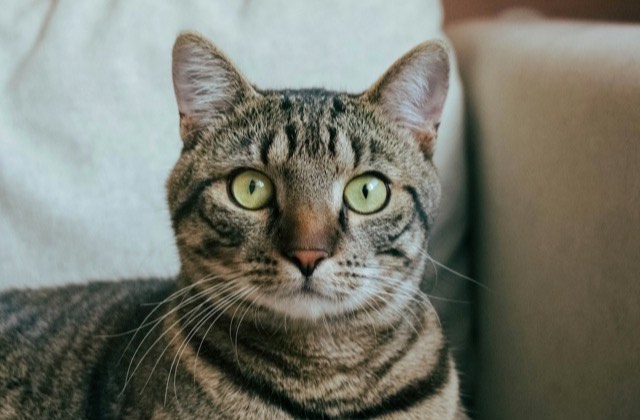
Feeding a British Shorthair: preventing weight gain in a compact, heavy-set cat
Published by Planète Pets · managing editor: Clément Lacaille · how our guides are written
The British Shorthair ranks among the cat breeds most prone to weight gain, thanks to a stocky, heavy-boned build paired with a fairly sedentary temperament, which calls for a measured ration from a young age rather than a correction made later. A study by Bjørnvad, Nielsen, Armstrong, McEvoy and Kristensen, published in 2011 in the American Journal of Veterinary Research, developed a body condition scoring system for cats based on simple morphometric measurements, a tool that proves especially useful for a breed with such a massive build, where excess weight is easy to underestimate by eye alone. See the full breed profile on our British Shorthair page and more pointers in the food section.
Contents · 4 sections
Why does this breed gain weight so easily?
The British Shorthair combines naturally high muscle and bone mass with a lower-than-average spontaneous activity level: it asks for less play, rarely climbs, and is often content with a quiet life. That combination makes the feeding chart on the bag misleading, since those guidelines are built for an average cat, not for a dense build that burns comparatively little energy.
How many meals a day?
Two to three meals measured on a kitchen scale work better than free-feeding, which encourages grazing in a cat already inclined to move little. A slow-feeder bowl or a programmable dispenser (£18-£45) slows down eating and helps stick to the calculated portion rather than the amount the cat is asking for.
What signs should you watch day to day?
- The waistline seen from above: a completely straight silhouette is a warning sign, even on a breed that's naturally broad
- How easily the ribs can be felt under light finger pressure, without being visible
- A regular monthly weigh-in, more reliable than a visual check on a dense-coated breed
- Spontaneous activity level, which can drop even further once weight gain sets in
Our guide to weight loss plans for an overweight cat covers the method for correcting weight already gained.
Frequently asked questions
Is a British Shorthair doomed to gain weight?
No, a measured ration and a bit of play-based stimulation are enough in most cases to maintain a healthy weight, despite the breed's predisposition.
Does it need a specific "British Shorthair" kibble?
Not essential: a good-quality adult kibble, correctly portioned, is enough; the amount fed matters far more than the marketing formulation.
From what age should weight be monitored?
From neutering onward, since it slows the metabolism and raises the risk of weight gain in a breed already prone to it.
See it in the Planète Pets shop: Raised-edge silicone feeding mat for cats (€25.90) · the whole shop
See it at Le Félin, a shop from the same family (zero commission): Arbre à chat griffoir (from €199.99)
This guide is part of Planète Pets’s Cats universe. Our advice is general in nature: for any health concern, your veterinarian remains the only reference.