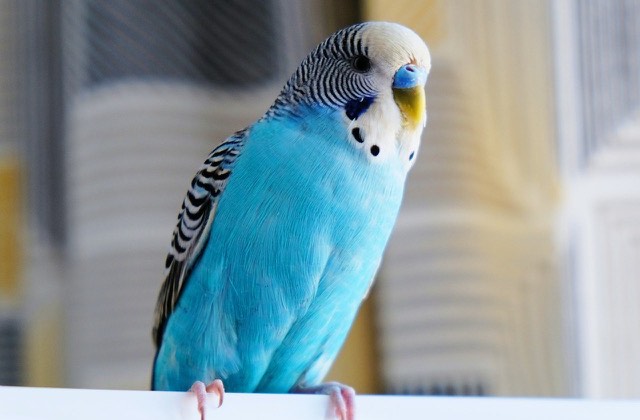
Senegal parrot: recognising the signs of stress and anxiety
Published by Planète Pets · managing editor: Clément Lacaille · how our guides are written
Known for being calmer and quieter than many other parrots, the Senegal parrot often expresses stress in subtle, easy-to-miss ways, which frequently delays owners noticing the problem. Learning to read these quiet signals lets you step in before a behaviour problem takes root.
Contents · 5 sections
Why does stress go unnoticed so easily in this species?
A study by Cheryl Meehan, Joy Garner and Joy Mench, published in 2003 in Applied Animal Behaviour Science, found that same-sex pair housing markedly improved welfare in young Amazon parrots compared with solitary housing, with a reduction in behaviours linked to frustration and isolation (see the study). This finding, established in Amazon parrots, applies broadly to other companion parrots such as the Senegal parrot, a bird from the same order that's likewise sensitive to prolonged isolation.
What signs should raise concern day to day?
- Retreating to the back of the cage: a Senegal parrot that systematically avoids the front of the cage or visible perches often signals distress.
- Plumage held tight or puffed for long stretches: distinct from the brief, normal fluffing seen during rest.
- Unusual repetitive screaming: a marked rise in screaming frequency, outside the context of normal communication.
- Refusing to leave the cage: a normally curious Senegal parrot that consistently declines time out deserves close attention.
What common causes trigger this kind of stress?
A sudden change of routine, a new pet in the household, moving the cage, or a long stretch of loneliness are among the most common triggers in this species. Adolescence, marked by unusual biting, can also come with transient signs of anxiety, covered in our article the Senegal parrot's biting phase and adolescence.
How should you respond to these signals?
Restore a stable routine as much as possible, without stacking up several changes at once, and enrich the environment rather than increasing direct handling if the bird is already on the defensive. Adequate living space is a key factor here, covered in cage and aviary space for the Senegal parrot. If the signs persist beyond a few weeks, an avian vet should rule out an underlying medical cause. All our care guidance is gathered in the bird care and grooming section.
Frequently asked questions
Does a stressed Senegal parrot stop eating?
A drop in appetite can accompany marked stress, but it should always be taken seriously and checked promptly, since it can also signal a separate health issue.
Is feather plucking one of the stress signs in this species?
It can appear in prolonged cases, but it's less common in Senegal parrots than in some other parrots; its appearance should still be treated as an immediate concern.
Can a single change trigger this kind of anxiety?
Sometimes yes, especially in a bird that's already sensitive; that's why it's better to introduce routine changes gradually rather than all at once.
See it in the Planète Pets shop: Wooden plug board, puzzle toy for parrots (€19.90) · the whole shop
This guide is part of Planète Pets’s Birds universe. Our advice is general in nature: for any health concern, your veterinarian remains the only reference.