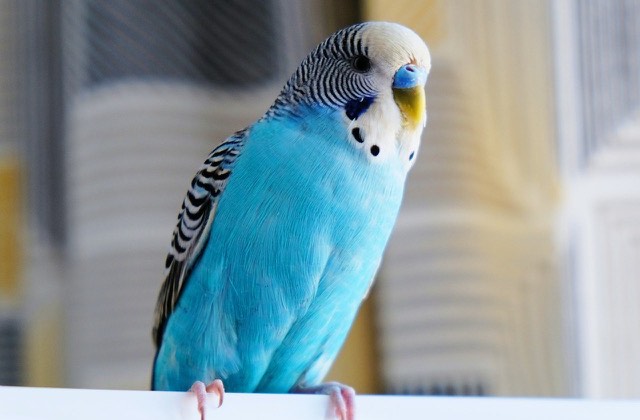
Scented Candles, Essential Oils and Diffusers: Dangers for Birds
Published by Planète Pets · managing editor: Clément Lacaille · how our guides are written
A bird's respiratory system works very differently from ours: air flows in a near-continuous stream through air sacs, with no dead space, making every breath far more efficient at absorbing oxygen — but also far more efficient at absorbing airborne toxins. A landmark review by Brown, Brain and Wang, published in 1997 in Environmental Health Perspectives, describes the avian respiratory system as a unique model of sensitivity to inhaled toxicants, historically used to detect dangers invisible to humans (see the study) — the phrase "canary in the coal mine" is not just a figure of speech. Our home safety benchmarks are gathered in the bird travel and safety section.
Contents · 4 sections
Scented candles and ambience fires
Scented candles release volatile organic compounds and sometimes fine soot particles when burning, invisible to the eye but irritating to a bird's air sacs. Even so-called "natural" candles are not harmless when burned continuously in a closed room housing a bird. The risk echoes the well-documented one, among parrot owners, of nonstick cookware covered in our guide to Teflon fume danger for birds: in both cases, the room where the bird lives should stay ventilated and free of continuous combustion.
Essential oils and diffusers
Many essential oils diffused continuously — tea tree, eucalyptus, concentrated citrus — contain compounds (phenols, terpenes) that are toxic by inhalation to birds, even at concentrations tolerated by humans. Ultrasonic diffusers spread these molecules throughout the room without sufficient dilution for such a sensitive organism. It is better to forgo their use entirely in the room housing the cage rather than search for a "safer" oil: none is validated for use near a bird.
Air fresheners and aerosol cleaners
Spray air fresheners, window cleaners and aerosol dusters share the same problem: fine particles and solvents breathed directly by the bird, with no way for it to move away if it stays caged. The simple rule: move the bird out of the room, or postpone use of the product, as our broader guide to bird-proofing your home reminds.
Frequently asked questions
Are unscented candles safe?
They remain safer than scented ones, but continuous burning in a closed room should still be limited; always favour good ventilation.
Are any essential oils safe for birds?
None is validated for direct diffusion near a bird: the precautionary principle applies, whatever the oil.
What should I do if I suspect poisoning?
Move the bird outdoors immediately and see an avian vet urgently, without waiting for serious symptoms to appear.
An accessory from our shop for this use: Parrot outdoor harness with elastic lead (€25.90) · the whole shop
This guide is part of Planète Pets’s Birds universe. Our advice is general in nature: for any health concern, your veterinarian remains the only reference.