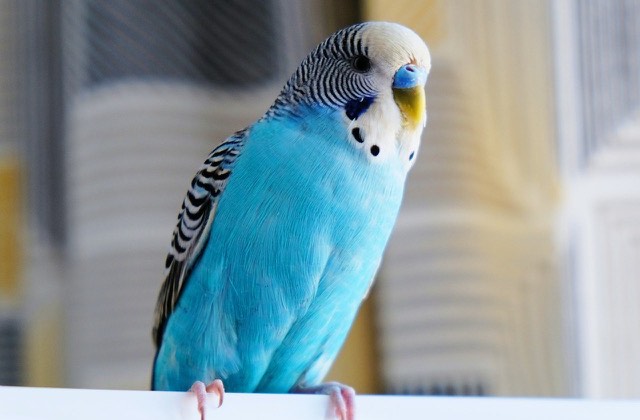
Nonstick pans and Teflon fumes: a deadly danger for pet birds
Published by Planète Pets · managing editor: Clément Lacaille · how our guides are written
A nonstick coating left on the stove a few minutes too long can be enough to kill a bird in a nearby room, with no warning sign at all for the humans in the house. All our safety guides are gathered in the bird travel and safety section.
Contents · 5 sections
Why are birds so vulnerable?
A bird's respiratory system works as a near-continuous flow-through circuit, far more efficient than a mammal's at extracting oxygen from the air, but it also absorbs airborne toxins with alarming speed. Combined with a very high metabolic rate, this makes birds noticeably more sensitive than other pets to airborne pollutants, a topic already covered in our guide to bird-proofing your home.
What the studies on heated Teflon show
Polytetrafluoroethylene (PTFE), better known by the brand name Teflon, breaks down into toxic gases once it passes roughly 280°C (536°F), a temperature an empty pan left on a high burner can easily reach. A 1982 study by Wells, Slocombe and Trapp, published in the American Journal of Veterinary Research, exposed budgerigars to these pyrolysis fumes in an experimental chamber and observed acute respiratory distress followed by rapid death in many of the birds, with severe lung damage confirmed on post-mortem exam (original study). Because these gases are colorless and odorless to humans, an owner usually gets no warning before finding their bird in distress.
What other products carry the same risk?
Beyond nonstick pans and pots, the same risk applies to some self-cleaning ovens on their pyrolytic cycle, coated toasters and deep fryers, and high-end fabric steamers or irons with PTFE soleplates. The safety rule stays the same across the board: watch anything cooking, never let a nonstick pan run dry on heat, and ventilate the room the cage is in whenever you're cooking at high temperature.
How do you make your kitchen safe without losing convenience?
Keeping the bird's cage in a room separate from the kitchen, or at least closing the door while cooking, sharply cuts exposure if something goes wrong. Gradually swapping nonstick cookware for stainless steel or cast iron for high-heat cooking removes the risk at the source, a precaution that pairs well with other steps for securing the home.
Frequently asked questions
Do air fresheners or scented candles carry the same risk?
The risk is different but real: aerosols, scented candles and cleaning sprays can also irritate a bird's respiratory tract and are best avoided in any room where it lives.
What should you do if a bird shows signs of respiratory distress?
Move the bird and its cage outside or into a well-ventilated room immediately, then contact an avian vet urgently: every minute counts with PTFE fume poisoning.
Are newer nonstick pans any safer?
The risk of breakdown at high temperature remains with most current nonstick coatings; careful attention while cooking is the only real safeguard. Browse all our guides on the bird hub.
An accessory from our shop for this use: Parrot outdoor harness with elastic lead (€25.90) · the whole shop
This guide is part of Planète Pets’s Birds universe. Our advice is general in nature: for any health concern, your veterinarian remains the only reference.