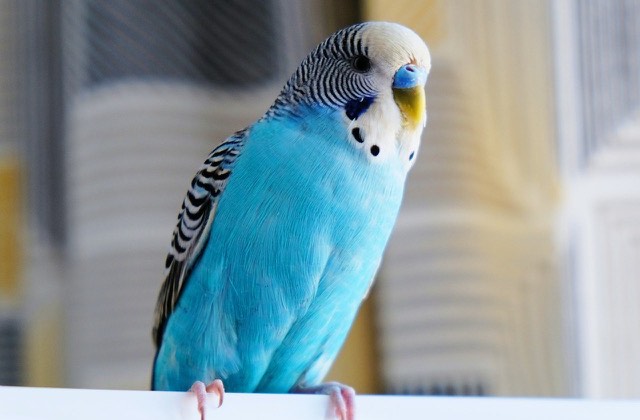
Overgrown beak in birds: possible causes and when to see a vet
Published by Planète Pets · managing editor: Clément Lacaille · how our guides are written
A beak that keeps growing longer in an adult bird is almost never a coincidence: in the vast majority of cases it points to malocclusion, liver disease or, more rarely, a viral infection — never simply a lack of "something to grind it on". An avian vet should be consulted as soon as a beak visibly changes shape or length.
Contents · 5 sections
The beak grows continuously — wear has to keep pace
Like claws, a bird's beak grows throughout its life from a vascularised, keratin-producing base. In a healthy bird, that growth is naturally offset by scraping against abrasive perches, chewing wood and the daily use of the beak for eating and manipulating objects. When wear no longer keeps up, the beak lengthens, deforms or becomes brittle — a signal worth taking seriously rather than simply filing down.
What illnesses can cause abnormal beak growth?
In budgies and cockatiels, the most common cause remains liver disease: a diet too rich in fatty seeds disrupts liver metabolism, which is exactly what regulates keratin production in the beak. An abnormally long beak with irregular ridges in an overweight bird should always raise this diagnosis before any other explanation.
In large parrots and cockatoos, infection with the circovirus responsible for psittacine beak and feather disease (PBFD) is among the causes to rule out first. A landmark study by Branson Ritchie and colleagues, published in 1989 in the journal Virology, characterised this virus for the first time as the cause of progressive beak deformities and feather loss in affected cockatoos (see the study). A blood test can confirm or rule out this possibility.
Malocclusion: a common mechanical cause
An old injury, a poorly healed fracture or a congenital defect — not uncommon in cockatiels from intensive breeding — can misalign the two halves of the beak. Once the two mandibles stop wearing against each other, one of them keeps growing unchecked, sometimes called "scissor beak". This mechanical cause never corrects itself: it requires regular, sometimes lifelong, follow-up with an avian vet.
What should you actually do if your bird's beak looks too long?
- Never trim the beak yourself with nail clippers or a DIY tool: the risk of fracture or bleeding is real — the safe method is detailed in our article on nail and beak trimming.
- Get bloodwork done, including a liver panel, as soon as excess length appears without an obvious mechanical cause.
- Review the diet if the bird is overweight or mostly seed-fed: our guidance on safe fruits and vegetables helps rebalance the ration.
- Offer a mineral block and wood to chew daily to encourage natural wear, as covered in our article on cuttlebone and mineral blocks.
All our everyday care guidance is gathered in the bird care and grooming section.
Frequently asked questions
Is a slightly irregular beak always a problem?
No, a mild asymmetry that doesn't hinder eating and isn't changing rapidly can be normal for some individuals; it's the change over time that should raise concern, not a fixed appearance.
Is liver disease reversible?
Often yes, if caught early: a diet change combined with veterinary follow-up frequently restores normal beak growth within a few months.
Can PBFD be treated?
There is currently no cure; prevention relies on testing before introducing a new bird and isolating positive individuals, a plan best discussed with an avian vet.
An accessory from our shop for this use: Parrot outdoor harness with elastic lead (€25.90) · the whole shop
This guide is part of Planète Pets’s Birds universe. Our advice is general in nature: for any health concern, your veterinarian remains the only reference.