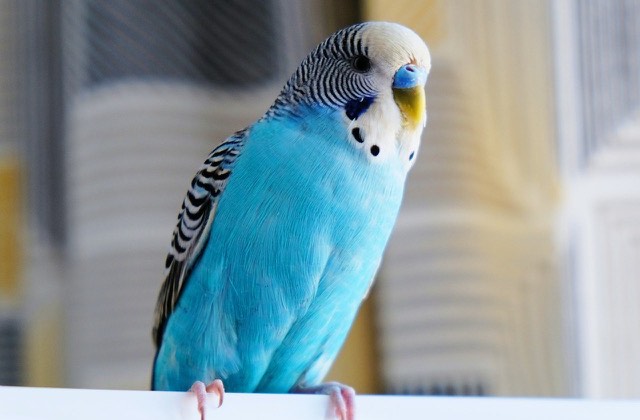
Cockatiel, Budgie, or Large Macaw: Which Species Understands a String-Pull Toy Best? What Research Shows
Published by Planète Pets · managing editor: Clément Lacaille · how our guides are written
Faced with a toy where two strings dangle and only one actually leads to a reward, not all parrots reason about it the same way. Our overview of parrot toys and puzzles covers this kind of equipment; here is what a comparative study established about how species differ on this kind of challenge.
Contents · 4 sections
What Krasheninnikova, Bräger, and Wanker's study shows
A study by Anastasia Krasheninnikova, Stefanie Bräger, and Ralf Wanker, published in 2013 in Animal Cognition, compared the performance of four parrot species, including the cockatiel and the budgerigar, on means-end comprehension tasks where the bird has to pull the correct string among several to obtain a reward (see the study). Results showed marked differences in success between species, with some solving the task through repeated trial and error rather than a direct grasp of the link between the string and the reward.
Experience with moving objects matters as much as species
The authors suggested that these performance gaps stem partly from some species' lack of experience with suspended, moving objects in their natural environment, rather than a raw difference in general intelligence between species. This echoes the guidance in our article on object permanence in parrots, where repeated exposure to a type of manipulation influences success.
What this means for choosing puzzle toys
Faced with a new string or mechanism toy, it's better to offer a simplified version before ramping up difficulty, whatever the species, rather than concluding too quickly that a bird "isn't smart enough" for that kind of equipment. Guidance on pacing this kind of challenge correctly is in our overview of parrot toys and puzzles.
- Cross-species comparison: four parrot species were tested on the same string-pulling task.
- Performance gaps: some species solve the task through direct comprehension, others through repeated trial and error.
- Role of experience: lack of exposure to suspended, moving objects partly explains these gaps.
- Practical application: introducing a mechanism toy gradually, whatever the species, favours success.
This comparative study is a reminder that failing at a puzzle toy doesn't necessarily reflect a lack of intelligence, but often simply a lack of experience with that kind of manipulation. Full guidelines are in our bird toys and enrichment section.
Frequently asked questions
Is a cockatiel less intelligent than a large parrot with this kind of toy?
Not necessarily: the performance gap measured in the study stems partly from lack of experience with moving objects, not solely from a difference in general intelligence.
At what age should a string-pull toy be introduced to a parrot?
A very simple version, with a single visible string and an obvious link to the reward, remains accessible as soon as the bird already manipulates objects with its beak or feet.
Should you help the bird if it fails several times in a row?
It's better to go back to a simpler version of the toy rather than helping directly, so the bird can progress on its own, at its own pace.
In our shop, for this use: Wooden plug board, puzzle toy for parrots (€19.90) · the whole shop
This guide is part of Planète Pets’s Birds universe. Our advice is general in nature: for any health concern, your veterinarian remains the only reference.