Parrot Toys: Destructibles, Puzzles and Smart Rotation
Published by Planète Pets · managing editor: Clément Lacaille · how our guides are written
A parrot is a remarkably intelligent animal, comparable to a young child at certain tasks. Without stimulation, that sharp mind turns against the bird: screaming, chronic boredom, sometimes feather plucking. Toys are therefore not a luxury but a fundamental enrichment need.
Contents · 5 sections
Destructible toys: made to be destroyed
Many owners hesitate to replace a toy that was “demolished in two days”. Yet that is exactly its job: in the wild, a parrot spends hours stripping bark and husks. Shreddable toys channel that behaviour:
- Soft wood (balsa, untreated pine): ideal for beaks of all sizes.
- Natural fibres: raffia, braided corn husk, palm leaves, unprinted cardboard.
- Undyed vegetable-tanned leather for knots to untie.
Budget 5 to 20 € per destructible toy. Treat this spending as a consumable, just like food.
Puzzle toys: putting the brain to work
Foraging toys make the bird solve a problem to earn a treat: drawers to open, wheels to spin, stacked cups. This is the enrichment closest to natural behaviour, where searching for food fills a large part of the day. Typical prices: 10 to 35 € for reusable acrylic models. Start simple, then raise the difficulty: a puzzle that is too hard from the outset discourages the bird.
Material safety
Check systematically: no zinc or lead in chains and bells (choose stainless steel), no frayed textile fibres where a toe could get caught, no rings a head can pass through. When in doubt about a material, leave it out — our bird-proofing guide lists the risky metals and materials.
Rotation: the secret of busy birds
A toy left in place permanently becomes furniture. Build up a stock of six to ten toys and leave only three or four in the cage, swapped every week. The bird rediscovers its toys as if they were brand new. Also take care not to clutter the flying space of the cage or the aviary.
What about the smaller species?
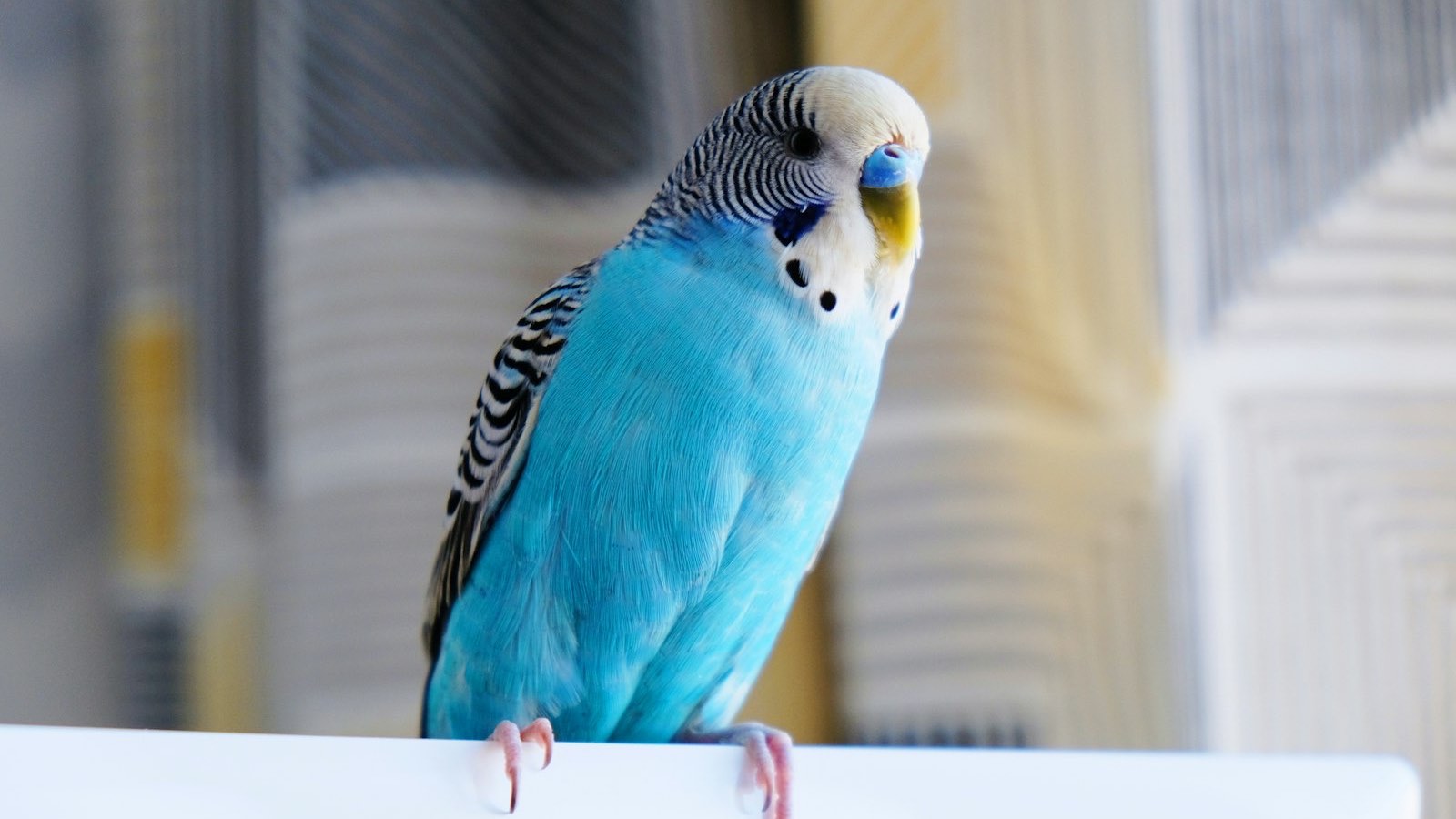
Budgies and lovebirds benefit from the same principles in a smaller format: raffia balls, mini wood skewers — though mirrors are best avoided for birds kept alone. Find our comparisons in the toys and enrichment section of Planète Pets.
In our shop, for this use: Wooden plug board, puzzle toy for parrots (€19.90) · the whole shop
This guide is part of Planète Pets’s Birds universe. Our advice is general in nature: for any health concern, your veterinarian remains the only reference.