Why Do Parrots Invent More Ways to Get Food? What Feeding-Innovation Research Shows
Published by Planète Pets · managing editor: Clément Lacaille · how our guides are written
A parrot that figures out on its own how to open a latch to reach its food bowl isn't a random quirk of the species: it's a trait measured across hundreds of bird species. General guidelines are in our bird food section; here is what a landmark study established about this link between brain size and feeding inventiveness.
Contents · 4 sections
What Lefebvre's study shows
A study by Louis Lefebvre, Patrick Whittle, Evan Lascaris, and Adam Finkelstein, published in 1997 in Animal Behaviour, tallied several hundred documented cases of feeding innovation published in ornithological journals — cases where wild birds exploited a new food source or a new technique for reaching it — and found that the families with the highest innovation rate, corvids and psittacines leading the list, also had the largest forebrain relative to body size (see the study). Conversely, families with more modest relative brain size, including several small seed-eating songbirds, appeared far less often in this survey.
Why this sets parrot and small-bird needs apart
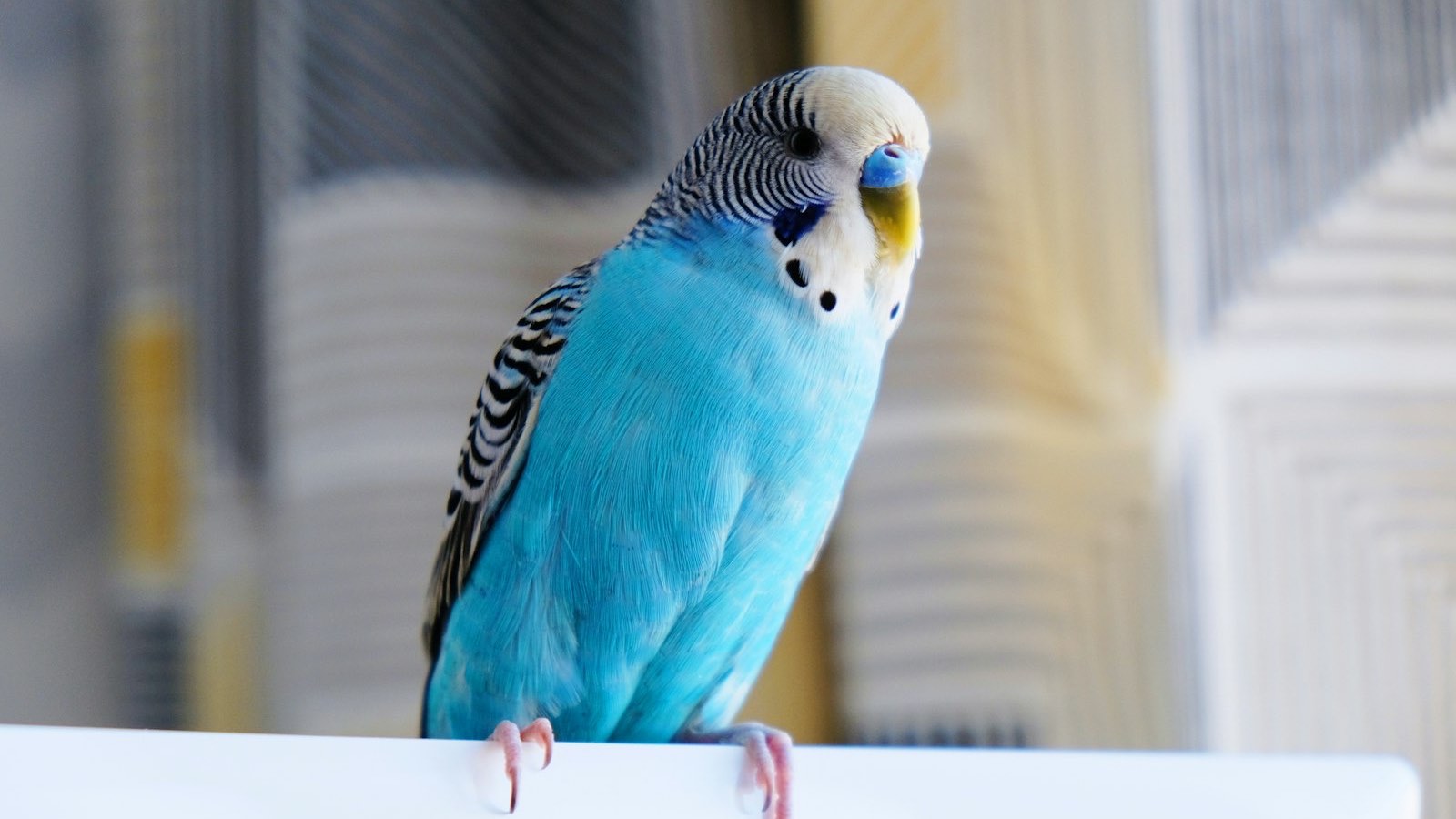
This documented difference in wild inventiveness partly explains why a parrot quickly gets bored with a fixed food bowl, while a canary or budgerigar tends to settle more easily into a stable feeding routine. Guidance on translating this inventiveness into enrichment is in our guide to foraging toys for birds.
A gap already documented between wild foraging and the food bowl
This result echoes a broader finding on the gap between the time spent searching for food in the wild and the speed of a bowl that's always full in the same spot, covered in our article on wild parrot foraging time versus the food bowl.
- Large-scale survey: several hundred published cases of feeding innovation were analyzed.
- Brain correlation: the most inventive families have the largest brain relative to body size.
- Parrots and corvids lead: these families dominate the ranking of documented innovations.
- Practical takeaway: a parrot needs renewed feeding challenges, unlike some small seed-eaters.
This study places a parrot's inquisitive, foraging behavior in a precise scientific frame: it isn't an individual quirk, but a measurable family trait. Full guidelines are in our bird food section.
Frequently asked questions
Does this study mean canaries are less intelligent than parrots?
No, it specifically measures documented wild feeding inventiveness, not general intelligence, which shows up differently across bird families.
Should foraging toys be offered to every bird species?
High-innovation species, such as parrots, benefit the most, but moderate feeding enrichment remains beneficial for most pet birds.
Did this survey include pet bird species other than parrots?
The survey covered wild observations across all families, including several wild ancestors of birds now kept in captivity.
See it in the Planète Pets shop: Wooden plug board, puzzle toy for parrots (€19.90) · the whole shop
This guide is part of Planète Pets’s Birds universe. Our advice is general in nature: for any health concern, your veterinarian remains the only reference.