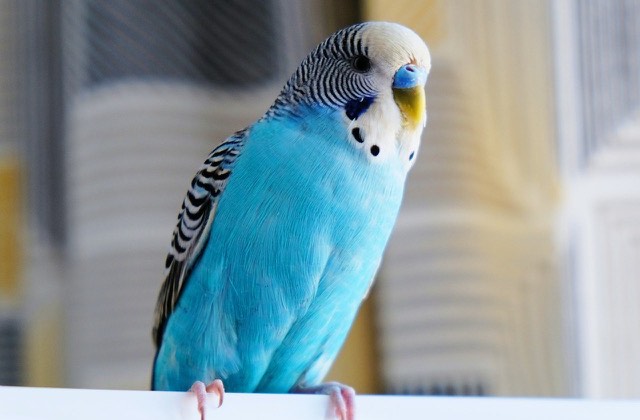
Why Do Birds Sleep on One Leg, Sometimes With One Eye Open?
Published by Planète Pets · managing editor: Clément Lacaille · how our guides are written
A bird perched on a single leg, the other tucked into its feathers, or visibly keeping one eye open while dozing, isn't just a random posture. General sleep needs are covered in our article on the sleep and darkness a bird needs; here is what research explains about these two distinct behaviors.
Contents · 5 sections
What research shows about sleeping with one eye open
A study by Rattenborg, Lima and Amlaner, published in 1999 in Behavioural Brain Research, observed mallard ducks sleeping in a row and found that individuals at the exposed ends of the group, more vulnerable to potential danger, practiced unihemispheric sleep far more often, with one brain hemisphere staying awake while the opposite eye remained open and directed away from the group (see the study). These birds responded quickly to a threatening visual stimulus presented on the side of the open eye.
A vigilance level that adjusts to context
This mechanism isn't fixed: a bird adjusts how much unihemispheric sleep it uses depending on its position within the group and the perceived level of risk. A pet bird placed in a calm, secure environment, as described in our article on the ideal setup for the room it lives in, relies less on this vigilant sleep than a bird exposed to a cat regularly walking by or general household commotion.
And the tucked leg, a different mechanism
Standing on one leg, with the other tucked against the body and insulated from cold by the feathers, is mainly a thermoregulation strategy: legs, poorly insulated by feathers, lose heat through contact with the perch, and reducing the exposed surface limits that heat loss, especially as room temperature drops.
Two normal behaviors, not to be mistaken for illness
A bird that naturally alternates which leg bears its weight and occasionally dozes with one eye open is nothing to worry about. Persistent lameness on one leg, on the other hand, is an entirely different matter and warrants a vet visit, as covered in our article on signs that should raise concern.
- Unihemispheric sleep: one hemisphere stays alert, with the opposite eye watching the surroundings.
- Adjusted to perceived risk: more common in an exposed position within the group than at its center.
- Tucked leg: a separate mechanism, tied to thermoregulation rather than vigilance.
- Normal behaviors: distinct from lameness or persistent lethargy.
These two seemingly trivial behaviors show how a bird stays partly on alert even at rest, a holdover from its life in the wild that still shows up in the pet bird. Full guidelines are in our bird bedding and habitat section.
Frequently asked questions
Does a pet bird alone in a quiet room still need this vigilant sleep?
It generally relies on it less than in an exposed situation, but the mechanism stays present and can resurface after noise or a change in its environment.
Is always tucking the same leg a problem?
Naturally alternating between the two legs over the course of days is expected; an exclusive, lasting preference for a single leg deserves a vet's opinion to rule out discomfort.
Does this one-eye-open sleep occur in all pet bird species?
The mechanism is documented across many bird species, wild and domestic alike, with an intensity that varies by social context and perceived level of risk.
See it in the Planète Pets shop: Bendable multicolour cotton rope perch, 40 cm (€21.90) · the whole shop
This guide is part of Planète Pets’s Birds universe. Our advice is general in nature: for any health concern, your veterinarian remains the only reference.