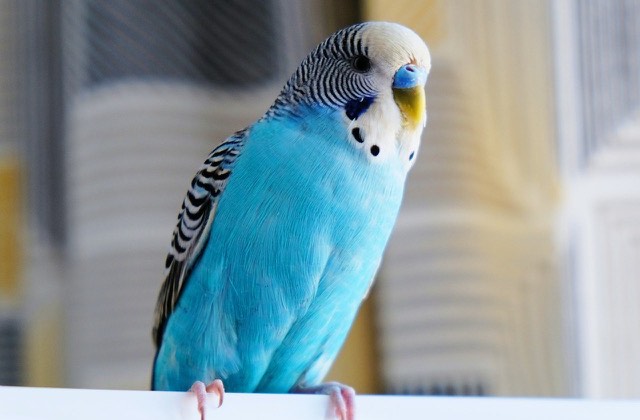
Abrasive perches for birds: useful nail care or a risk to the feet?
Published by Planète Pets · managing editor: Clément Lacaille · how our guides are written
An abrasive perch naturally wears down nails and can reduce how often you need a vet nail trim, but only if it stays a minority perch in the cage: used as the only perch, or placed where the bird sleeps, it instead becomes a common cause of irritation, even sores, on the underside of the feet.
Contents · 5 sections
What does an abrasive perch actually do?
Its surface — cement, pumice, or wood coated with compressed sand — lightly files the nail with every step, slowing regrowth compared with a smooth perch. Some models double as a beak-conditioning spot for extra keratin upkeep. The effect stays gradual and modest, though: it never replaces clipping nails that are already too long, a method covered in our article on nail and beak trimming.
What is the real risk to the feet?
An abrasive surface in constant contact with the same patch of skin ends up irritating it, a mechanism well documented in farmed poultry exposed to abrasive, damp flooring or litter. A study by Eric Shepherd and Brian Fairchild, published in 2010 in the journal Poultry Science, reviewed the factors behind footpad lesions in birds and identified prolonged contact with an abrasive or unsuitable surface as a major risk factor, worsened by moisture and a lack of rotation between resting spots (see the study). While that study focuses on farmed poultry, the underlying principle — a fixed abrasive surface plus prolonged contact equals lesion risk — applies just as much to a pet bird that spends most of its time on a single cement perch.
How should you choose and position an abrasive perch?
- Just one abrasive perch per cage, never more, alongside natural wood perches of varying diameters — see our guidance on choosing perch diameter.
- Placed in a high-traffic spot, near a feeder for example, never where the bird sleeps or perches the longest.
- Never as the sole perch supplied with some entry-level cages: smooth, single-diameter plastic perches cause the opposite problem, covered in our article on single-diameter plastic perches.
- Removed at the first sign of redness, swelling, or a smooth, shiny patch on the underside of the foot.
How should you check your bird's feet day to day?
A quick weekly visual check is enough: gently lift a bird used to being handled and look at the sole of the foot for redness, scabs, or an unusually smooth texture. If in doubt, an avian vet can confirm whether it's simple irritation fixable by changing the setup, or established pododermatitis needing treatment. All our accessory guidance is gathered in the bird accessories section.
Frequently asked questions
Does a cement perch suit every species?
No, it isn't recommended for very small, light species whose footpads are more delicate; ask for advice on the right size and grain for your bird.
How long does an abrasive perch take to wear down nails?
The effect is gradual, over several weeks of regular use, and varies with each bird's own regrowth speed; it doesn't replace regular nail checks.
Can you make an abrasive perch at home?
That isn't recommended: makeshift coatings, such as sandpaper, flake off and release particles the bird can ingest; a model designed specifically for avian use is the safer choice.
See it in the Planète Pets shop: Flexible pastel cotton rope perch, 35 cm, for budgies and cockatiels (€32.90) · the whole shop
This guide is part of Planète Pets’s Birds universe. Our advice is general in nature: for any health concern, your veterinarian remains the only reference.