Feeding a Bristlenose pleco: herbivore diet, frequency, mistakes
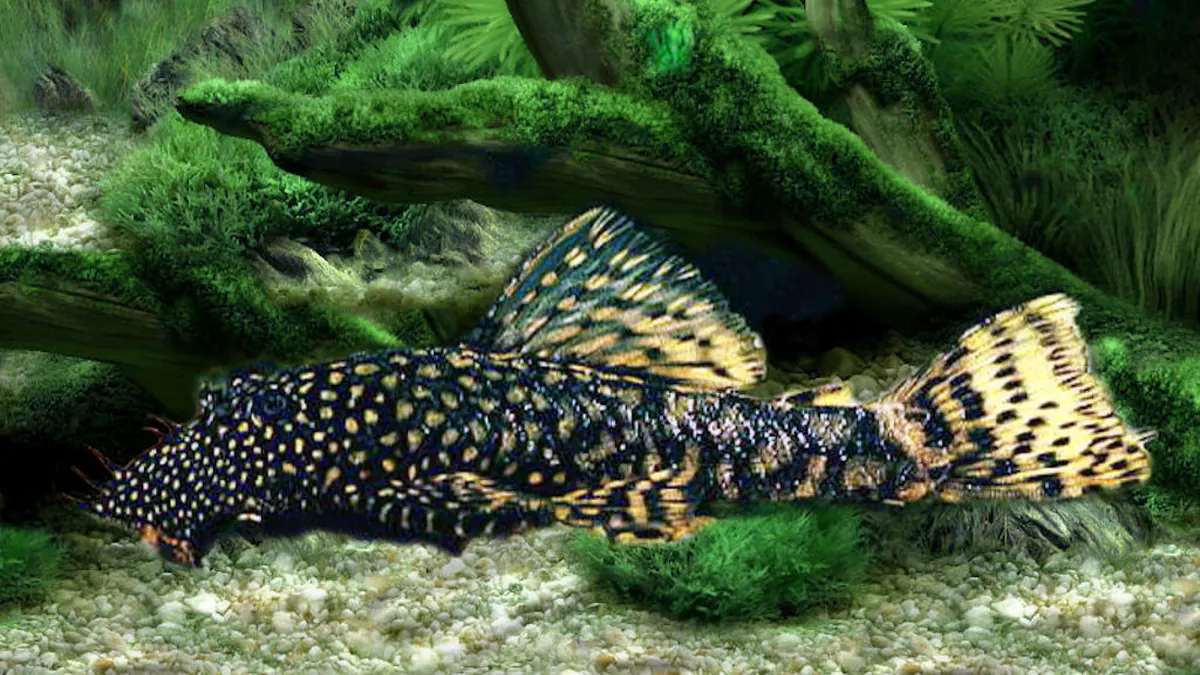

Bristlenose pleco : Tank algae are never enough: supplement with vegetable wafers, blanched zucchini and cucumber. Rasped driftwood provides fiber essential to its digestion.
An accessory from our shop for this use: Programmable automatic aquarium fish feeder (€32.90) · the whole shop
Our products don’t ship to you yet, but the PDF practical guide is instant: Beginner axolotl: aquarium and care (€19)
In short: 12 to 15 cm as an adult, 100 L minimum, water between 22 and 27 °C. A peaceful, nocturnal armored catfish, it hides by day and a single male rules the tank's cavities. Driftwood to rasp is vital for its digestion, and tank algae are never enough: supplement with blanched vegetables.
Feeding a Bristlenose pleco: diet and habits
The Bristlenose pleco is mainly herbivorous: blanched greens, plant-based granules and algae — over-rich protein foods clog its system. Since it eats at the bottom, pick sinking wafers and stop at what gets eaten in two minutes: beyond that you are feeding the water, not the fish.
Frequency and variety
One or two small feeds a day for adults, with a weekly fasting day that costs it nothing — overfeeding remains the top cause of tank pollution. Feed at a fixed time: the Bristlenose pleco learns the ritual fast, and you get the best observation window. Alternate dry, frozen and blanched greens (courgette, spinach) across the week.
The costly mistakes
The Bristlenose pleco “begging” at the glass is not starving — it has simply learnt your silhouette: hold the two-minute line. Budget flakes crumble and pollute: serious-brand food costs a few euros more per year, not per month. The rest of the profile is on the full Bristlenose pleco profile.
Frequently asked questions
How often should a Bristlenose pleco be fed?
One or two small daily feeds eaten within two minutes, plus one fasting day a week. In doubt, underfeed: the water will thank you.
What food suits a Bristlenose pleco?
Mainly herbivorous: blanched greens, plant-based granules and algae — over-rich protein foods clog its system — served in sinking form to reach its bottom zone.
The guides that apply to you
- Overfeeding your fish: the most common (and most dangerous) mistake
Overfeeding fish pollutes the water faster than any other mistake: uneaten food after 2-3 minutes, rising ammonia, algae and disease in a chain reaction.
- Freeze-Dried or Frozen Tubifex Worms: What Real Risk Do They Pose to Your Fish?
Live tubifex has long been a documented health hazard in fish farming. Why freeze-drying and freezing became the standard, and how to feed these worms without unbalancing your fish's diet.
- Live and frozen fish food: the guide to getting started
Bloodworms, brine shrimp, daphnia: live and frozen food transforms your fish’s health. Formats, prices, precautions and the ideal feeding frequency.
- Feeding an axolotl: which foods, how often and how much
The axolotl is a strict carnivore with simple but precise needs. Which foods to choose, how often to feed it by age and how to size portions without overfeeding.