Travelling with a Australian Shepherd: car, crate and rules
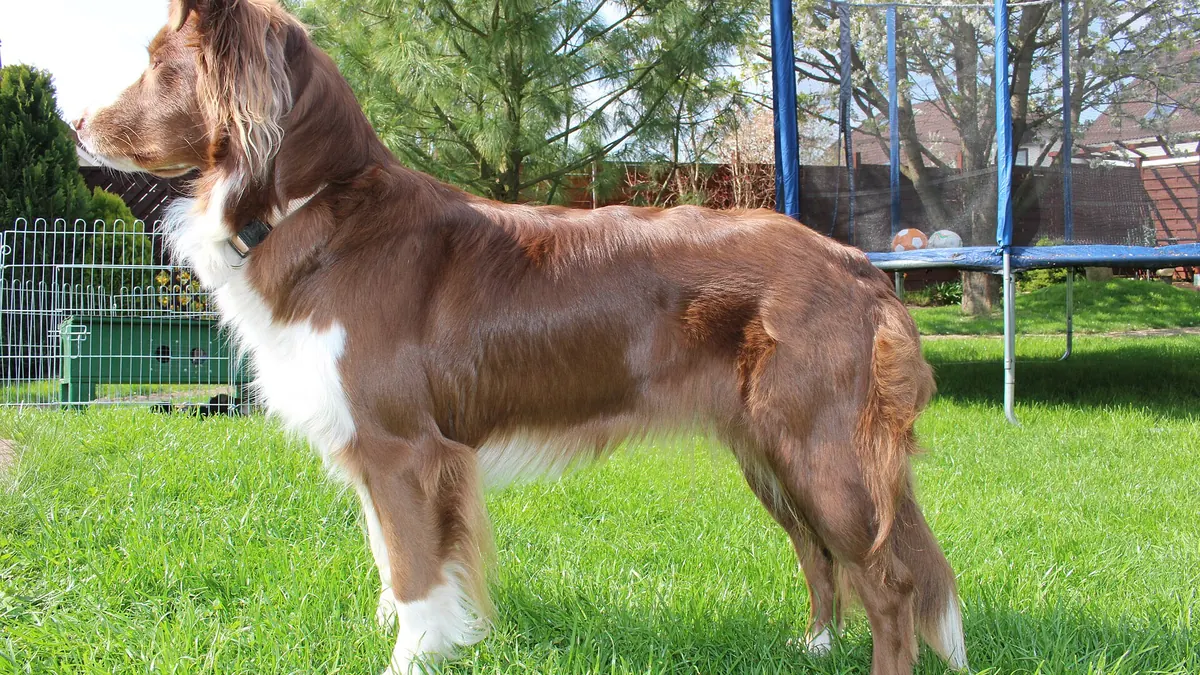

Australian Shepherd: Introduced to the car early, it travels well in an M/L crate or with a safety harness. Often taken everywhere, it benefits from a folding crate that is handy for agility events or holidays.
Our practical guide, to download: Training a Herding or Working Dog: Border Collie, Australian Shepherd, German Shepherd, Malinois, the Step-by-Step Course — 44-page PDF, instant download. Get my guide — €24
In short: Medium-to-large dog, 46-58 cm at the withers (16-32 kg), medium-length coat with undercoat, very high energy level. A lively, highly cerebral herding dog, brimming with energy and devoted to its people. Part of the breed carries the MDR1 mutation, which makes certain medications and antiparasitics dangerous: get a genetic test or veterinary advice before any treatment.
In the car with a Australian Shepherd
For its 16 to 32 kg, two serious options: a rigid crate of about 95 cm strapped in the boot, or a crash-tested safety harness clipped to ISOFIX. An unrestrained dog of this weight becomes a projectile under braking — and a possible fine for distracted driving.
Trains, planes, holidays
Too big for the cabin, the Australian Shepherd flies in the pressurised hold in an IATA-approved crate — an ordeal to reserve for unavoidable trips. On trains, a muzzle and lead meet the rules. Plan the habituation: a Australian Shepherd that eats and naps in its open crate at home will treat it as a den, not a trap.
Identification and good habits
Before any departure, check the trio: microchip, up-to-date vaccines and an EU passport for trips abroad. In warm weather a Australian Shepherd never stays in a parked car: fifteen minutes is enough for tragedy.
Frequently asked questions
What crate size for a Australian Shepherd?
About 95 cm long: able to stand without hunching and turn around freely. For flying, check the model’s IATA dimensions.
Can a Australian Shepherd fly in the cabin?
No, it exceeds the cabin limit (8 kg including the bag): it travels in the pressurised hold in an IATA crate — avoid it when you can.
The guides that apply to you
- Dog ramp or stairs: reaching the car and the sofa without injury
Incline, non-slip surface, maximum load: how to choose a dog ramp or steps suited to the car, the bed or the sofa.
- GPS collars for dogs: how to choose the right tracker
Subscription or not, battery life, accuracy, waterproofing: the criteria that matter when choosing a GPS collar so you never lose your dog again.
- Microchip or tattoo: which ID actually gets a lost dog home?
Dog identification: what a study shows about return-to-owner rates depending on whether the dog is microchipped or not.
- Dogs restrained in cars: what a survey of 2,000 owners in three countries found
Between 55% and 72% of dogs travel restrained depending on the country, a survey of over 2,000 owners found. The rest ride loose on the seat or on a lap.