Feeding a Akita: portions, kibble and budget
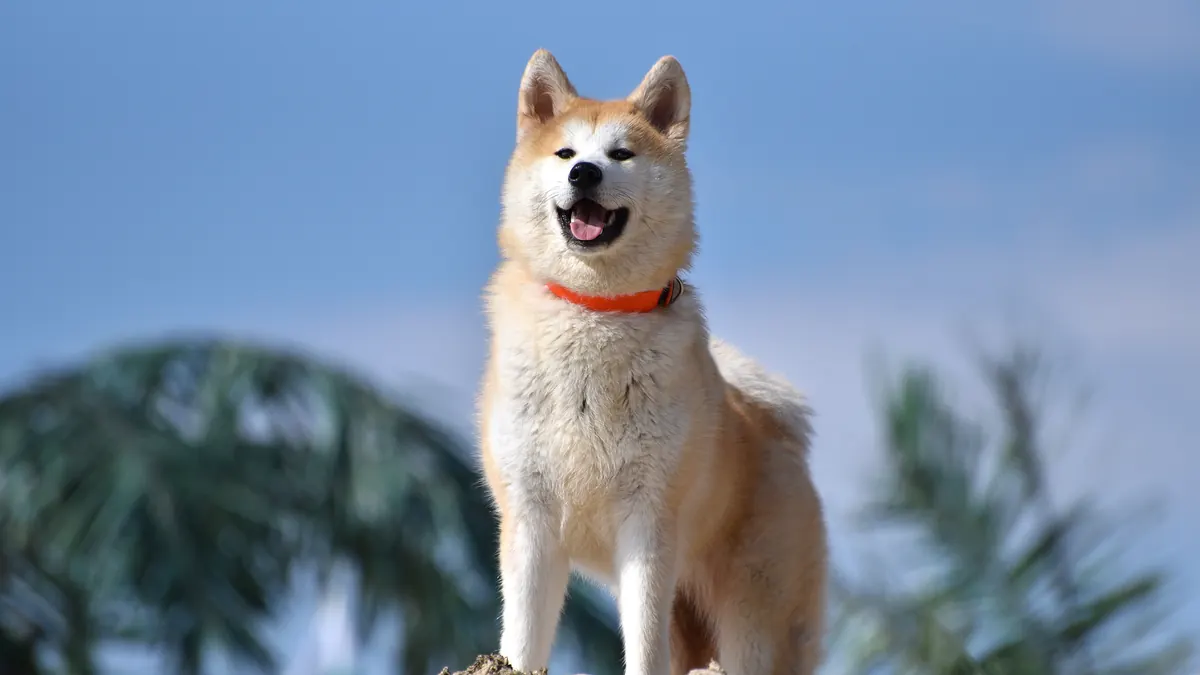

Akita: Expect roughly 350 to 500 g of kibble per day; the breed is prone to certain skin and digestive sensitivities, which makes single-protein recipes such as fish or poultry worthwhile. Some Akitas eat in phases, so resist the urge to pile on treats.
Our practical guides together, to download: Course: Train Your Dog in 8 Weeks — 2 PDF guides (85 pages in English (86 in French)), in English and French, instant download. Get my bundle — €49
In short: Large dog, 58 to 70 cm and 30 to 45 kg, short dense double coat, moderate energy, independent temperament. A calm, dignified primitive breed, loyal to its family but often intolerant of same-sex dogs. Its dog-to-dog reactivity and unreliable recall demand a strong short lead and an escape-proof harness.
The right daily ration for a Akita
An adult Akita of 30 to 45 kg eats 270 to 420 g of complete kibble a day, over two meals — a figure to adjust for age, neutering and actual exercise. The reference is the weight curve: you should feel the ribs without seeing them.
Matching the food to the breed
Like every breed this size, the Akita should eat two calm meals a day, with no intense exercise in the following hour: the basic precaution against gastric dilatation-volvulus. Choose large-breed kibble (slow growth, joint support) and a stable, wide bowl.
Budget and smart buying
The kibble line for an adult Akita runs €50 to €90 a month. Large bags save per kilo — if stored airtight, dry, and finished within six weeks of opening. All our label-reading pointers are on the full Akita profile.
Frequently asked questions
How much kibble per day for a Akita?
Start from the manufacturer’s table, i.e. 270 to 420 g a day for 30 to 45 kg, served in two meals; then adjust to actual body condition, and ask the vet at any doubt.
How many meals a day for a Akita?
Two meals for an adult — essential at this size, which is exposed to gastric torsion, three to four for a growing puppy.
The guides that apply to you
- Feeding a rottweiler: lowering the risk of bloat (GDV)
Split meals, a floor-level bowl, no exercise right after eating: the habits that reduce the risk of gastric dilatation-volvulus in the deep-chested rottweiler.
- Siberian Husky: zinc-responsive dermatosis and the role of diet
The Siberian Husky is the breed most affected by zinc-responsive dermatosis, with crusts around the eyes and muzzle. What the landmark study shows and how diet shapes this skin disorder.
- Miniature Schnauzer: hypertriglyceridemia and what it means for diet
The Miniature Schnauzer shows an unusually high prevalence of hypertriglyceridemia, often silent. What a US veterinary study shows and how to adapt feeding to limit the associated risks.
- Automatic dog feeder: which one should you choose?
Capacity, scheduling, anti-jam mechanism, backup battery: how to choose an automatic dog feeder to match your daily routine.