Toys for a Akita: durability, exercise and enrichment
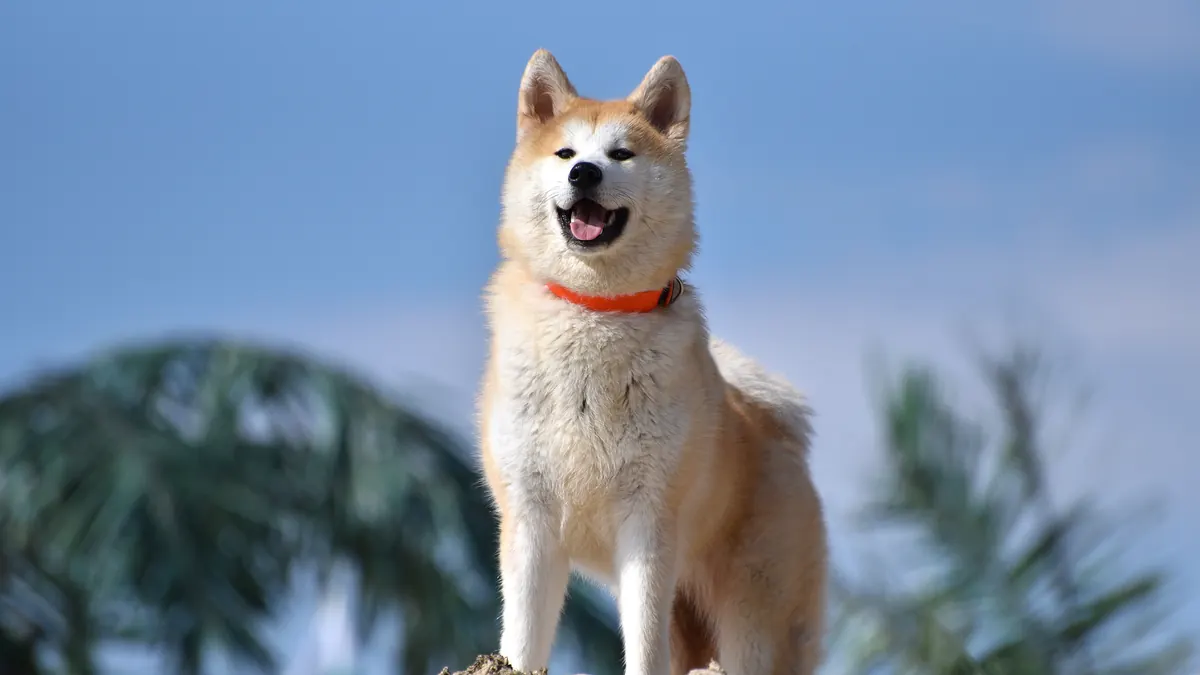

Akita: A primitive breed with little interest in fetch, it prefers short games and scent activities over repetitive drills that bore it. Sturdy chew toys and calm occupations (lick mats, natural chews) suit its composed temperament better.
Our practical guides together, to download: Course: Train Your Dog in 8 Weeks — 2 PDF guides (85 pages in English (86 in French)), in English and French, instant download. Get my bundle — €49
In short: Large dog, 58 to 70 cm and 30 to 45 kg, short dense double coat, moderate energy, independent temperament. A calm, dignified primitive breed, loyal to its family but often intolerant of same-sex dogs. Its dog-to-dog reactivity and unreliable recall demand a strong short lead and an escape-proof harness.
Toys that survive a Akita
Its powerful jaw shreds entry-level toys in minutes: go for the heavy-chewer range — solid rubber, nylon, sized bigger than its mouth to prevent swallowing. Inspect the toy basket weekly and bin anything split or gutted — swallowed fragments remain a routine veterinary emergency.
How much daily activity?
An adult Akita demands 60 to 120 minutes of real activity each day — and count the sniffy walks: ten minutes of nose-down work equals half an hour of marching.
Mental work: the real boredom-buster
Snuffle mats, food-dispensing toys and canine puzzles keep the Akita busy on rainy days and while you are out. Start at the easy level: a dog that fails gives up, a dog that wins asks for more. Two or three ten-minute sessions beat an hour on Sunday.
Frequently asked questions
Which toys should I pick for a Akita?
Its powerful jaw shreds entry-level toys in minutes: go for the heavy-chewer range — solid rubber, nylon, sized bigger than its mouth to prevent swallowing.
How much exercise does a Akita need daily?
The cruising range: 60-120 minutes of authentic activity a day, dialled down for seniors and in heatwaves.
The guides that apply to you
- How to train your dog: where to start (the basics, in order)
Dog training made simple: the principles that work, the order to teach the basics (name, sit, down, recall, loose leash, stay) and an 8-week plan.
- Dog enrichment ideas: 15 brain games to play at home
Dog enrichment ideas: 15 sniffing, foraging and brain games to play at home, with time, level, safety rules and a sample day.
- A toy too small for your dog: the choking risk many owners overlook
A toy that is the wrong size for your dog's jaw can cause choking or ingestion. The size and durability criteria to check before buying, and the right reflexes in an emergency.
- Orange ball on grass: what a dog's colour vision changes about toy choice
Dogs are dichromats. A study in Proceedings of the Royal Society B shows they follow hue rather than brightness — which demotes some popular toy colours.