Housing a Budgerigar: a 80 × 40 × 50 cm cage, fully fitted
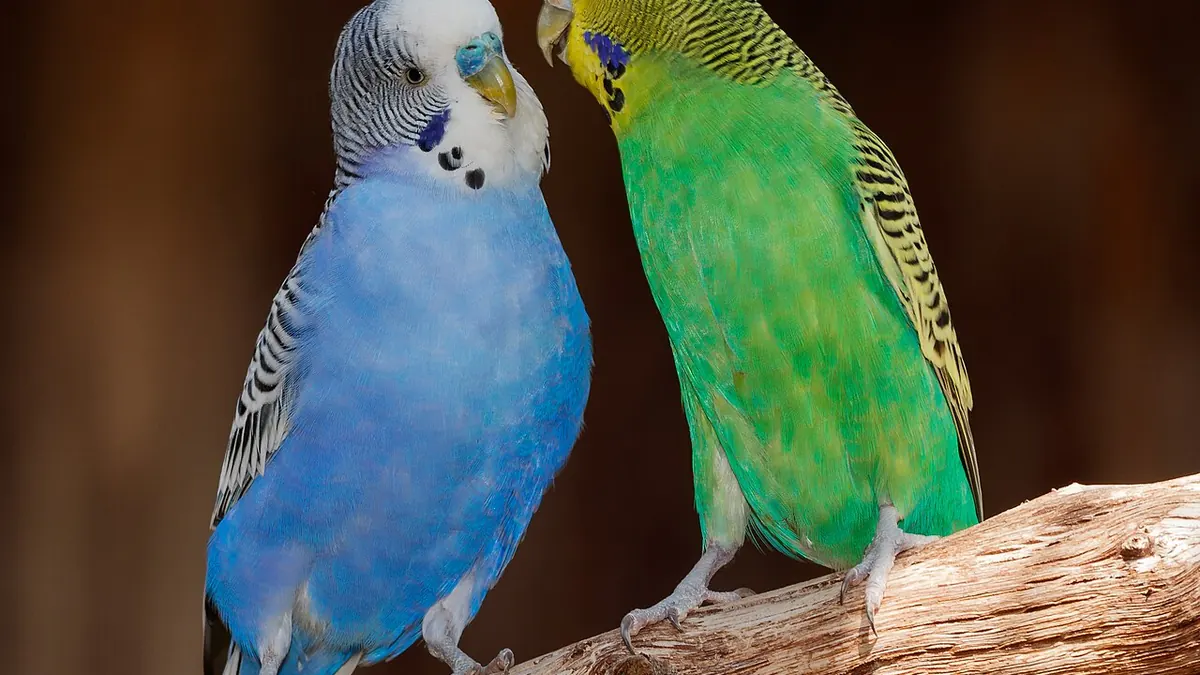

Budgerigar : For a pair, allow a cage at least 80 cm wide with narrow bar spacing, around 60 to 120 euros, placed in a living area free of draughts. Daily out-of-cage flight time in a bird-proofed room remains essential.
An accessory from our shop for this use: Flexible pastel cotton rope perch, 35 cm, for budgies and cockatiels (€32.90) · the whole shop
We don’t ship products to your country yet; our practical guide downloads anywhere: Budgies, Cockatiels and Canaries: The Starter Guide (€13)
In short: Around 18 cm and 30 to 40 g, lifespan of 5 to 10 years, low to moderate noise level. Lively, curious and gregarious, it chatters almost constantly and tames quickly as long as you talk to it every day. Often underestimated, it needs a cage wider than it is tall for horizontal flight and at least one companion so it does not languish alone.
80 × 40 × 50 cm: the serious minimum
For a Budgerigar, the cage measures at least 80 × 40 × 50 cm, wider than tall: birds fly horizontally, not in lifts. Bars spaced 1 to 1.2 cm — any wider and the head slips through and jams.
Perches and layout
Fitting out a Budgerigar cage starts with the perches: raw natural wood, mixed diameters between 1 and 1.5 cm, mounted at both ends to keep the flight axis clear and never directly above the bowls. Add no-waste feeders, a newspaper floor renewed every two days and bath access — banning smooth plastic and abrasive “nail-trimming” sleeves, sworn enemies of bird feet.
Placement changes everything
The Budgerigar’s ideal address: back to a wall for safety, at eye height, at the heart of the living room but never the kitchen — an overheated non-stick coating releases fumes lethal to birds. Natural light without direct sun, 10 to 12 hours of calm darkness at night.
Frequently asked questions
What cage size for a Budgerigar?
80 × 40 × 50 cm minimum, wider than tall, bars spaced 1 to 1.2 cm — plus daily free flight, the cage being only base camp.
Where should a Budgerigar’s cage go?
Against a living-room wall at eye height, away from the kitchen (toxic fumes), direct sun and draughts, with 10 to 12 hours of quiet darkness.
The guides that apply to you
- Nest box for budgies: should you really add one to the cage?
A wooden nest box looks harmless, but it can trigger a full breeding cycle in budgies that have no chicks to raise. What to know before adding one.
- Mixing several bird species in the same aviary: mistakes to avoid
Cockatoos, parakeets and cockatiels don't cohabit risk-free in a shared aviary. The mistakes around space, breeding season and supervision that go wrong.
- Bird Perches: Why Varying the Diameters Changes Everything
Natural wood, varied diameters, placement inside the cage: the perch guide to protect the feet of your budgies, canaries and parrots.
- Red-Headed and Black-Headed Gouldian Finches: Why You Shouldn't Mix Them Without Care
In the Gouldian finch, head colour isn't just decorative: it predicts how aggressive a bird will be. A landmark study explains this link and its consequences for setting up a mixed aviary.