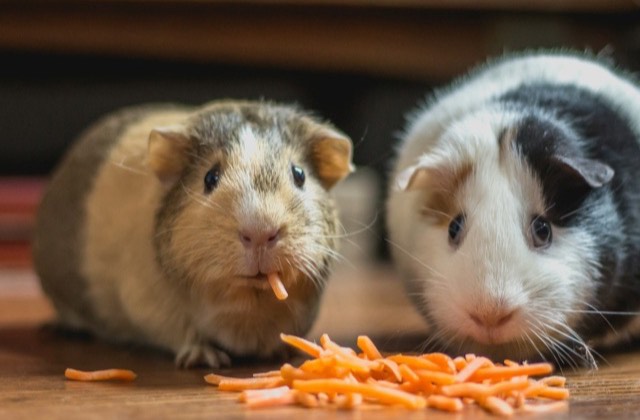
Fruit for rodents: which ones and how much?
Published by Planète Pets · managing editor: Clément Lacaille · how our guides are written
Fruit is a near-universal favorite among rodents, but its sugar content makes it an occasional treat rather than an everyday food. The right amount depends heavily on the species: a guinea pig tolerates fruit better than a hamster, whose metabolism is more sensitive to excess sugar. Find all our guides in the food category for rodents.

Contents · 5 sections
Which fruits suit which species?
- Guinea pig: apple, pear, strawberry, melon in small pieces, at most 2 to 3 times a week.
- Rat: most common fruits work in small daily amounts as long as sugar stays a minor part of the diet.
- Hamster, gerbil: an occasional bite only (a cube of apple or pear), never more than once or twice a week.
- Chinchilla: fresh fruit isn't recommended as routine, since their digestive system tolerates excess sugar poorly; save it for very rare occasions, in tiny cubes.
For the everyday backbone of the diet, our article on hay for guinea pigs and chinchillas remains the go-to reference.
Which fruits should you avoid entirely?
Grapes aren't recommended for most small rodents due to their high sugar content, and the same goes for dried fruit, which concentrates calories and sugar. Citrus fruits (orange, lemon, grapefruit) are too acidic and can cause digestive trouble. Pits and seeds should always be removed before giving a fruit.
What signs point to too much fruit?
Soft stools, reduced interest in regular food, or gradual weight gain are the first warning signs of a diet too rich in sugar. If these appear, cut back on fruit frequency right away and lean on hay or leafy greens instead, as covered in our article on a guinea pig's daily fresh vegetables.
How should you introduce a new fruit?
Always introduce a new fruit in a very small amount and watch the animal for 24 hours before giving it again: a sudden diet change is the leading cause of digestive trouble in rodents, whatever the species.
Frequently asked questions
Can you give fruit to a rodent every day?
No, with the exception of rats in very small amounts: for most species, one to three times a week is plenty.
Is banana a good choice?
Yes, in small occasional amounts, but it's sweeter than apple or pear, so keep it to a tiny bite.
Should you remove the fruit's skin?
Not required if the fruit is organic and well washed, but always remove seeds and pits before giving it.
An accessory from our shop for this use: Wooden hay rack with tray for rabbit, guinea pig and chinchilla (€21.90) · the whole shop
This guide is part of Planète Pets’s Rodents universe. Our advice is general in nature: for any health concern, your veterinarian remains the only reference.