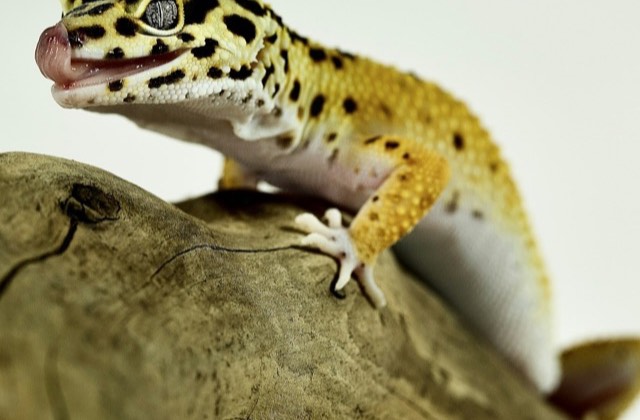
Leopard gecko: which enrichments actually make a difference?
Published by Planète Pets · managing editor: Clément Lacaille · how our guides are written
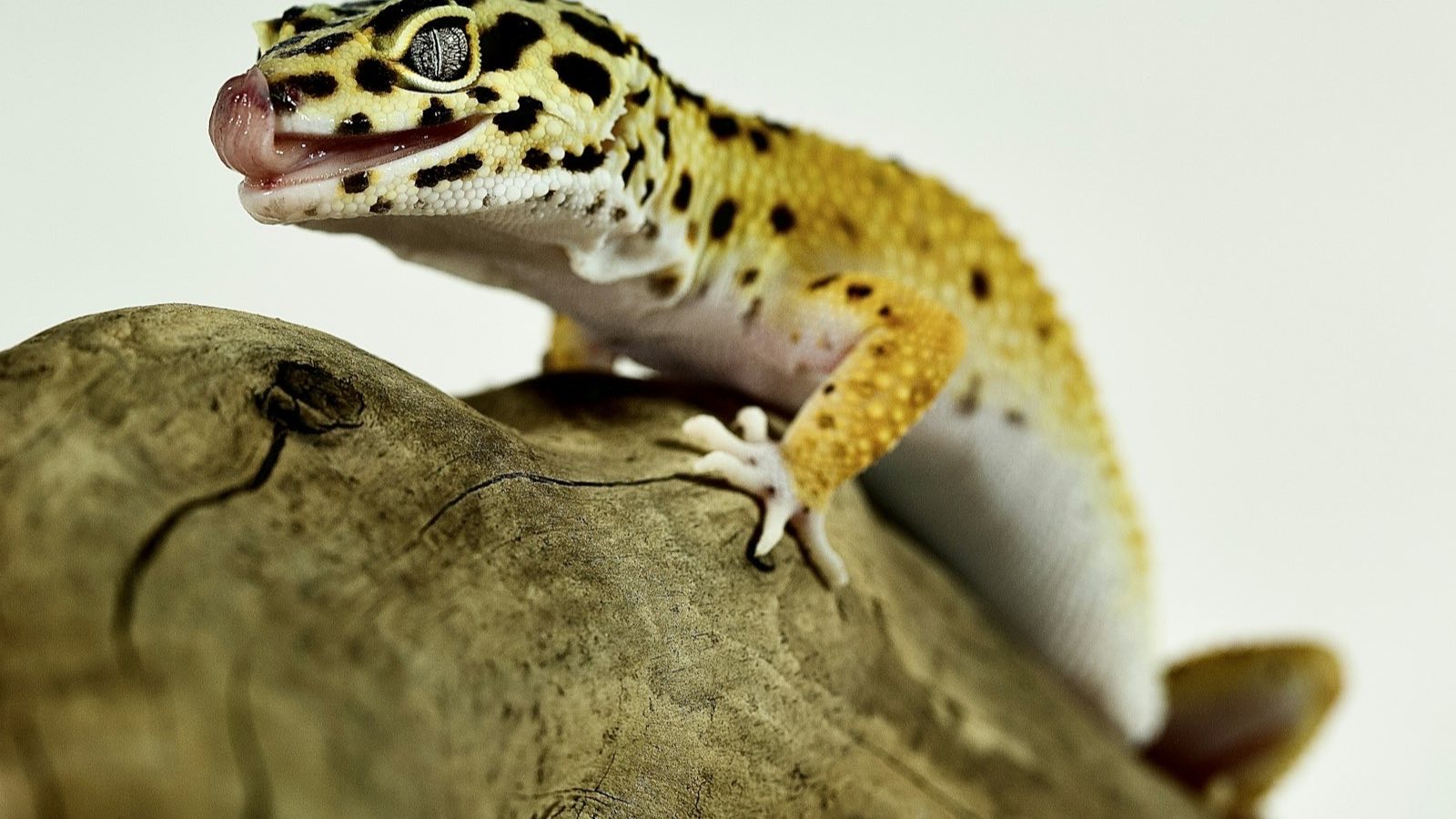
Piling objects into a leopard gecko's terrarium isn't enough to enrich its life — those objects need a measurable effect on its behaviour. A study by Bashaw, Gibson, Schowe and Kucher, published in 2016 in the journal Applied Animal Behaviour Science, tested five types of enrichment in the leopard gecko (Eublepharis macularius) — thermal, feeding, olfactory, object and visual — tracking their effect on behavioural welfare indicators such as exploration and vigilance. Find our other pointers in the toys and enrichment section.
Contents · 5 sections
Five enrichments put to the test
The researchers offered the geckos, in turn, a wider thermal gradient, hidden food to search out, novel scents diffused into the terrarium, manipulable objects (rocks, tubes) and a visual stimulus (a mirror). Each enrichment was compared to a control period with no change, measuring time spent exploring, hiding, or staying still in a vigilant posture.
What genuinely improves behaviour
Four out of five enrichments had a measurable positive effect: thermal, feeding, olfactory and object enrichment all cut down time spent hiding or frozen in vigilance, in favour of active exploration. Hiding part of the ration in the substrate or under an object, instead of setting it out in plain view, is already enough to shift this behaviour.
The one enrichment that changed nothing
Only visual enrichment — a mirror placed in the terrarium — produced no significant effect on the geckos' behaviour. Hardly a surprise for a nocturnal, largely non-social species that appears to draw no benefit from this kind of stimulation.
Practical pointers
- Effective: thermal gradient, hidden food, novel scents, objects to explore.
- No measured effect: mirrors and purely visual stimuli.
- Simple habit: rotate where food is placed rather than always serving it in the same spot.
- Frequency: refresh an enrichment every one to two weeks to keep its effect.
These feeding enrichments complement an already well-planned diet; our article on feeding the leopard gecko details the right proportions of insects and calcium. See also our leopard gecko profile for its full picture.
Frequently asked questions
Should I remove the mirror if my leopard gecko already has one?
Not necessarily: the study shows an absence of positive effect, not a negative one; it's just not worth relying on as a sole source of enrichment.
How often should a new enrichment be introduced?
Once or twice a week is plenty; what matters most is varying the type rather than piling on objects of the same kind.
Does an adult leopard gecko need less enrichment than a juvenile?
The study doesn't draw that distinction, but well-settled adults remain just as responsive to feeding and olfactory enrichment, which mirror their natural foraging behaviour.
An accessory from our shop for this use: Ventilated clear box for feeder insects, transport and quarantine, 19 cm (€17.90) · the whole shop
This guide is part of Planète Pets’s Reptiles universe. Our advice is general in nature: for any health concern, your veterinarian remains the only reference.