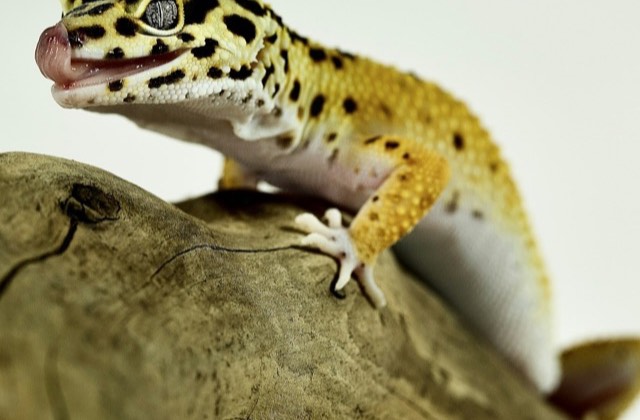
Feeding a leopard gecko: crickets, worms, calcium and D3 done right
Published by Planète Pets · managing editor: Clément Lacaille · how our guides are written
The leopard gecko is strictly insectivorous: no kibble, no fruit, only live prey properly prepared. The good news is that its diet is easy to organise once you grasp three concepts: insect variety, gut loading and calcium supplementation. Done well, this routine takes only a few minutes per meal and prevents most of the health problems seen in captivity. Much of this guide also applies to young bearded dragons, themselves great insect eaters.
Contents · 5 sections
Which insects to offer?
- Crickets and locusts: the backbone of the diet, nutritious and stimulating to hunt.
- Dubia roaches: excellent protein-to-fat ratio, easy to breed at home.
- Mealworms and superworms: fattier, as a complement once or twice a week.
- Silkworms, waxworms: occasional treats, waxworms being very fatty.
Prey size should not exceed the space between the gecko’s eyes. An adult typically eats 5 to 8 insects per meal, every two to three days; a juvenile eats daily. Budget-wise, a box of crickets costs 3 to 5 € at the pet shop; breeding dubia roaches slashes that expense considerably.
Gut loading: feed the prey before the predator
A starved insect brings almost nothing to the table. Feed your crickets and roaches 24 to 48 hours before offering them, using fresh vegetables (carrot, courgette, endive) and a little bran or rolled oats. The nutritional value of the prey is literally whatever is in its stomach.
Calcium and vitamin D3: the vital duo
Without sufficient intake, a captive insectivore develops metabolic bone disease. The proven routine:
- Dust the insects with pure calcium at most meals (the shake-in-a-bag technique).
- Use a calcium + D3 complex once or twice a week if the animal has no UVB lighting; less often if it does, since excess D3 is toxic.
- Leave a small dish of pure calcium freely available in the terrarium.
A tub of supplement (Zoo Med, Exo Terra or equivalent) costs 6 to 15 € and lasts several months.
Water and the classic mistakes
Clean water must be available at all times in a stable, shallow bowl. Among the common mistakes: leaving crickets loose overnight (they nibble the sleeping gecko), overdoing the waxworms, or feeding on loose substrate that ends up ingested. Tong-feeding or feeding from a dish solves all three problems at once.
To go further
Find our comparisons of supplements, feeding tongs and dispensers on Planète Pets in the reptile food section, and all our guides on the reptile hub.
See it in the Planète Pets shop: Ventilated clear box for feeder insects, transport and quarantine, 19 cm (€17.90) · the whole shop
This guide is part of Planète Pets’s Reptiles universe. Our advice is general in nature: for any health concern, your veterinarian remains the only reference.