Calcium and vitamins for reptiles: how do you dose the powder correctly?
Published by Planète Pets · managing editor: Clément Lacaille · how our guides are written
Calcium powder should be dusted onto insects or greens before every meal for a juvenile, and two to three times a week for an adult. The accompanying vitamin D3 needs a more cautious dose: too much is just as risky as too little. A reptile with good UVB exposure generally needs less synthetic D3 than an indoor animal without a proper fixture.
Contents · 5 sections
What frequency by age?
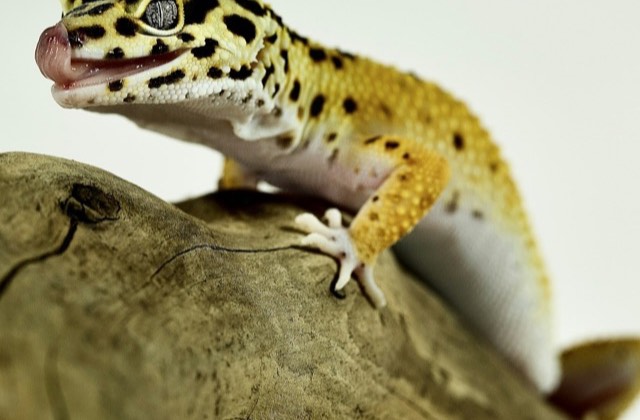
A juvenile bearded dragon or leopard gecko, still growing fast, needs calcium at every meal to build a strong skeleton. See our guide on appropriately sized prey by age to adjust how much powder goes on the insects offered. Past a year old, an adult tolerates a more spaced-out schedule, around two to three dustings a week.
Calcium with or without D3: how do you choose?
- Reptile under a quality UVB fixture: calcium without D3 most of the time, the animal synthesises its own;
- Indoor reptile without reliable UVB: calcium with D3 at a cautious dose, on a vet's advice;
- Nocturnal species with low UVB exposure: D3 dusting is often needed, but always in limited amounts.
A well-positioned UVB fixture remains the best way to reduce reliance on synthetic vitamin D3.
What are the risks of getting the dose wrong?
Chronic calcium deficiency causes metabolic bone disease, recognisable by deformed limbs or a softened jaw in young reptiles: the damage is sometimes irreversible. Too much vitamin D3, on the other hand, leads to abnormal calcification of internal organs, a risk that is just as serious but less well known to beginners.
How do you dust insects correctly?
Put the crickets or worms in a small container with a pinch of powder, then gently shake to coat each insect without overdoing it. Feed the animal right after, before the powder falls off the insect's legs. Visible excess white powder at the bottom of the terrarium usually signals too generous a dose.
Frequently asked questions
Can you dust greens the same way as insects?
Yes, the powder sticks well to slightly damp vegetables, at the same frequency as for insects depending on the species.
Should you switch calcium brands regularly?
No, it is better to stick with a reliable product and check its expiry date rather than switching without reason.
Does a herbivorous reptile have the same needs as an insectivore?
Calcium needs are similar, but a herbivore such as some tortoises often needs an even stricter calcium-to-phosphorus ratio.
In our shop, for this use: Ventilated clear box for feeder insects, transport and quarantine, 19 cm (€17.90) · the whole shop
This guide is part of Planète Pets’s Reptiles universe. Our advice is general in nature: for any health concern, your veterinarian remains the only reference.