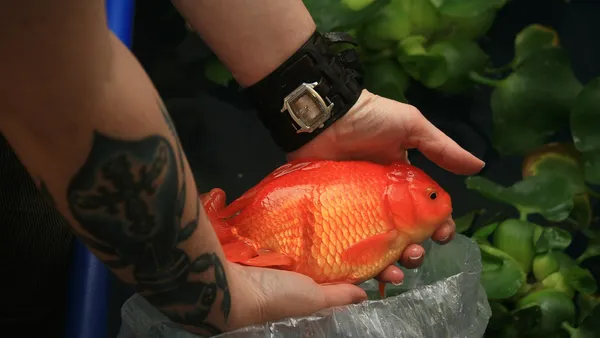
Goldfish Alone or in a Group: Do You Need More Than One?
Published by Planète Pets · managing editor: Clément Lacaille · how our guides are written
Yes: the goldfish (Carassius auratus) is a gregarious species in the wild, naturally living in groups of several tankmates. A goldfish kept alone does not "suffer" in the strict sense, but it does not express its natural shoaling behaviour, which tends to be more active and reassuring for the fish. A classic reference in fish ethology, Pitcher and Parrish's work on the functions of shoaling behaviour (see the study), notes that group living lowers stress and perceived predation risk in many freshwater fish species. Find all our pointers on the fishkeeping hub and in the bedding and habitat section.
Contents · 5 sections
Is the goldfish really a social fish?
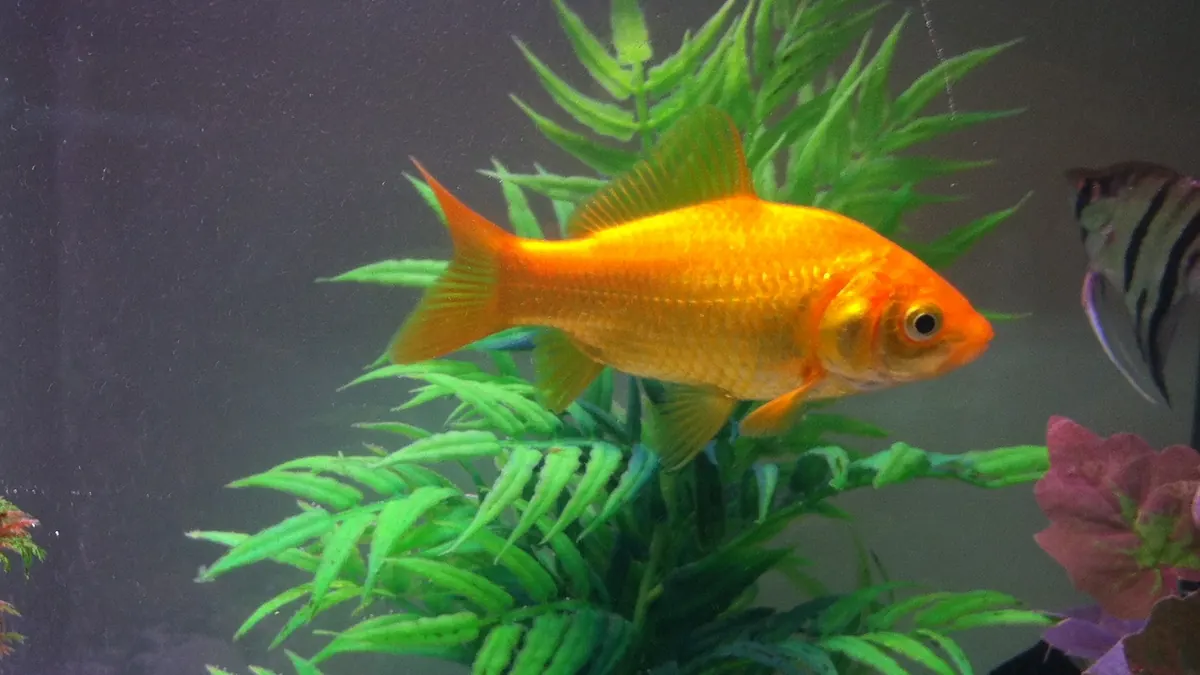
Yes, but without a strict hierarchy or individual bonds: it is group sociability, not one-to-one attachment. Goldfish mostly recognise each other by sight and readily swim near one another, especially at feeding time. A single fish in a large enough tank stays healthy as long as water and space keep up, as detailed in our guide goldfish tank size, but it often explores less and stays closer to the decor.
What changes when you add one or more tankmates?
In a group, goldfish swim more, explore the whole available volume and generally feed with more enthusiasm. That does not mean a lone fish is unhappy in the human sense of the word, but observation in tanks and ponds shows richer behaviour as soon as two or three individuals share the space, provided the volume keeps pace.
How much extra volume per additional goldfish?
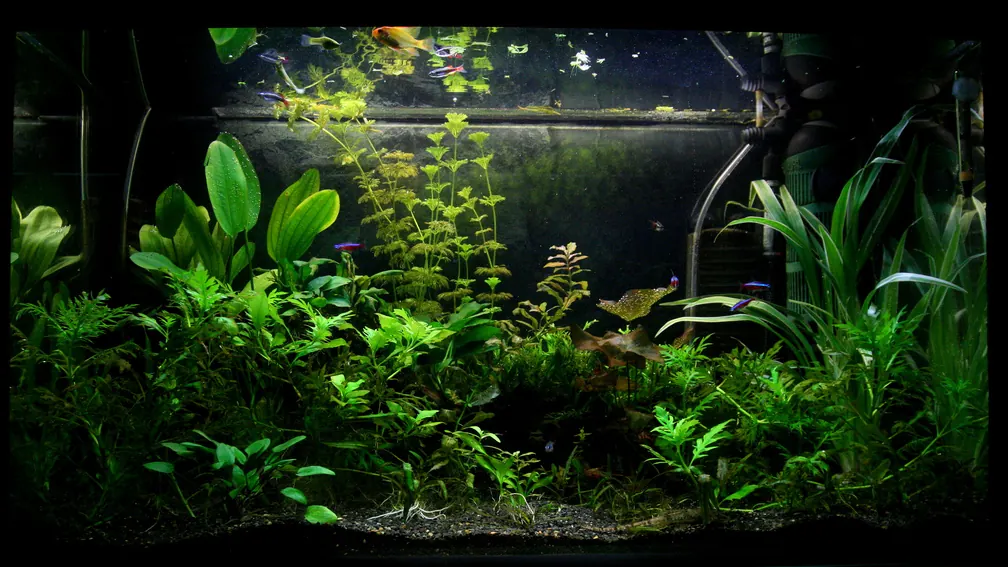
Plan at least 50 net litres for the first goldfish, then 30 to 40 extra litres per additional fish, accounting for growth: a pond goldfish often exceeds 20 to 25 cm as an adult. Temperature also matters, see our guide cold water and ideal temperature to size filtration and oxygenation accordingly.
Can you mix different sizes or varieties?
Yes, as long as you stick to coldwater goldfish of similar build: a small shubunkin and a large comet may not cohabit well, with the faster fish hogging the food. It is better to introduce fish of comparable size, and adjust the group later if needed.
- Plan for at least two goldfish if volume allows, never at the expense of space per fish
- Add 30 to 40 litres per extra goldfish, with filtration matched to the added bioload
- Introduce fish of similar size and variety to avoid one dominating feeding
- A single goldfish in a properly sized tank is not at risk, but tends to be less active
Frequently asked questions
Can a single goldfish live normally?
Yes, as long as volume and filtration are correct for its adult size. It will simply be less active than in a group.
What's the minimum number of goldfish for a group?
Two is enough to see group behaviour, provided you add the necessary volume and filtration.
Do you need an even number of goldfish?
No, there is no pairing rule: unlike some strict shoaling species, goldfish adapt well to groups of two, three or more.
This guide is part of Planète Pets’s Fishkeeping universe. Our advice is general in nature: for any health concern, your veterinarian remains the only reference.