Color-enhancing goldfish food: does astaxanthin actually work?
Published by Planète Pets · managing editor: Clément Lacaille · how our guides are written
"Color-boosting" flakes promise more vivid fish, without always spelling out what the formula actually contains. Our fish feeding guides are gathered in the fish food section.
Contents · 5 sections
Why fish color depends entirely on diet
Unlike other pigments, fish cannot manufacture the carotenoids responsible for red, orange and yellow tones themselves: these molecules have to come from food. A dietary shortfall in carotenoids therefore translates directly into duller coloring, regardless of the fish's overall health.
What a study measured precisely
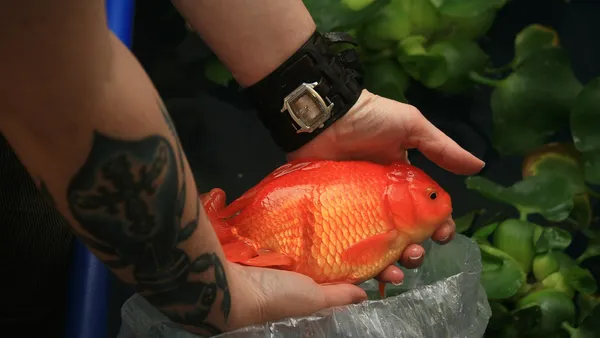
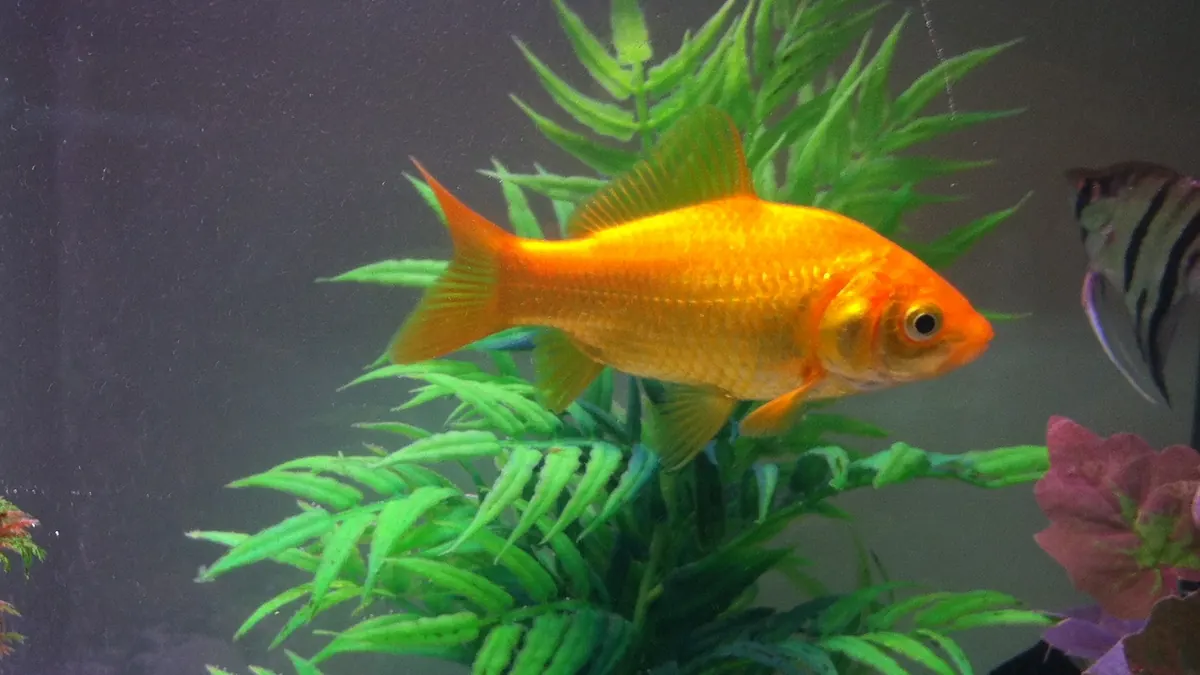
Xu, Jin, Wang, Chen, Wang and Yu published a study in 2006, in the Journal of the World Aquaculture Society, testing the effect of astaxanthin from the red yeast Xanthophyllomyces dendrorhous on pigmentation in goldfish, Carassius auratus (see the study). At a dose of 60 mg of astaxanthin per kilogram of feed, pigment concentration rose, compared with a base diet without astaxanthin, by 22.6% in the head, 45.5% in the scales, 31.0% in the flesh and 21.2% in the fins — differences the authors report as statistically significant.
An uneven gain depending on the tissue
The tissue-by-tissue breakdown is the most useful detail for understanding why some fish "color up" quickly in the fins while the body barely changes to the eye: the authors measured the caudal fin as holding the most pigment, followed by scales then the head, with flesh remaining the least colored in absolute terms. The same fortified feed therefore does not produce a uniform effect across a fish's whole coloring. This echoes what we cover for another species in our article on diet and guppy color.
What this dose does not do
The same study makes a point often glossed over by "color" food marketing: at 60 mg/kg, astaxanthin had no measurable effect on growth or survival in the fish. It acts only on pigmentation, not as a growth supplement or general tonic. A pale, otherwise poorly fed and unhealthy fish will not regain vivid color from a pigment add-on alone — a genuinely balanced diet, including fresh vegetables for goldfish, remains the real foundation.
Frequently asked questions
Do all commercial "color" foods contain astaxanthin at this dose?
Nothing guarantees it: composition and dosage vary by brand, and the label does not always state the source or the actual carotenoid concentration used.
How long before you see an effect?
This study does not give a precise onset time, only a measurement after a controlled feeding period. In practice, a visible color change builds up over several weeks, not overnight. All our guides are on the aquarium hub.
This guide is part of Planète Pets’s Fishkeeping universe. Our advice is general in nature: for any health concern, your veterinarian remains the only reference.