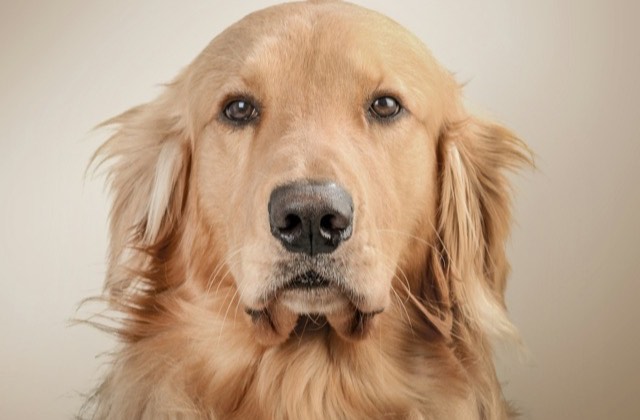
Great Pyrenees: feeding a giant puppy without wrecking its joints
Published by Planète Pets · managing editor: Clément Lacaille · how our guides are written
A Great Pyrenees goes from 700 grams to more than 50 kilos in eighteen months. During that window, anything that speeds up growth or unbalances the skeleton leaves a permanent mark. It is the most decisive period of the dog's life, and paradoxically the one where mistakes are made with the best intentions: "he's growing, he needs feeding". The Great Pyrenees breed profile covers its adult size.
Contents · 5 sections
Ration it — and the figure is striking
The study by Richard Kealy, Sten-Erik Olsson, Dennis Lawler, Gail Smith and colleagues, published in 1992 in the Journal of the American Veterinary Medical Association, followed 48 Labradors from eight weeks to two years, half fed free-choice, half fed 25% less (see the study). The result: 7 dysplastic dogs out of 24 in the restricted group against 16 out of 24 in the free-fed group, with less femoral subluxation at every age radiographed. The same cohort, followed for life by Gail Smith and Dennis Lawler and published in 2006 in the same journal, showed that the first radiographic signs of hip osteoarthritis appeared at a median age of 6 years in free-fed dogs against 12 years in restricted ones (see the study). Six years of joint health, bought purely on portion size.
Calcium is a ceiling, not a target
The commonest mistake in giant breeds is topping up the ration with calcium "for the bones". The work of Inez Schoenmakers, Herman Hazewinkel and colleagues, published in 2000 in The Veterinary Record on growing Great Danes, is unambiguous: excess calcium alone caused hypercalcaemia, hypophosphataemia and severe mineralisation disorders, and returning to a normal diet then brought out osteochondrosis lesions. Unlike the adult, a puppy regulates excess calcium absorption poorly. The European FEDIAF nutritional guidelines cap early-growth intake at 1.6 g of calcium per 100 g of dry matter, well below the adult maximum, and recommend holding around 1% until roughly six months in breeds over 15 kg as adults. The practical conclusion: a complete large-breed puppy food and nothing else — no mineral supplement, no daily cottage cheese, no adult kibble "because it's less rich".
What "slow growth" means in practice
On a Pyrenean puppy the target is not a given weight at a given age but a silhouette: the last ribs should stay palpable under a thin covering, and a waist should be visible from above. Weighing every fortnight and adjusting the ration by 5 to 10% beats following the bag chart, which is calibrated for an average puppy. On exercise, avoid repeated stairs, jumping down from a car boot and long runs on hard ground before growth finishes; slippery floors are a mechanical factor in their own right, as our article on bedding and stable flooring for large-breed puppies explains.
Where the breed stands
The American OFA database puts the Great Pyrenees at around 9% dysplastic hips across more than 6,000 evaluations — a decent score for a dog this size, bearing in mind that submissions are voluntary and probably understate reality. On elbows, the study by Anita Oberbauer and her team, published in 2017 in PLOS ONE, ranks it among the fifteen least affected breeds, at 1.5% (see the study). The main lever therefore remains the bowl and the pace of growth. For the rest of the dog's life, our article on bodyweight and osteosarcoma risk takes the subject further; cost benchmarks are in insuring a Great Pyrenees and the rest in dog food.
Frequently asked questions
Should a giant puppy get a calcium supplement?
No, unless your vet prescribes one on a calculated home-cooked diet. On a complete commercial large-breed puppy food, any addition raises the orthopaedic risk.
How long should I feed a puppy formula?
Until growth finishes, around 18 months in this breed. Switching to adult food too early unbalances calcium and phosphorus at the worst possible moment.
Is a rationed puppy hungry?
It asks for more, which is not the same thing. In the Kealy cohort, restricted dogs lived nearly two years longer than the others.
See it in the Planète Pets shop: Spiral slow-feeder dog bowl, 23 cm (€22.90) · the whole shop
This guide is part of Planète Pets’s Dogs universe. Our advice is general in nature: for any health concern, your veterinarian remains the only reference.