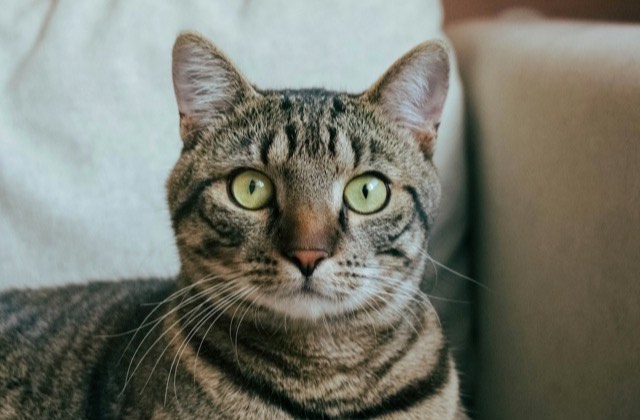
Feeding a Maine Coon, a large breed: what calorie needs to expect
Published by Planète Pets · managing editor: Clément Lacaille · how our guides are written
With adult males reaching 8 to 10 kg, the Maine Coon has nutritional needs that bear little resemblance to those of an average cat around 4 kg. A study by Godefroy and colleagues, published in the Journal of Feline Medicine and Surgery, notes that growth in large cat breeds stays slower until full skeletal maturity, with a higher risk of joint problems if calorie intake is poorly calibrated during that phase. See the full breed profile on our Maine Coon page and more pointers in the food section.
Contents · 5 sections
Growth spread over nearly two years
Where a standard cat reaches adult size by around 12 months, a Maine Coon keeps growing until 3-4 years old, with most of the frame built between 18 and 24 months. A "kitten" formula suited to large breeds, rich in quality protein and moderate in calcium/phosphorus, limits the risk of overly fast growth, which is harmful to joints. The switch to adult food therefore comes later than for a standard-size cat, typically around 15 to 18 months rather than 12.
Portions calculated on actual weight, not the average
Feeding charts printed on kibble bags are often calibrated for an "average" 4 kg cat: applied as-is to an 8 kg Maine Coon, they underfeed the animal. Better to weigh the cat regularly and adjust the daily portion to its actual weight, checking the brand's guidance for larger builds or asking the vet. Our article on monthly cat food budget helps anticipate the cost, noticeably higher for this breed.
Heart and joints: two points to watch
The Maine Coon is among the breeds predisposed to feline hypertrophic cardiomyopathy; a diet rich in quality taurine and omega-3 fatty acids supports cardiovascular health, without replacing veterinary monitoring. On the joint side, excess weight worsens the risk of hip dysplasia, already more common in large cat breeds: keeping the cat at an optimal body condition, without being overweight, remains the simplest lever to pull day to day.
A bowl and feeding spot sized to match
The Maine Coon's generous build often means rethinking the bowl itself, so it doesn't have to flatten its large whiskers against the sides: our comparison of ceramic vs. stainless steel bowls covers the wide, shallow shapes best suited to this build.
Frequently asked questions
Does a Maine Coon really eat more than a standard cat?
Yes, noticeably more in absolute quantity due to its body mass, even though the energy need per kilo stays close to that of a standard cat.
When should you switch to adult food?
Later than for a standard cat: typically between 15 and 18 months, once skeletal growth is well advanced, to confirm with your vet.
Is a specific "large breed" kibble necessary?
Not mandatory but recommended during growth: these formulas limit excess calcium intake, a risk factor for the joints of larger builds.
An accessory from our shop for this use: Raised-edge silicone feeding mat for cats (€25.90) · the whole shop
For your cat, at Le Félin (same family, zero commission): Arbre à chat grande plateforme (from €119.99)
This guide is part of Planète Pets’s Cats universe. Our advice is general in nature: for any health concern, your veterinarian remains the only reference.