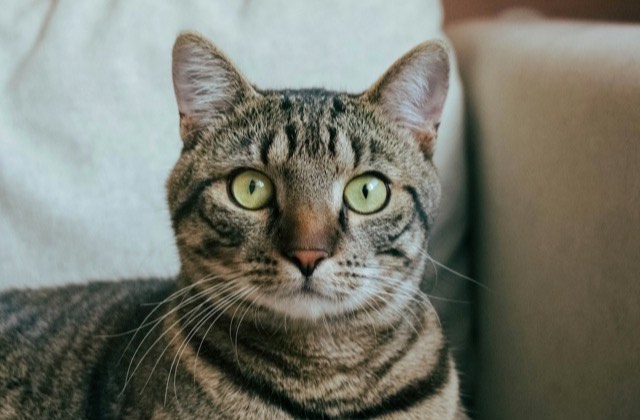
Feeding a Domestic Shorthair Cat: Needs and the Right Choices
Published by Planète Pets · managing editor: Clément Lacaille · how our guides are written
The domestic shorthair is the most common cat in our homes. Hardy and adaptable, it is still a strict carnivore, whose diet must rest on animal protein. That is a biological requirement, not a preference: the work of A. Hewson-Hughes and colleagues, published in 2011, showed that cats spontaneously regulate their intake by favouring protein. Our benchmarks are in the cat food section.
Contents · 4 sections
A strict carnivore, first and foremost
A good food for a domestic shorthair shows a majority of animal protein and a limited share of carbohydrate. Check that meat or fish tops the ingredient list, and be wary of foods too rich in cereals. These needs are the same at any age, with formulas suited to kitten, adult then senior, as our guide to choosing kitten food details.
Dry, wet or mixed feeding
Dry food is convenient and good for upkeep but very dry; wet food, rich in water, supports hydration and satiety. For many domestic shorthairs, mixed feeding combines the advantages of both. The full comparison is developed in our guide to wet vs dry cat food.
Hydration, a key point
Cats naturally drink little: a too-dry diet encourages urinary problems over the long term. Provide several water points, consider a fountain and include wet food in the ration. Finally, watch portions: a low-activity indoor cat quickly gains weight if food is left out unchecked. This framework applies across our whole cat hub.
Frequently asked questions
Does a domestic shorthair have special needs?
No, its needs are those of any cat: a strict carnivore diet, rich in animal protein, suited to its age and activity.
Should you give dry or wet food?
Both are possible; mixed feeding often works well, pairing the upkeep of dry food with the hydration of wet food.
How do you avoid overweight?
Measured portions, few treats and activity. See the domestic shorthair profile.
In our shop, for this use: Raised-edge silicone feeding mat for cats (€25.90) · the whole shop
For the gear, at Le Félin (same family, zero commission): Arbre à chat fleur (from €149.99)
This guide is part of Planète Pets’s Cats universe. Our advice is general in nature: for any health concern, your veterinarian remains the only reference.