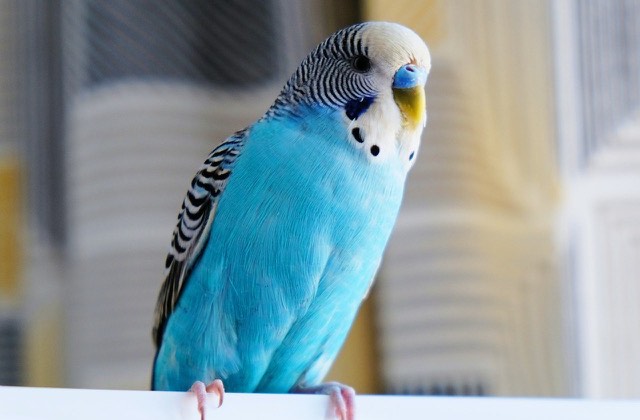
Lovebird or budgie for beginners: which bird needs the most company?
Published by Planète Pets · managing editor: Clément Lacaille · how our guides are written
Sold side by side at the pet store, lovebirds and budgies do not have the same tolerance for being alone at all. All our guides on choosing your first bird are gathered in the bird accessories section.
Contents · 5 sections
What is the temperament difference between the two?
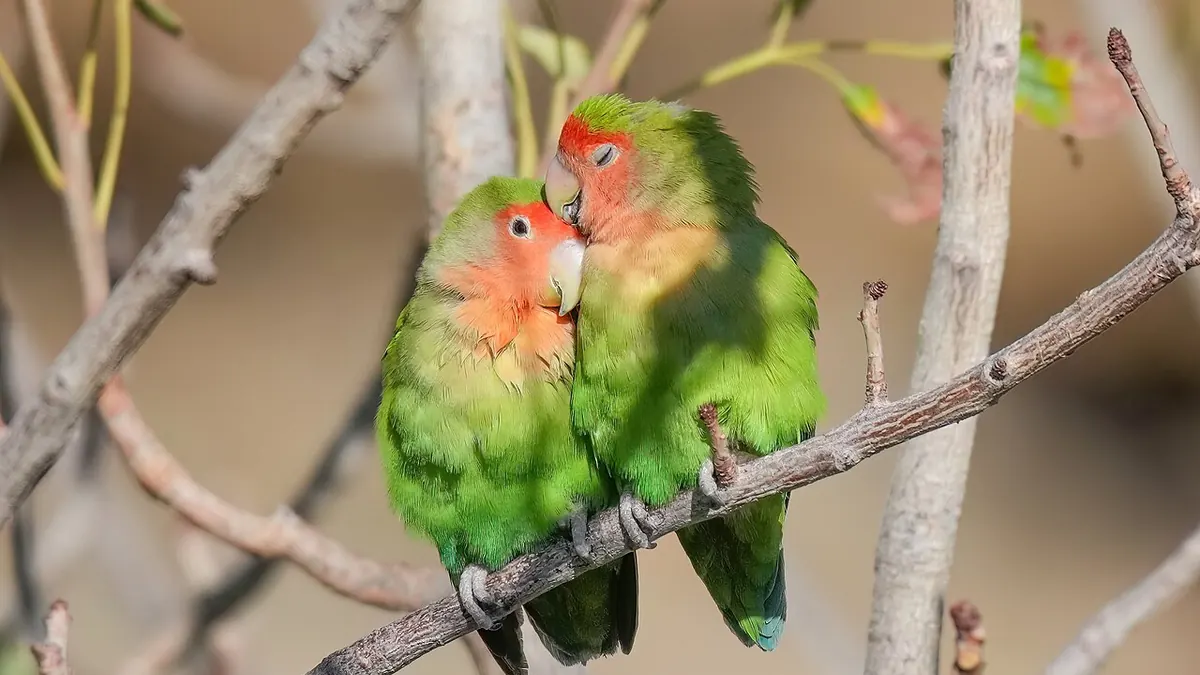
The lovebird (genus Agapornis) forms an extremely tight, territorial pair bond: in the wild as in a cage, it tolerates the presence of another bird poorly unless that bird is its actual partner, and can be openly aggressive toward companions of a different species. The budgerigar is more flexible: gregarious but less exclusive, it more readily accepts living in a small group or shifting part of its social need onto its owner.
Can a lovebird live alone?
This is strongly discouraged. A solitary lovebird, deprived of a same-species partner, more easily develops repeated screaming, hand aggression or feather plucking. A study by Nicol and Pope, published in 1993 in the journal Animal Welfare, compared budgerigars housed alone to budgerigars living in a group in an aviary: the solitary birds vocalized noticeably more, a classic sign of social distress, while the group-housed birds were more active and ate more (original study). If this effect already shows up in a species considered more flexible like the budgie, it is likely even more pronounced in a lovebird, whose pair bond is biologically more rigid.
How do they behave once tamed?
A single, well-socialized budgie readily shifts its attachment onto you and generally stays easy to handle. A single lovebird, on the other hand, can become excessively attached to its owner, jealous and sometimes prone to biting other members of the household — a well-known over-bonding pattern in this species when no natural partner is available.
Which one should you choose to start out?
- You're often away: a pair of budgies, which adjusts more easily to group life.
- You're around a lot and want a strong bond with one bird: a single budgie stays simpler than a single lovebird.
- You're ready to adopt a pair from the start: a lovebird makes a wonderful companion to watch, even without much handling.
See our related comparison on one budgie or two and on choosing between a budgie and a cockatiel to fine-tune your decision.
Frequently asked questions
Can you keep a single lovebird if you're home a lot?
It's possible but risky: even several hours of daily interaction rarely replace a real same-species partner for this species, which is known for behavioral issues when kept alone.
Can a lovebird and a budgie share the same cage?
No, lovebirds are often aggressive toward other species in a confined space; cohabitation can only be attempted in a spacious aviary, with several feeding stations.
What budget should you plan for a pair?
Budget €30–70 per lovebird and €15–40 per budgerigar from a reputable breeder, with the cage and accessories shared for the pair. All our bird guides are gathered on the bird hub.
In our shop, for this use: Flexible pastel cotton rope perch, 35 cm, for budgies and cockatiels (€32.90) · the whole shop
This guide is part of Planète Pets’s Birds universe. Our advice is general in nature: for any health concern, your veterinarian remains the only reference.