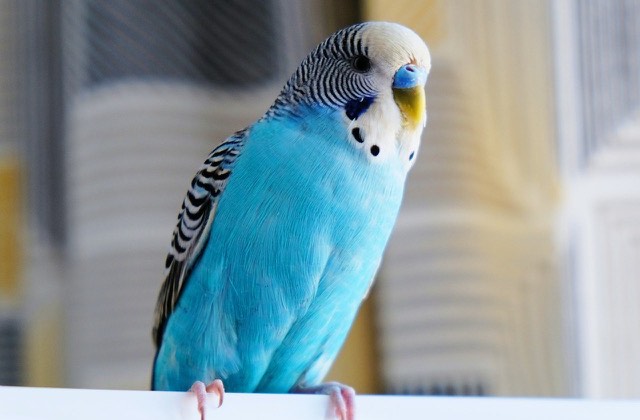
Introducing Two Birds to Form a Pair: The Protocol to Follow
Published by Planète Pets · managing editor: Clément Lacaille · how our guides are written
Putting two unfamiliar adult birds together with no intermediate steps usually causes injuries rather than a pair bond. The benefits of keeping birds in twos are explained in our article on one budgie or two; here is how to actually make the introduction work.
Contents · 6 sections
What the research shows about pair bond formation
A study by Hile, Plummer and Striedter, published in 2000 in Animal Behaviour, paired up male and female budgerigars that were completely unfamiliar with each other and tracked how their contact calls evolved: on average, 2.1 weeks were enough for a pair to develop a shared call, with eight out of nine males imitating their assigned partner's call. This finding confirms that pair bonding is a gradual, observable process, not an instant event that plays out at the first meeting.
Start with separate, visible cages
Set the two birds up in separate cages placed a short distance apart for one to two weeks. This phase lets each bird get used to seeing and hearing the other with no risk of injury, and lets you already spot signs of mutual interest, such as vocalizations directed at the neighboring cage.
Confirm health status before any contact
No introduction should take place before a full health quarantine is complete for the newcomer, as described in our guide to new bird quarantine. Introducing a bird carrying a latent pathogen puts the whole household at risk, including the future partner.
The first meeting on neutral ground
Once you observe positive signals from the separate cages, arrange a first meeting on neutral ground, away from any territory already claimed by either bird, under constant supervision. A mirror or a single toy should be removed from this space to avoid needless competition, as explained in our article on a mirror for a single budgie.
Recognizing a pair bond forming
Mutual preening accepted without aggression, relaxed postures side by side, and contact calls that begin to sound alike are the signals indicating that permanent cohabitation can be considered, usually after several successful meeting sessions.
- Separate cages first: one to two weeks of mutual visibility with no direct contact.
- Quarantine completed: a non-negotiable health condition before any meeting.
- Neutral ground: never inside either bird's usual cage.
- Signs of success: mutual preening, relaxed postures, calls converging.
Following these gradual steps, rather than putting two birds straight into the same cage, meaningfully improves the odds of a real, stable pair forming. General enrichment principles are covered in our bird toys and enrichment section.
Frequently asked questions
How long can it take for a pair to fully form?
It varies by species and individual, from a few weeks in small psittacines to several months in larger parrots with more complex bonds.
Will two birds that keep ignoring each other after several weeks eventually accept each other?
Not necessarily: persistent indifference or repeated signs of aggression often signal an incompatibility that is better respected than forced.
Should you keep monitoring the pair once permanent cohabitation is set up?
Yes, for at least the first few weeks, to confirm that sharing food, perches and the nest is going smoothly without lasting tension.
An accessory from our shop for this use: Wooden plug board, puzzle toy for parrots (€19.90) · the whole shop
This guide is part of Planète Pets’s Birds universe. Our advice is general in nature: for any health concern, your veterinarian remains the only reference.