How Many Toys Should Go in a Bird Cage Without Overloading It?
Published by Planète Pets · managing editor: Clément Lacaille · how our guides are written
An overloaded cage cuts into the flight space available and can create stress rather than enrichment, even when the intent behind it is good. Three to five varied toys, rotated regularly, generally offer more stimulation than a dozen objects crammed in at once.
Contents · 6 sections
How many toys should you plan for by cage size?
- small cage (budgie, finch): two to three toys, leaving real central flight space;
- medium cage (cockatiel, lovebird): three to four toys of varied sizes and textures;
- large cage or aviary (parrot): four to six toys spread out without blocking the main perches;
- always leave a clear path between the perches, feeder and water dish.
Why does an overloaded cage cause problems?
A cluttered space limits movement and short flights, both essential to a bird's physical wellbeing, and can also make reaching food or water harder. General layout guidelines are covered in bird play gyms and perch stands, which complement a well-organized cage.
How do you run an effective toy rotation?
Keeping two to three fixed toys and rotating the rest every one to two weeks maintains novelty without piling up too many objects at once. This rotation follows the principles covered in parrot toys and puzzles, especially for species that lose interest in a familiar object quickly.
Should you mix different toy types at the same time?
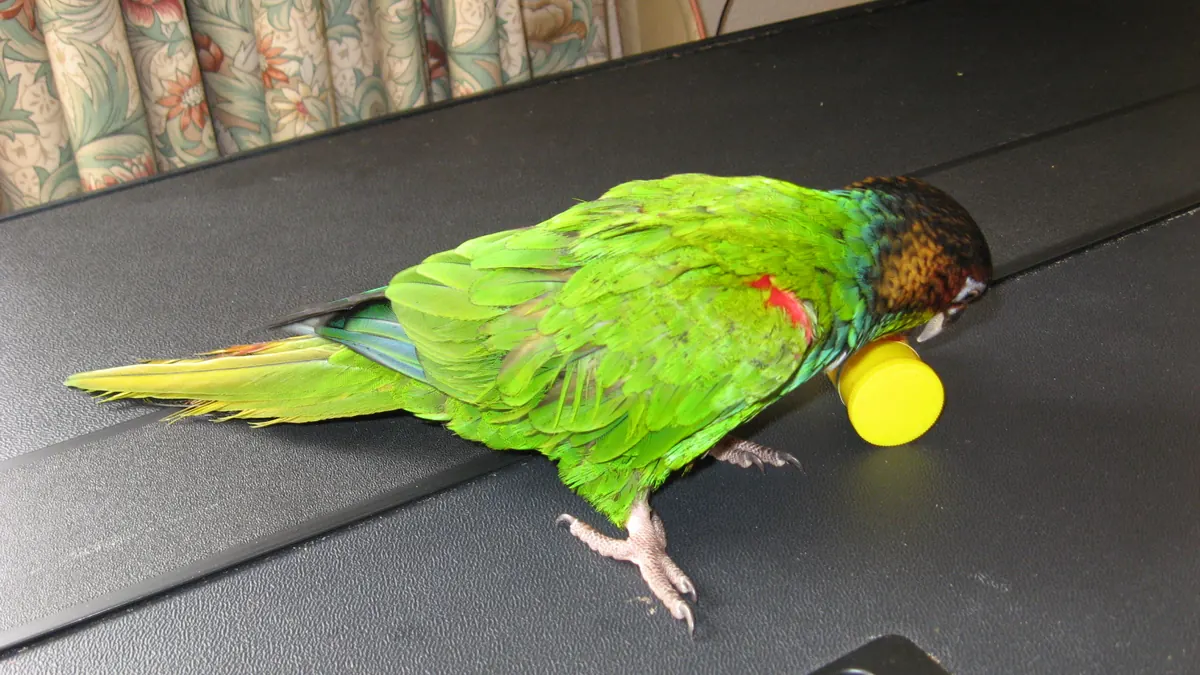
Yes, combining a chew toy, a foraging toy and a swinging accessory stimulates different behaviors instead of piling up similar objects. Our bird toys and enrichment guide covers categories worth rotating by species.
Can a bird lose interest in an overly full cage?
Yes, an environment saturated with objects can actually reduce active exploration, with the bird settling for a limited space rather than using the whole cage.
Frequently asked questions
Should all toys be removed at night?
Not necessary for most birds, except for a noisy or unstable toy that could disturb the sleep covered in sleep and darkness for birds.
Should toys hanging from the cage ceiling be limited?
Yes, one or two overhead is enough to avoid blocking vertical movement between perches.
How can you tell a cage is too full?
If the bird struggles to fly from one perch to another without dodging several objects, the cage likely holds too many toys at once.
This guide is part of Planète Pets’s Birds universe. Our advice is general in nature: for any health concern, your veterinarian remains the only reference.