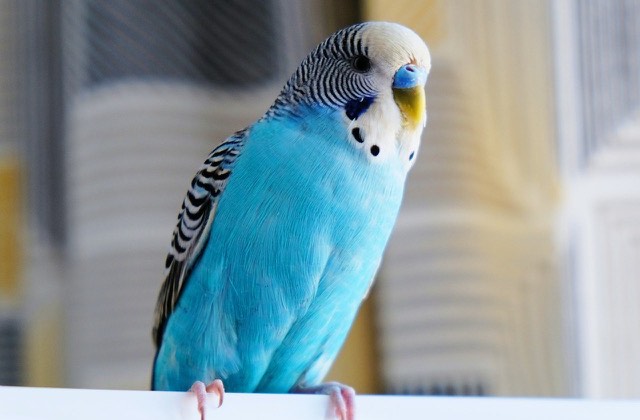
First free flight outside the cage: how to bird-proof the room before letting go
Published by Planète Pets · managing editor: Clément Lacaille · how our guides are written
Before the very first free flight, close doors and windows, draw the curtains or lower the blinds, switch off fans and stovetops, and shut other household pets in a separate room: a bird discovering the space for the first time often flies erratically, without spotting the obvious dangers around it.
Contents · 5 sections
Why do windows remain the number-one danger?
A landmark study by Daniel Klem, published in 1990 in the Journal of Field Ornithology, analysed several hundred bird collisions with window glass and found that almost every fatal case involved intracranial haemorrhage, caused by an impact the bird never anticipates against a transparent or reflective surface. A pet bird unfamiliar with the home layout is exposed to the same reflex: it perceives glass as a simple continuation of the room. Lasting solutions to mark windows are covered in our article bird-safe window screens.
What other hazards should you check before letting the bird out?
- Fans and ceiling blades fully stopped, never just slowed down.
- Hot pans, lit burners and candles out of reach or switched off.
- Mirrors and reflective surfaces temporarily covered during this first discovery.
- Other household pets shut in a separate room, even the calmest ones.
- Small trap spaces (behind a fridge, under a sofa) blocked off or watched.
What does a first free-flight session actually look like?
Choose a modestly sized room rather than a large living room for the very first time, leave the cage open and visible as a safety landmark, and keep the session to a few calm minutes rather than a long exploration. A stressed bird that cannot find its way back to the cage may land on the floor or hide: it is better to watch without chasing it.
What if the bird lands somewhere inaccessible?
Turn off the lights except the one near the open cage, which then becomes the most attractive spot in the room, and give it time to come back on its own rather than forcing it. The full response for a more serious escape is covered in our article lost bird: prevention and search.
Frequently asked questions
At what age can a bird start free flight?
Once its flight feathers are fully developed and it already handles short trips within its cage or play stand confidently, generally after full weaning.
Should wing clipping be stopped before introducing free flight?
That is a choice to discuss with an avian vet based on your home and its risks; the arguments for both approaches are detailed in our article should you clip your bird's wings.
How long should the first session last?
A few minutes are enough for a gentle first discovery; several short, positive sessions beat one long one that tires or stresses the bird.
An accessory from our shop for this use: Parrot outdoor harness with elastic lead (€25.90) · the whole shop
This guide is part of Planète Pets’s Birds universe. Our advice is general in nature: for any health concern, your veterinarian remains the only reference.