Travelling with a Weimaraner: car, crate and rules
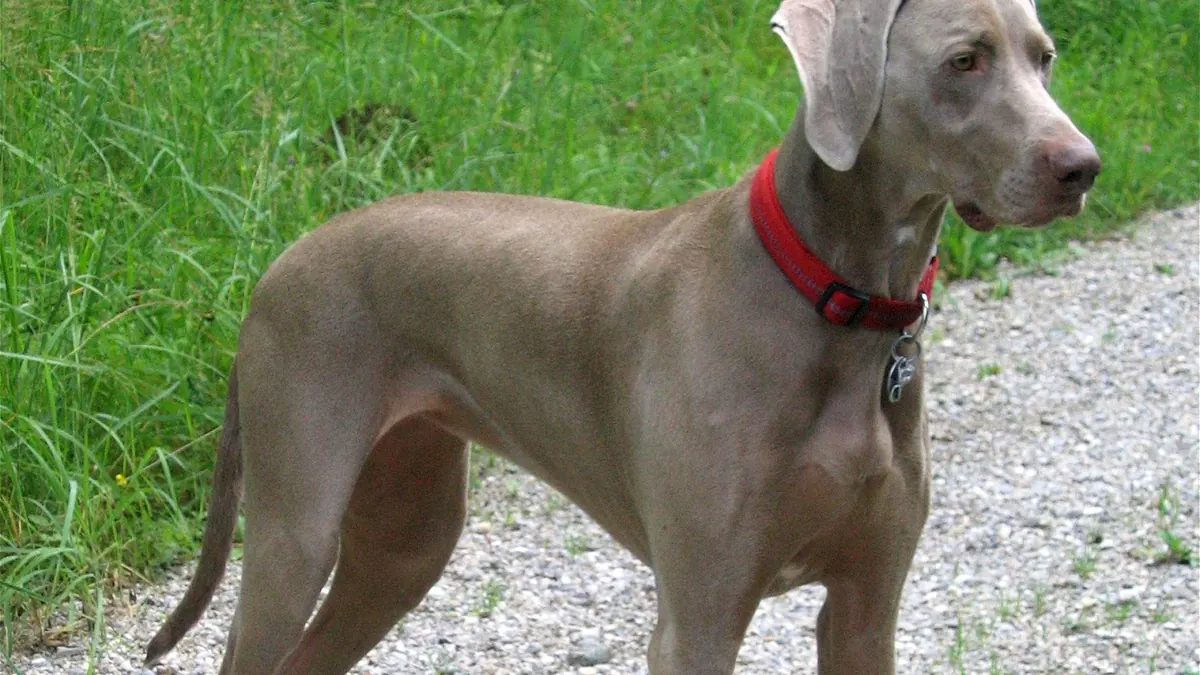

Weimaraner: Budget for an XL travel crate or a boot divider: at 30 kg and more, an unrestrained dog is a real hazard under braking. A sturdy Y-harness with a back handle helps control this powerful dog, which pulls readily early in training.
Our practical guide, to download: Gundog Training the Positive Way: Whistle, Retrieve, Pointing and Steadiness, Step by Step — 42-page PDF, instant download. Get my guide — €29
In short: Large dog of 57 to 70 cm and 25 to 40 kg, short silver-grey coat, very high energy. A large silver-grey hunter, brilliant, powerful and highly demanding of human company. Among the breeds most exposed to bloat: two split meals and strict rest around exercise, no exceptions.
In the car with a Weimaraner
At 25 to 40 kg, the only genuinely safe option is a crash-tested crate of about 110 cm secured in the boot — failing that, a solid partition grille. An unrestrained dog of this weight becomes a projectile under braking — and a possible fine for distracted driving.
Trains, planes, holidays
Too big for the cabin, the Weimaraner flies in the pressurised hold in an IATA-approved crate — an ordeal to reserve for unavoidable trips. On trains, a muzzle and lead meet the rules. Get it used to the crate weeks before departure: left open at home with treats inside, it becomes a den rather than a trap.
Identification and good habits
Before any departure, check the trio: microchip, up-to-date vaccines and an EU passport for trips abroad. In warm weather a Weimaraner never stays in a parked car: fifteen minutes is enough for tragedy.
Frequently asked questions
What crate size for a Weimaraner?
Aim for 110 cm long for an adult: it must stand head-up and turn around freely — and for flying, only the model’s IATA dimensions count.
Can a Weimaraner fly in the cabin?
No, it exceeds the cabin limit (8 kg including the bag): it travels in the pressurised hold in an IATA crate — avoid it when you can.
The guides that apply to you
- Dog sick in the car: understanding and beating motion sickness
Drooling, panting, vomiting: motion sickness mainly affects young dogs. Step-by-step habituation, boot setup and gestures that reduce nausea.
- Dog car barriers: the guide to choosing the right one
Universal grille, vehicle-specific or boot net: how to keep your dog safely separated from the cabin and travel with peace of mind.
- Hot pavement: protecting your dog's paws in summer
In summer, pavement can top 50 °C and burn a dog's paw pads in seconds. How to test the ground, adjust walk times and protect the paws.
- Boarding your dog for the holidays: kennel, foster family or pet-sitter?
Going away without your dog: comparing boarding kennels, foster families and home pet-sitters to choose the calmest option for your dog's temperament and your budget.