Grooming and care for a Shiba Inu: brush, bath, health
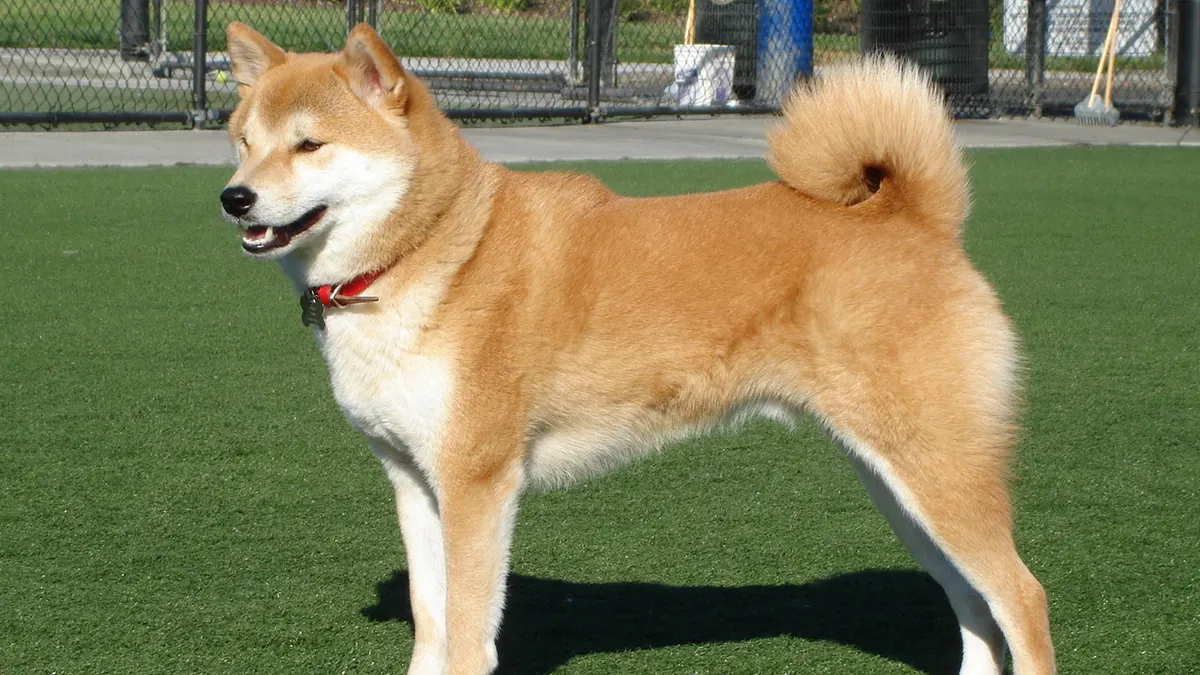
Shiba Inu: Almost cat-like in cleanliness, it licks itself, avoids puddles and barely smells: rare baths and weekly brushing suffice. Twice a year the shed turns the house into an undercoat blizzard: daily slicker brushing and a serious vacuum cleaner.
All your small pets in one place, ready to print: Course: Train Your Dog in 8 Weeks — 2 PDF guides (85 pages in English (86 in French)), in English and French, instant download. Get my bundle — €49
🩺 Our hygiene and health advice stays general: it never substitutes for an examination by a veterinarian, the only person qualified to advise on your animal.
In short: Small dog, 35 to 41 cm and 8 to 11 kg, short dense double coat, medium to high energy, very independent. A small, clean and wildly independent primitive dog, famous for its protest scream. An expert at backing out of a standard harness: a three-strap escape-proof model is almost mandatory.
Coat care, brush by brush
Brush-wise, the Shiba Inu calls for a soft-pin brush, once or twice a week — and its seasonal moult is spectacular: for two to three weeks the undercoat comes out in handfuls and demands daily brushing. Start young, with short rewarded sessions: a dog that links the brush to a pleasant moment accepts grooming for life.
Baths, claws, ears, teeth
A bath every two to three months, or when genuinely dirty, with a dog-pH shampoo — never a human product. Check claws monthly — natural wear often does the job on such an active dog, inspect ears at the same time, and brush teeth two or three times a week.
Health watch-points for the Shiba Inu
In the Shiba Inu, the documented watch-points are: atopic dermatitis and luxating patella. Nothing inevitable, but they steer prevention — and at the first unusual sign, the vet decides, not the shop aisle. Life expectancy sits around 12 to 15 years.
Frequently asked questions
Which brush for a Shiba Inu?
For its coat, plan on a soft-pin brush, once or twice a week.
How often should a Shiba Inu be bathed?
Two to three months between baths is a good rhythm, muddy accidents aside; the shampoo, always, is a dog product.
The guides that apply to you
- Bull Terrier: hereditary nephritis is picked up by a urine test
A dominantly inherited kidney disease described as a model of Alport syndrome, bull terrier nephritis can be detected years before symptoms with a urine protein to creatinine ratio.
- Shiba Inu: GM1 gangliosidosis and why to insist on DNA-tested parents
Rare but fatal, GM1 gangliosidosis in the Shiba Inu is detected by a simple DNA test. What Japanese surveys actually measure in breeding stock, and what to ask a breeder for.
- Scottish Terrier: bladder cancer and the role of herbicide-treated lawns
The Scottish Terrier carries one of the highest bladder cancer risks among dog breeds. What a landmark US study on lawn herbicide exposure shows and how to reduce the risk.
- Leonberger: genetic polyneuropathy and the value of DNA screening
The Leonberger is one of the few breeds where a hereditary polyneuropathy has been pinned down at the genetic level. What an international study shows and how a DNA test helps guide breeding and monitoring.