Grooming and care for a Maltese: brush, bath, health
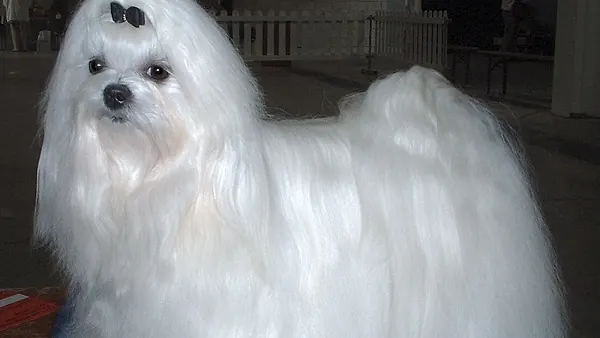

Maltese: Its white coat with no undercoat requires daily combing and pin brushing to prevent mats, plus regular cleaning around the eyes against reddish tear stains. A whitening shampoo, around 10 to 15 €, helps keep the coat bright.
All your small pets in one place, ready to print: Course: Train Your Dog in 8 Weeks — 2 PDF guides (85 pages in English (86 in French)), in English and French, instant download. Get my bundle — €49
🩺 The health watchpoints on this page are for information only: only a veterinarian can examine your animal and make a diagnosis.
In short: A miniature dog of 3 to 4 kg with a long, silky white coat and no undercoat, of moderate energy. A gentle, playful, delicate little dog, very close to its owners and made for indoor life. Its long, silky white coat with no undercoat sheds very little but shows everything: reddish tear stains around the eyes call for daily cleaning of the eye area.
Coat care, brush by brush
Plan, for a Maltese, on daily combing with a long-toothed comb then a slicker, or mats and tangles set in; note that its light shedding makes it easy to live with on the upkeep front. Start young, with short rewarded sessions: a dog that links the brush to a pleasant moment accepts grooming for life.
Baths, claws, ears, teeth
The Maltese’s bath comes round every four to six weeks, always with dog-pH shampoo, never your own products. Check claws monthly, inspect ears at the same time, and brush teeth two or three times a week.
Health watch-points for the Maltese
The breed is notably monitored for: patellar luxation and early dental problems. These predispositions are not a fate, but they shape preventive care — and any unusual sign belongs at the vet’s, not in a shop aisle. Life expectancy sits around 12 to 15 years.
Frequently asked questions
Which brush for a Maltese?
For its coat, plan on daily combing with a long-toothed comb then a slicker, or mats and tangles set in.
How often should a Maltese be bathed?
Count on a bath every month to six weeks; the coat demands it; the shampoo, always, is a dog product.
The guides that apply to you
- Leonberger: genetic polyneuropathy and the value of DNA screening
The Leonberger is one of the few breeds where a hereditary polyneuropathy has been pinned down at the genetic level. What an international study shows and how a DNA test helps guide breeding and monitoring.
- Why does my dog eat grass? What the research actually says
Dog eating grass: what two studies show about how common the behavior is, its link with vomiting, and the cases that should raise concern.
- Deworming a dog: how often, and how to do it stress-free
Roundworm, tapeworm: intestinal parasites affect a sizeable share of dogs, even well-monitored adults. Recommended frequency and methods to give a dewormer without a fight.
- Basset hound: primary glaucoma, eye screening and the cost of care
Abnormal iridocorneal angle, gonioscopy, glaucoma as an emergency and inherited thrombopathia: the basset hound documented weaknesses and what they cost.