Travelling with a Doberman: car, crate and rules
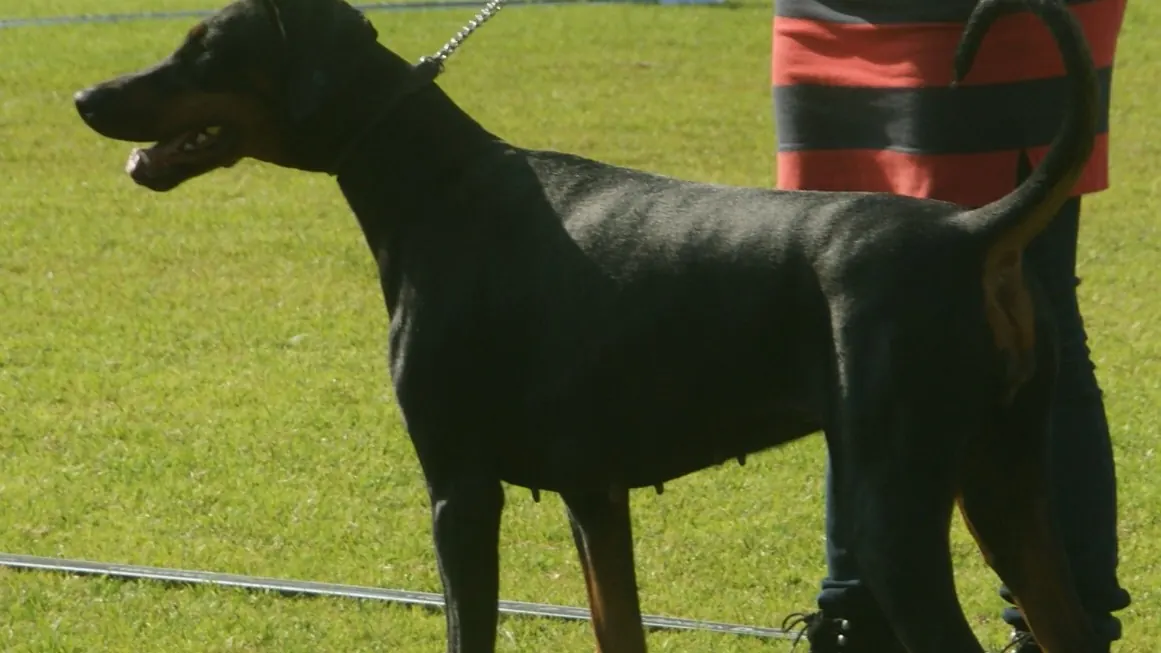

Doberman: A crate of about 100 cm or a certified car harness; get it used to travel young, as this vigilant dog can find hectic journeys stressful. Note that some local regulations classify the breed.
To go further, our PDF practical guides: Course: Train Your Dog in 8 Weeks — 2 PDF guides (85 pages in English (86 in French)), in English and French, instant download. Get my bundle — €49
In short: Large athletic dog of 30 to 45 kg, sleek coat with little undercoat, very high energy. An elegant, fast, vigilant dog, strongly bonded to its owner and craving intense activity. A sleek-coated athlete with little undercoat, it genuinely feels the cold: a lined winter coat is a near-essential accessory, unusually for a dog this size.
In the car with a Doberman
At 30 to 45 kg, the only genuinely safe option is a crash-tested crate of about 110 cm secured in the boot — failing that, a solid partition grille. An unrestrained dog of this weight becomes a projectile under braking — and a possible fine for distracted driving.
Trains, planes, holidays
Too big for the cabin, the Doberman flies in the pressurised hold in an IATA-approved crate — an ordeal to reserve for unavoidable trips. On trains, a muzzle and lead meet the rules. Get it used to the crate weeks before departure: left open at home with treats inside, it becomes a den rather than a trap.
Identification and good habits
Identification (microchip or tattoo) is mandatory, with vaccinations up to date for boarding or border crossings (EU passport, rabies shot). In hot weather, never leave a Doberman in a parked car, even “for five minutes”: the cabin turns lethal within a quarter of an hour.
Frequently asked questions
What crate size for a Doberman?
Aim for 110 cm long for an adult: it must stand head-up and turn around freely — and for flying, only the model’s IATA dimensions count.
Can a Doberman fly in the cabin?
No, it exceeds the cabin limit (8 kg including the bag): it travels in the pressurised hold in an IATA crate — avoid it when you can.
The guides that apply to you
- Leash-related injuries: what 422,659 US emergency department visits reveal
A twenty-year study of US hospital data quantifies the injuries leashes cause to owners, adults and children alike, and identifies who is most at risk.
- Cycling with your dog: basket, trailer or handlebar bag, which one?
Basket, trailer or handlebar bag: how to safely cycle with your dog depending on weight, age and the budget to plan for.
- Lost dog: what actually brings one home, according to two survey datasets
Neighbourhood searching 49 %, coming home alone 20 %, contact through identification 15 %: two US surveys quantify how lost dogs are recovered, with a median two-day timeline.
- How to teach your dog recall: the step-by-step method
How to teach a reliable dog recall: a fresh recall cue, a long line, recall games and a progression from home to garden to park on a line to off-leash, without a shock collar.