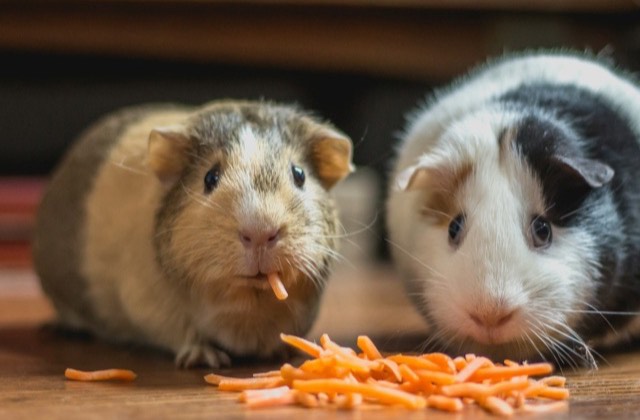
Guinea pigs and petting: what research shows about stress
Published by Planète Pets · managing editor: Clément Lacaille · how our guides are written
A guinea pig that stays still while being petted isn't necessarily relaxed. A study by Wirth, Gebhardt-Henrich, Riemer, Hattendorf, Zinsstag and Hediger, published in 2020 in the journal Physiology & Behavior, used thermography to track the eye temperature of animals petted during animal-assisted therapy sessions: the longer the petting lasted, the higher that temperature climbed, a marker of physiological stress (see the study). Find our other tips in the care and grooming section.
Contents · 4 sections
What the thermography shows
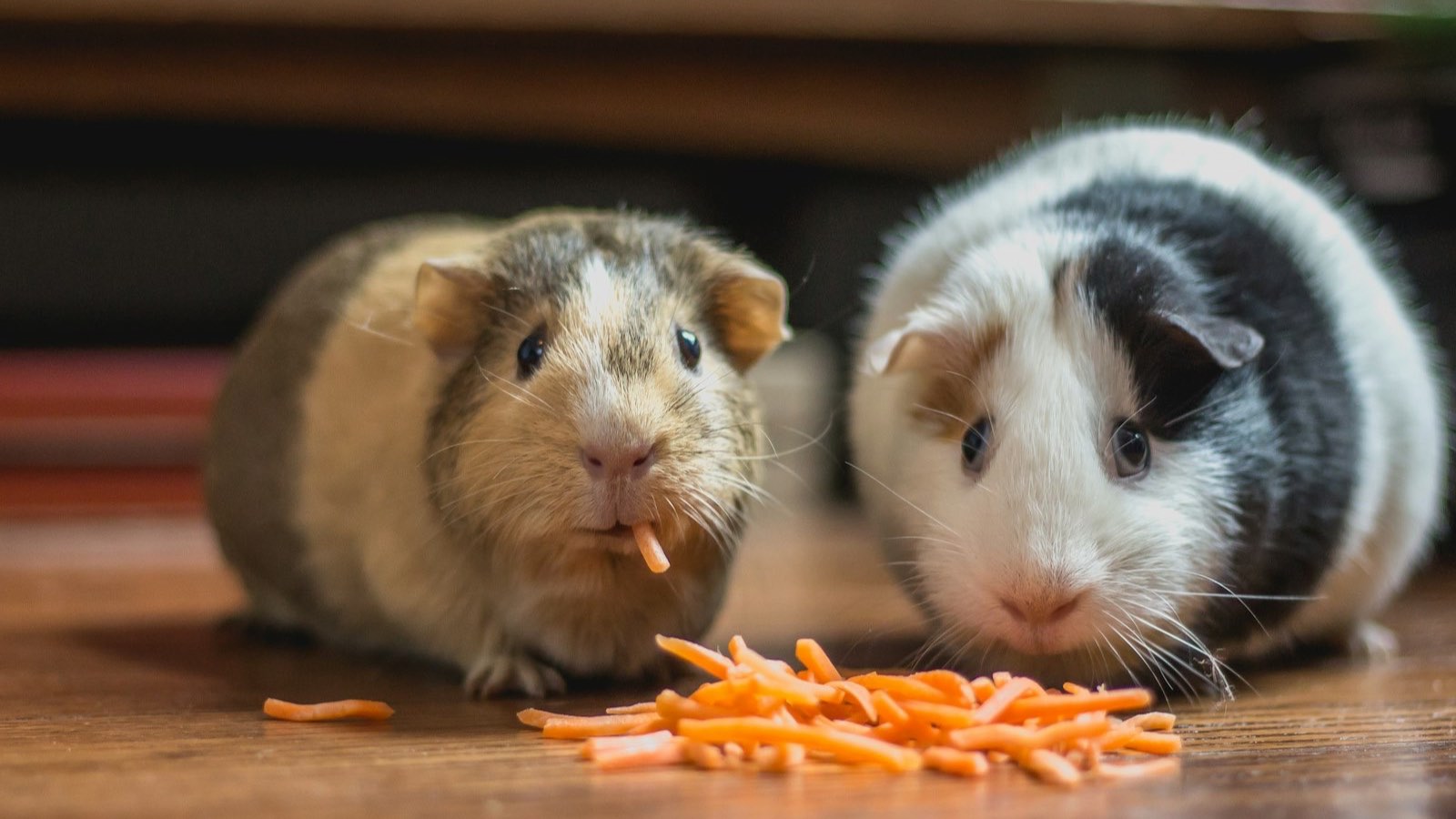
The researchers also observed that time spent eating dropped during interaction sessions with a human, compared with periods without contact: further evidence that even calm, well-intentioned handling represents a form of demand on the animal, not simply a shared moment of relaxation.
Respecting the need to retreat
In practice, this doesn't mean avoiding contact altogether, but rather pacing it: favor short sessions, let the animal withdraw to a hideout if it wants to, and never hold it in place by force. Having a cage-mate also reduces this stress, as our article on guinea pigs alone or in pairs explains. An environment rich in hideouts and activities, covered in our guinea pig enrichment guide, also helps the animal settle back down after handling.
A stress worth keeping in perspective
This rise in temperature doesn't mean petting should be abandoned altogether — it remains essential for getting the animal used to handling and spotting health issues by touch. The key is watching for signs of discomfort, such as repeated escape attempts or high-pitched squeals, rather than relying solely on the animal's apparent stillness.
Frequently asked questions
Is a still guinea pig necessarily calm during petting?
Not always: stillness can also reflect a freeze response rather than genuine relaxation, which is why short, regular sessions beat long handling stretches.
Should petting stop if the animal seems stressed?
It's better to shorten the session and try again later, always giving the animal the option to retreat to a hideout.
Should children avoid handling a guinea pig?
No, but supervised, brief and gentle handling is preferable, and teaching a child to recognize the animal's signs of discomfort helps.
An accessory from our shop for this use: Bubble-window carrier backpack for dwarf rabbit, guinea pig or ferret (€47.90) · the whole shop
This guide is part of Planète Pets’s Rodents universe. Our advice is general in nature: for any health concern, your veterinarian remains the only reference.