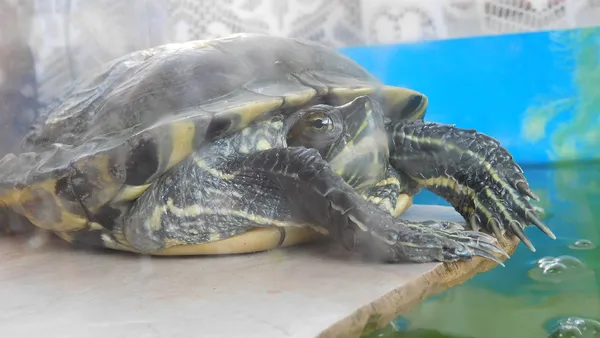
How much does a red-eared slider cost per year? Real budget
Published by Planète Pets · managing editor: Clément Lacaille · how our guides are written
A red-eared slider costs between 300 and 500 € a year once the initial setup is paid off: electricity (filtration, heating, UVB) is by far the heaviest item, well ahead of food. You will find all our recommended gear in the reptile accessories section. An undersized or poorly filtered aquaterrarium can push that bill up by 30 to 50 % more.
Contents · 5 sections
What is the biggest expense item?
Electricity dominates by far: a powerful filter sized to the tank runs 24/7, along with the basking lamp and the UVB fixture. Expect 150 to 250 € of electricity a year for a 300 to 400 litre tank, more if the aquaterrarium sits in a cold room.
How much does food cost over a year?
Specific pellets, fish, dried shrimp and aquatic greens add up to 60 to 100 € a year for an adult, a modest budget compared with heating. Watch out for overfeeding: an overfed turtle fouls the water faster and puts more strain on the filter.
What upkeep costs should you plan for?
- Replacing filter media: 30 to 60 € a year;
- Replacing the UVB tube: every 6 to 12 months, 20 to 40 €;
- Basking bulb: 10 to 20 € a year;
- Water treatment products: 20 to 30 € a year.
Keeping a regular eye on the electrical setup often saves money without cutting into the animal's welfare.
How do you cut the bill without harming the turtle?
Insulating the aquaterrarium from draughts, choosing a correctly sized filter pump from the start, and grouping plugs on a timer-controlled power strip all limit waste. It is worth spending a bit more upfront on properly sized equipment than dealing with repeated breakdowns and premature replacements.
Frequently asked questions
Does a red-eared slider cost more than a bearded dragon?
The yearly budget is comparable, but the split differs: the aquatic species weighs mainly on filtration and electricity, the bearded dragon more on live insects.
Can you cut back on heating in summer?
Yes, if the ambient temperature stays reliably above 22-24 °C, but always keep a safety thermostat in place.
How long does a red-eared slider live?
Well cared for, it can live past 20, even 30 years: a yearly budget to plan for over the very long term.
This guide is part of Planète Pets’s Reptiles universe. Our advice is general in nature: for any health concern, your veterinarian remains the only reference.