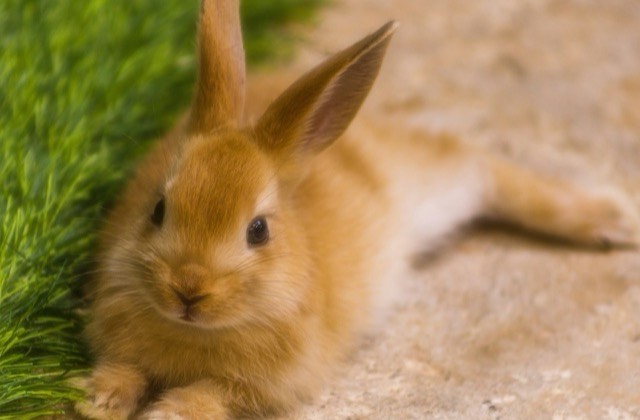
Flooring for a rabbit’s outdoor enclosure: pavers, gravel or lawn?
Published by Planète Pets · managing editor: Clément Lacaille · how our guides are written
Before buying mesh and a hutch, the choice of ground is the most lasting decision for a permanent outdoor enclosure: once laid, it doesn’t get replaced every year. Concrete pavers, compacted gravel and natural lawn offer very different comfort levels for a rabbit’s feet, since the species has no protective pads under its hind legs. A study by Wolf, Speers and Cappai, published in 2019 in Research in Veterinary Science, compared several bedding materials in farmed rabbits and found that the texture and absorbency of the substrate directly influenced how often pododermatitis lesions appeared. General dimensions to plan for an outdoor enclosure are covered in our rabbit bedding and habitat section.
Contents · 5 sections
Why does the ground matter so much for a rabbit?
Unlike a dog or cat, a rabbit rests its full weight on lightly padded metatarsals. Ground that’s too hard, too abrasive or permanently damp encourages foot sores, which build up gradually and often go unnoticed until an advanced stage.
Are concrete pavers a good choice?
They make cleaning easy and stop a rabbit from digging its way out, but their constant hardness wears down foot pads faster than a softer surface. Bare pavers are best kept to walkway zones or under the shelter rather than covering the whole enclosure.
Is gravel suitable?
Fine, rounded gravel drains rainwater well and cuts down on mud, but crushed gravel with sharp edges injures paws with every step. If gravel is used, it should stay covered with a layer of straw or hay that gets refreshed regularly.
Is natural lawn still the best option?
On the whole, yes: dense, well-drained lawn offers the most comfortable compromise, provided the enclosure is rotated across several zones so it doesn’t turn into damp bare earth. Our article on the secure outdoor rabbit run also covers fencing and predator protection.
- Concrete pavers: easy to clean, but best reserved for walkway zones rather than the full surface.
- Gravel: good drainage with rounded grains, cover with straw to protect paws.
- Natural lawn: the most comfortable compromise, rotate to avoid standing dampness.
- Key point: ground texture directly affects pododermatitis risk, whatever material is chosen.
In all three cases, a dry, raised spot (a board, or pavers covered in straw) should stay permanently available so the rabbit can rest away from ground moisture.
Frequently asked questions
Should wire mesh flooring be avoided entirely?
Yes, for permanent use: an all-mesh floor concentrates weight on narrow contact points and markedly raises the risk of foot sores compared with a solid floor.
Is a thick bedding layer enough on top of pavers?
A layer of straw or hay at least a few centimetres thick clearly improves comfort on hard ground, as long as it’s changed as soon as it gets damp.
Does the ground also affect a rabbit’s behaviour?
Yes, a rabbit in foot pain will spontaneously cut back on movement and exploration, which can be one of the first visible signs before lesions actually appear.
See it in the Planète Pets shop: 2-in-1 felt tunnel and hideout for rabbits and ferrets (44 × 60 cm) (€37.90) · the whole shop
See it in the Planète Pets shop: Modular plastic playpen for puppies and rabbits, 4 or 6 panels (from $87.90, ships from the US) · the US shop
This guide is part of Planète Pets’s Rabbits universe. Our advice is general in nature: for any health concern, your veterinarian remains the only reference.