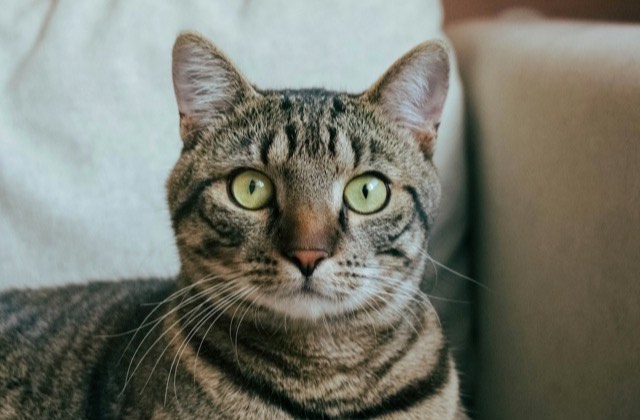
Feeding an Abyssinian: what an athletic, muscular cat really needs
Published by Planète Pets · managing editor: Clément Lacaille · how our guides are written
The Abyssinian ranks among the most active cat breeds: this small 3-5 kg frame spends much of its day climbing, running and exploring, which justifies a diet richer in protein and split across several meals rather than one large bowl. A study by Smit, Corner-Thomas, Weidgraaf and Thomas, published in 2022 in Applied Animal Behaviour Science, found that physical activity in domestic cats varies sharply with age and body condition, and tends to drop off markedly once cats reach maturity — a useful benchmark for adjusting an adult Abyssinian's intake, even though the breed's energy level is famously slower to fade than average. See the full breed profile on our Abyssinian page and more pointers in the food section.
Contents · 4 sections
Why does its activity level change the equation?
A cat that moves a lot burns more energy than a sedentary cat of the same weight, though that doesn't automatically justify an oversized portion: overestimating a genuinely active Abyssinian's real needs, and fattening it up in the process, is a common trap. Better to start from a high-quality, protein-rich, moderate-carbohydrate kibble and adjust the portion by tracking weight every four to six weeks rather than relying solely on the bag's feeding chart.
Should meals be split up?
Yes, and it's the change that matters most for this exploratory breed: 3 to 4 small meals a day, or even a programmable feeder (£25-£60), fits the rhythm of a cat that behaves as if it's hunting all day better than one or two large bowls. A slow-feeder bowl or a food-puzzle toy stretches out mealtime and channels some of that spare energy right when it's fed.
What budget should you plan for?
A premium kibble suited to an active cat generally costs £12-£20 a kilo, against £6-£10 for an entry-level range; the gap mainly reflects protein density and ingredient quality, both of which matter more for an Abyssinian than for a homebody cat. Budget roughly £25-£40 a month in kibble for an average-size adult, depending on the brand chosen.
Frequently asked questions
Does an Abyssinian gain weight easily despite being so active?
Yes, past a certain age its activity level can drop while its appetite doesn't follow suit, which is why regularly adjusting the portion to actual weight matters more than sticking to a long-standing habit.
Does it need a specific "active cat" formula?
Not essential: a good standard adult kibble, rich in animal protein, covers most cases; "active cat" isn't a regulated labelling category.
When should weight tracking start?
From adoption onward, with a regular monthly weigh-in: it's the only reliable way to spot gradual weight gain before it becomes a health issue, worth discussing with the vet if anything looks off.
An accessory from our shop for this use: Raised-edge silicone feeding mat for cats (€25.90) · the whole shop
For your cat, at Le Félin (same family, zero commission): Arbre à chat design moderne (from €119.99)
This guide is part of Planète Pets’s Cats universe. Our advice is general in nature: for any health concern, your veterinarian remains the only reference.