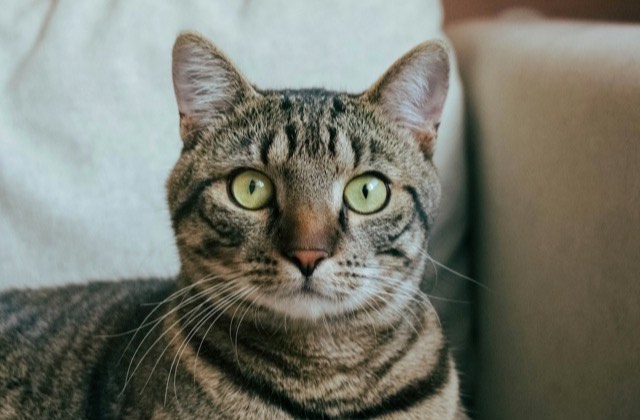
Chartreux cat: diet and weight management for a stocky, muscular breed
Published by Planète Pets · managing editor: Clément Lacaille · how our guides are written
The Chartreux doesn't have exotic nutritional needs, but its stocky build, dense muscle and fairly calm temperament make it a frequent candidate for weight gain if portions aren't adjusted. All our pointers are in the cat food section, on the cat page.
Contents · 6 sections
Why does the Chartreux gain weight so easily?
A study by Colliard, Paragon, Lemuet, Bénet and Blanchard, published in 2009 in the Journal of Feline Medicine and Surgery, identified the main risk factors for obesity in urban cats: neutering, exclusively indoor living, inactivity and free access to food. The Chartreux, often neutered young, kept indoors and naturally undemonstrative, tends to stack up several of these factors, without its dense muscle giving it away at first glance: under the short, dense coat, extra weight mostly shows up when you feel the ribs.
What guidelines apply to the daily ration?
A neutered, not-very-active adult Chartreux generally needs fewer calories than an intact or very playful cat: food formulated for neutered cats, higher in protein and lower in calories, is often a better fit than standard kibble. The ration should be calculated on the cat's ideal weight, not its current weight if it's already slightly overweight, and measured rather than poured by eye.
Does it need breed-specific food?
No formula is reserved for the Chartreux: what matters is matching the ration to age, neuter status and actual activity level, not the breed name on the pedigree. A stocky cat does benefit from a stable bowl that won't tip and easy access, since its build and muscle mass make some movements less agile than a leaner cat's.
How to limit weight gain without frustrating the cat
- Weigh the daily ration rather than filling the bowl by eye
- Split meals into several small portions to limit compensatory snacking
- Keep treats under 10% of daily calorie intake
- Weigh the cat once a month to catch any drift before it becomes a trend
- Offset the breed's natural calm with short but regular play sessions
Can play replace some of the dietary vigilance?
Not entirely, but it helps: a snuffle mat slows down eating while engaging the cat a bit more than a regular bowl, which suits a Chartreux that isn't naturally prone to spontaneous bursts of energy.
Frequently asked questions
Is the Chartreux genetically predisposed to obesity?
Nothing proves that formally: it's mainly the combination of neutering, indoor living and a calm temperament that explains the higher risk seen in this type of cat.
From what age should weight be monitored?
From neutering onward, generally between 5 and 8 months, since metabolism slows quickly after the procedure.
How can I tell if my Chartreux is overweight under its dense coat?
By feeling the ribs: they should be easy to feel under a thin layer of fat, without needing to press hard.
See it in the Planète Pets shop: Raised-edge silicone feeding mat for cats (€25.90) · the whole shop
For your cat, at Le Félin (same family, zero commission): Arbre à chat plafond (from €119.99)
This guide is part of Planète Pets’s Cats universe. Our advice is general in nature: for any health concern, your veterinarian remains the only reference.