Travelling with a Jack Russell Terrier: car, crate and rules
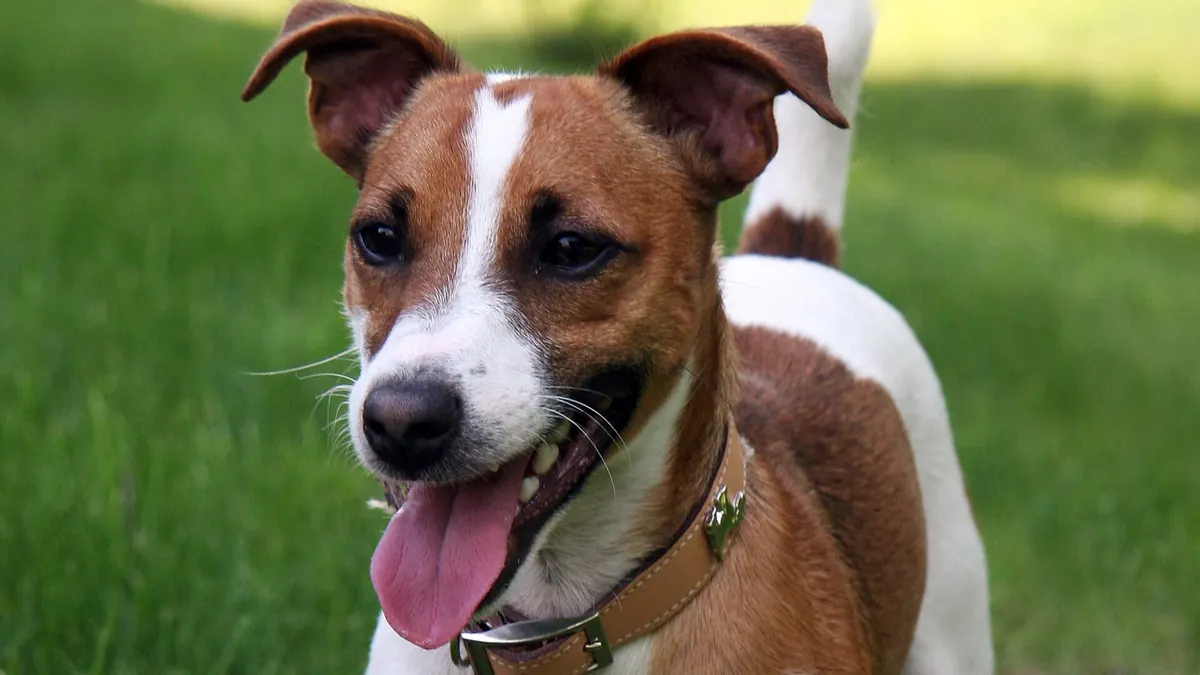

Jack Russell Terrier: In the car, a rigid size-S crate or a crash-tested safety harness restrains it effectively, as it copes poorly with sitting still. On walks, a 5 to 10 m long line is a good alternative to full off-lead freedom, since its chase instinct makes recall unreliable around game.
To go further, our PDF practical guides: Course: Train Your Dog in 8 Weeks — 2 PDF guides (85 pages in English (86 in French)), in English and French, instant download. Get my bundle — €49
In short: A small dog of 5 to 8 kg with an easy-care smooth or rough coat, very high energy and a strong hunting instinct. A tireless little hunting dog, ruled by a strong chase and digging instinct. An accomplished jumper and digger with unreliable recall around game, it demands a long line, serious fencing buried at the base and near-indestructible toys for its size.
In the car with a Jack Russell Terrier
At 5 to 8 kg, the Jack Russell Terrier travels in a rigid crate of about 60 cm placed in the rear footwell or strapped in, or an approved carrier bag for the lightest. An unrestrained dog of this weight becomes a projectile under braking — and a possible fine for distracted driving.
Trains, planes, holidays
Too big for the cabin, the Jack Russell Terrier flies in the pressurised hold in an IATA-approved crate — an ordeal to reserve for unavoidable trips. On trains, a muzzle and lead meet the rules. Plan the habituation: a Jack Russell Terrier that eats and naps in its open crate at home will treat it as a den, not a trap.
Identification and good habits
A Jack Russell Terrier travels chipped and vaccinated — EU passport and rabies shot whenever a border or boarding kennel is involved. And in summer, the absolute rule: never alone in the car, where temperatures turn lethal within minutes.
Frequently asked questions
What crate size for a Jack Russell Terrier?
Aim for 60 cm long for an adult: it must stand head-up and turn around freely — and for flying, only the model’s IATA dimensions count.
Can a Jack Russell Terrier fly in the cabin?
No, it exceeds the cabin limit (8 kg including the bag): it travels in the pressurised hold in an IATA crate — avoid it when you can.
The guides that apply to you
- Lost dog: what actually brings one home, according to two survey datasets
Neighbourhood searching 49 %, coming home alone 20 %, contact through identification 15 %: two US surveys quantify how lost dogs are recovered, with a median two-day timeline.
- Dog left alone in a car: what science says about the heat risk
Dog alone in a parked car: how fast the temperature climbs, why cracking the windows isn't enough, and the right reflexes to have.
- Flying with your dog: anti-stress products remain underused, a study finds
Among 635 owners whose dog had flown, most animals coped well, but the anti-stress options available to owners remain little used, a study finds.
- Microchip or tattoo: which ID actually gets a lost dog home?
Dog identification: what a study shows about return-to-owner rates depending on whether the dog is microchipped or not.