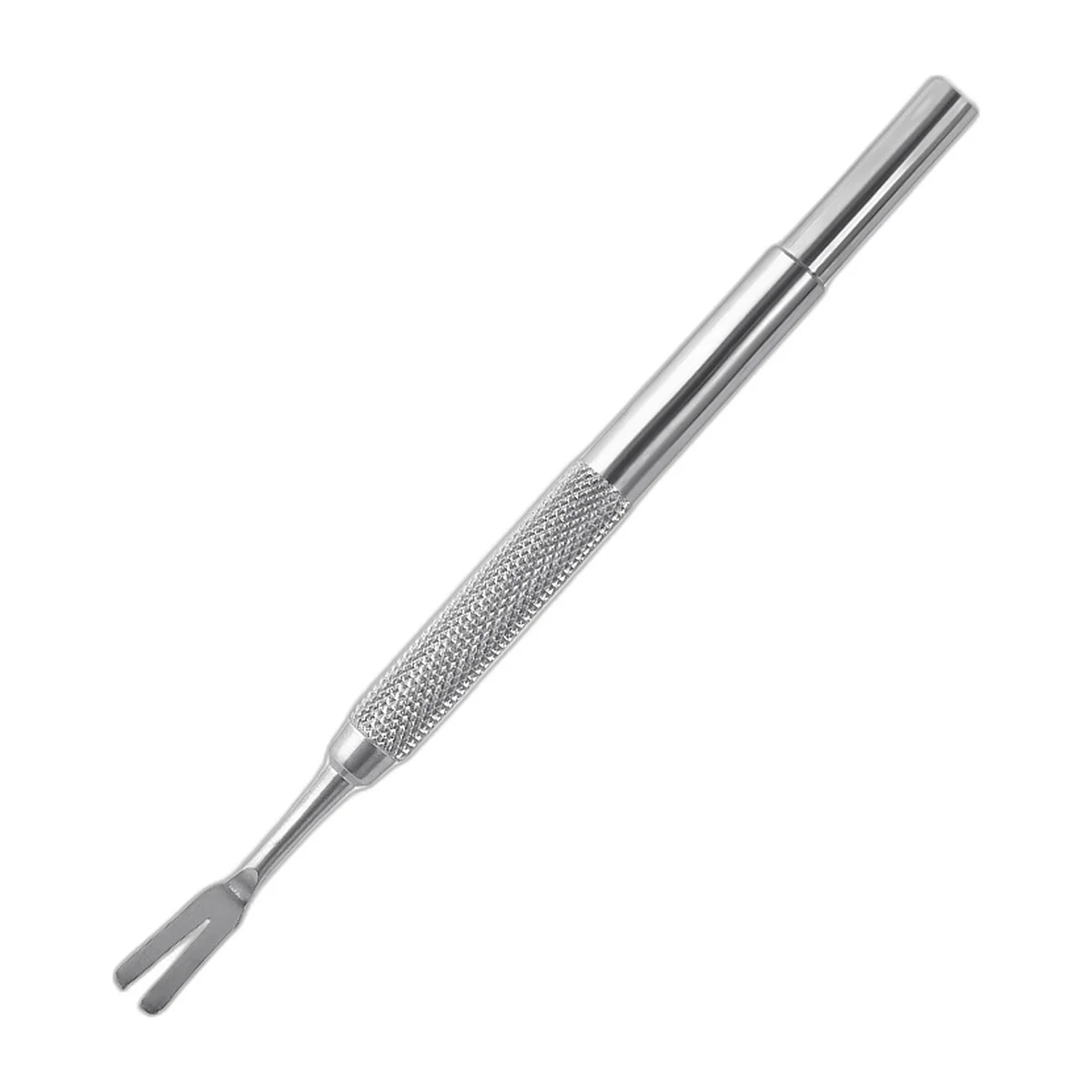
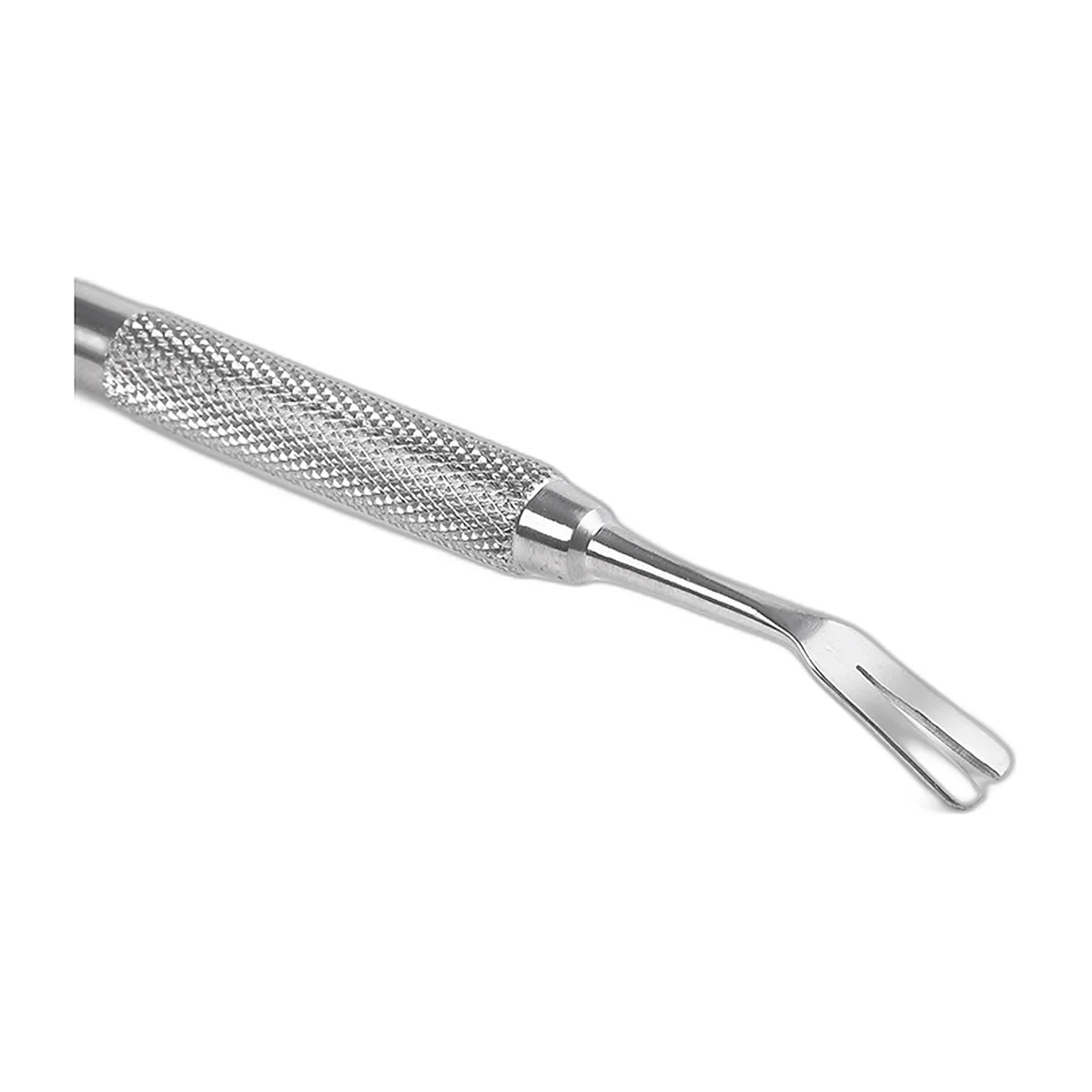
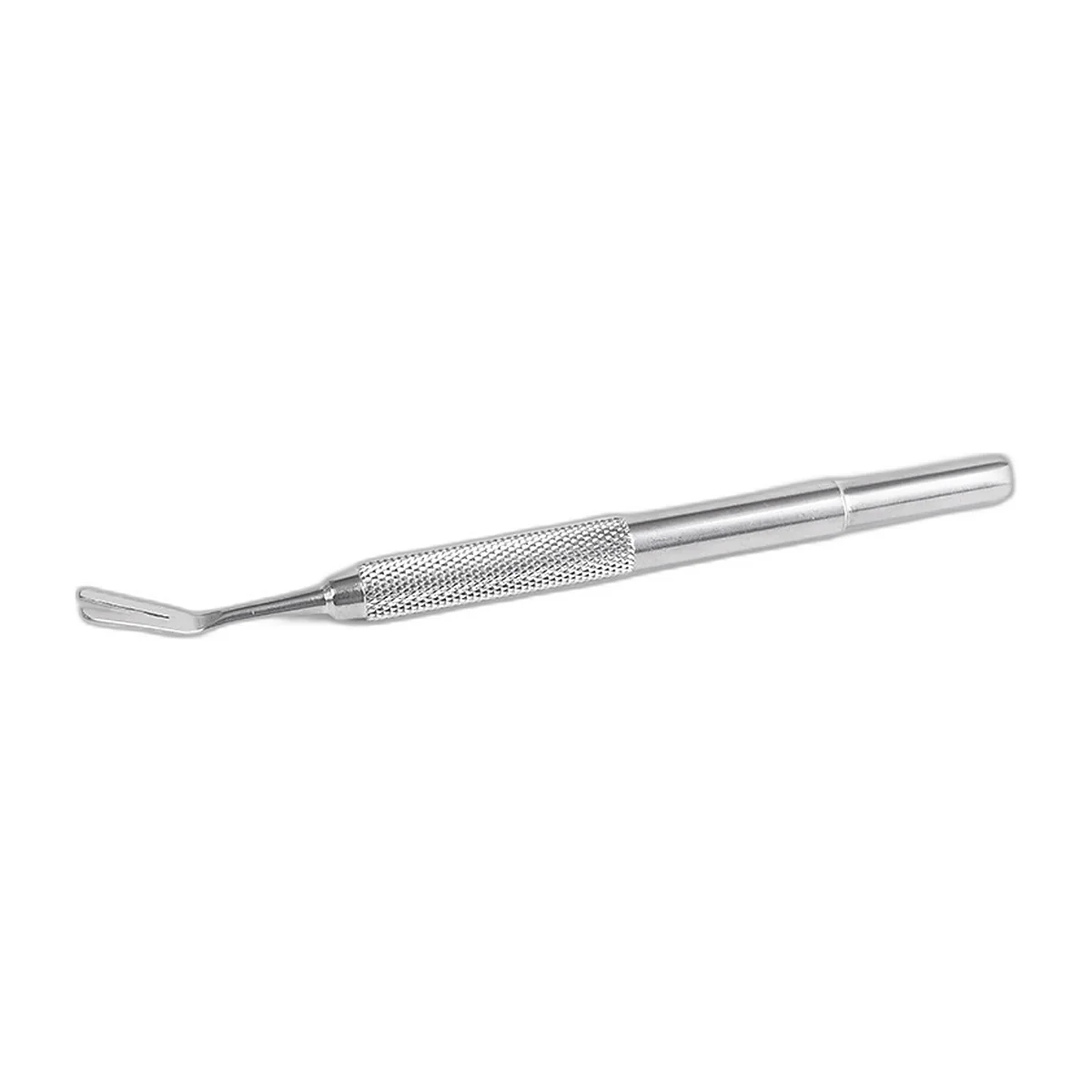
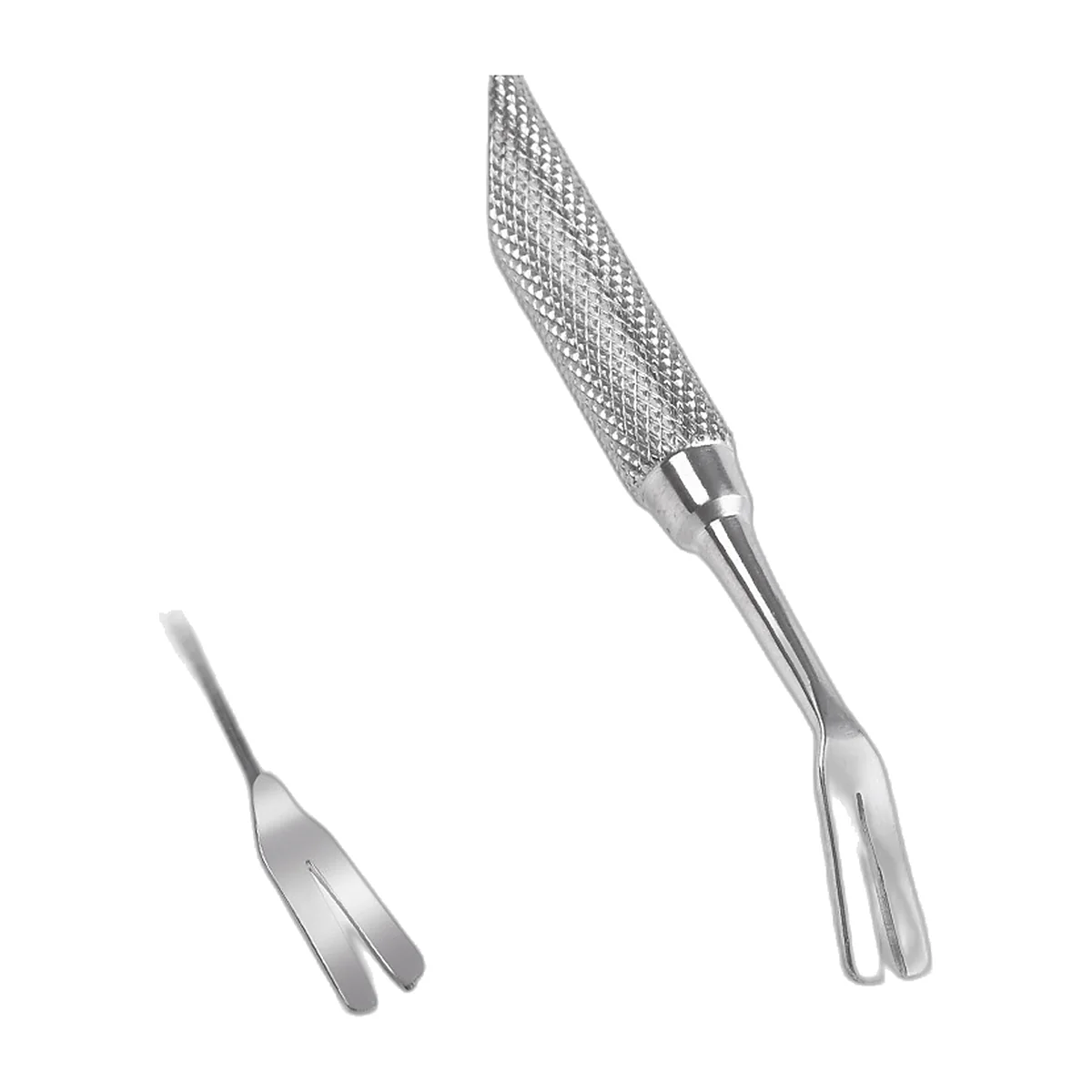
Stainless steel forked tick remover for dogs
Fine stainless steel tool with a forked tip: slide it under the tick flush with the skin and pull out with a steady motion.
€15.90 VAT not applicable (art. 293 B CGI)
🚚 Delivery in 8 to 15 working days, free from €49 (otherwise €4.90).
↩︎ 14 days to change your mind · 💳 secure Stripe payment · terms of sale
Description
The right way to remove a tick from a dog fits in one sentence: grasp it flush with the skin and pull it out with a steady motion, without crushing it or applying anything first. That takes a fine tool that slides under the tick without squeezing its engorged body. That is what this tick remover does: a stainless steel rod ending in a small fork.
Part the fur, slide the fork under the tick against the skin, then pull gently and steadily. It is 12 cm long, weighs 25 g and fits in a walking kit. Stainless steel can be cleaned and disinfected after each use.
Good to know: on a very small tick (larva, nymph), the fork may be slightly wide; very fine-tipped tweezers are then the alternative. The tool does not replace tick prevention, nor a vet’s opinion if your dog shows fever, lethargy or spreading redness after the bite.
Specifications
| Material | stainless steel |
|---|---|
| Tip | fork |
| Size | 120 × 7.5 × 7.5 mm |
| Weight | 25 g |
| Contents | 1 tick remover |
Frequently asked questions
Should I twist or pull?
Pull steadily, without jerking. The recommendations cited in our guide advise against twisting with tweezers and against putting anything on the tick first.
Does it work on a cat?
The motion is the same, but our advice and shop here concern dogs; for a cat, ask your vet for the right method.
Our guides to choose well
- Removing a tick from a dog: the right method, no products
Removing a tick from a dog: grasp it close to the skin and pull it out, no products. Why speed matters: canine babesiosis can pass in under 8 hours.
- Basset Hound: why those floppy ears need particular care
The Basset Hound combines long, floppy ears with a poorly ventilated ear canal, a breeding ground for recurring ear infections. What veterinary research shows and how to cut down on flare-ups.