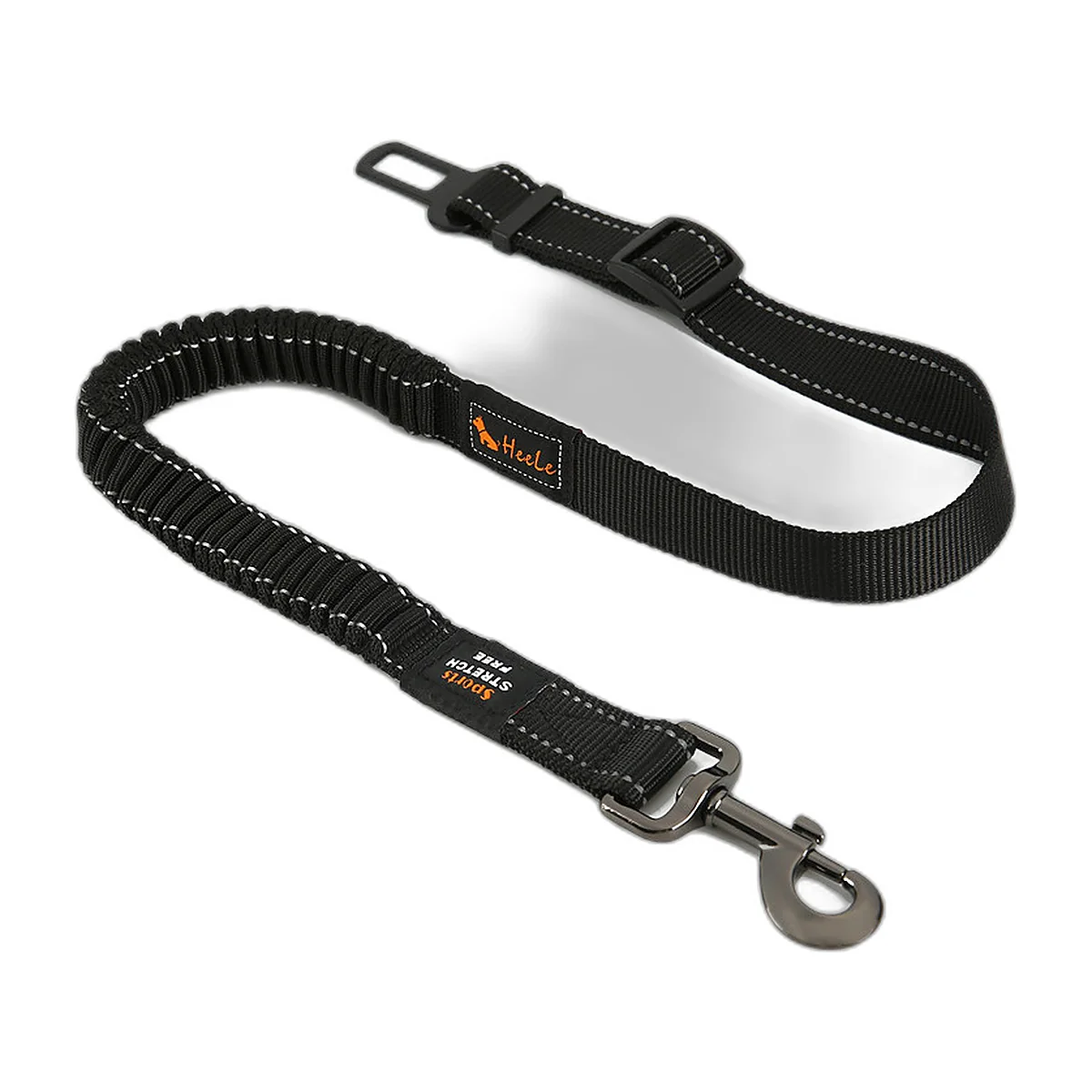
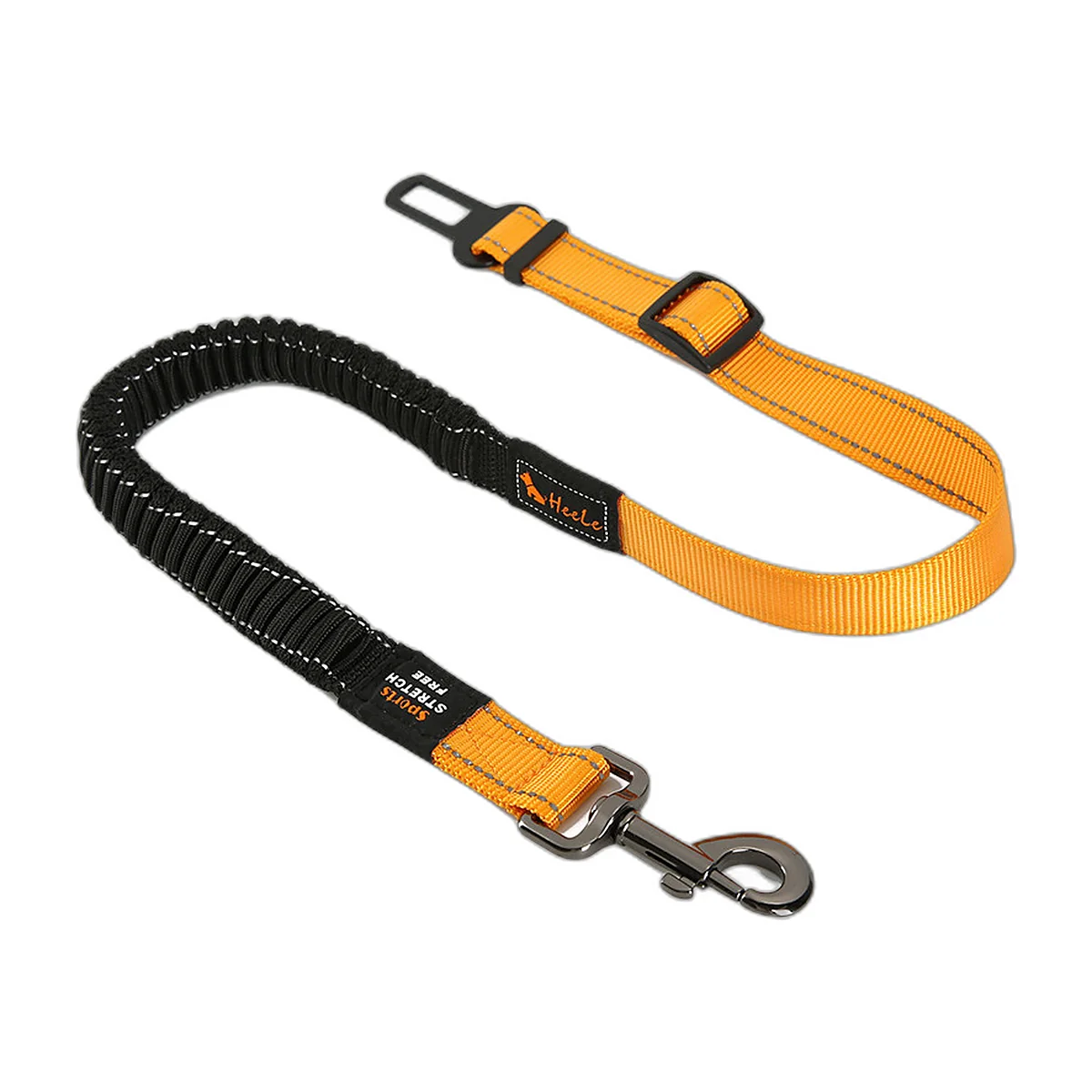
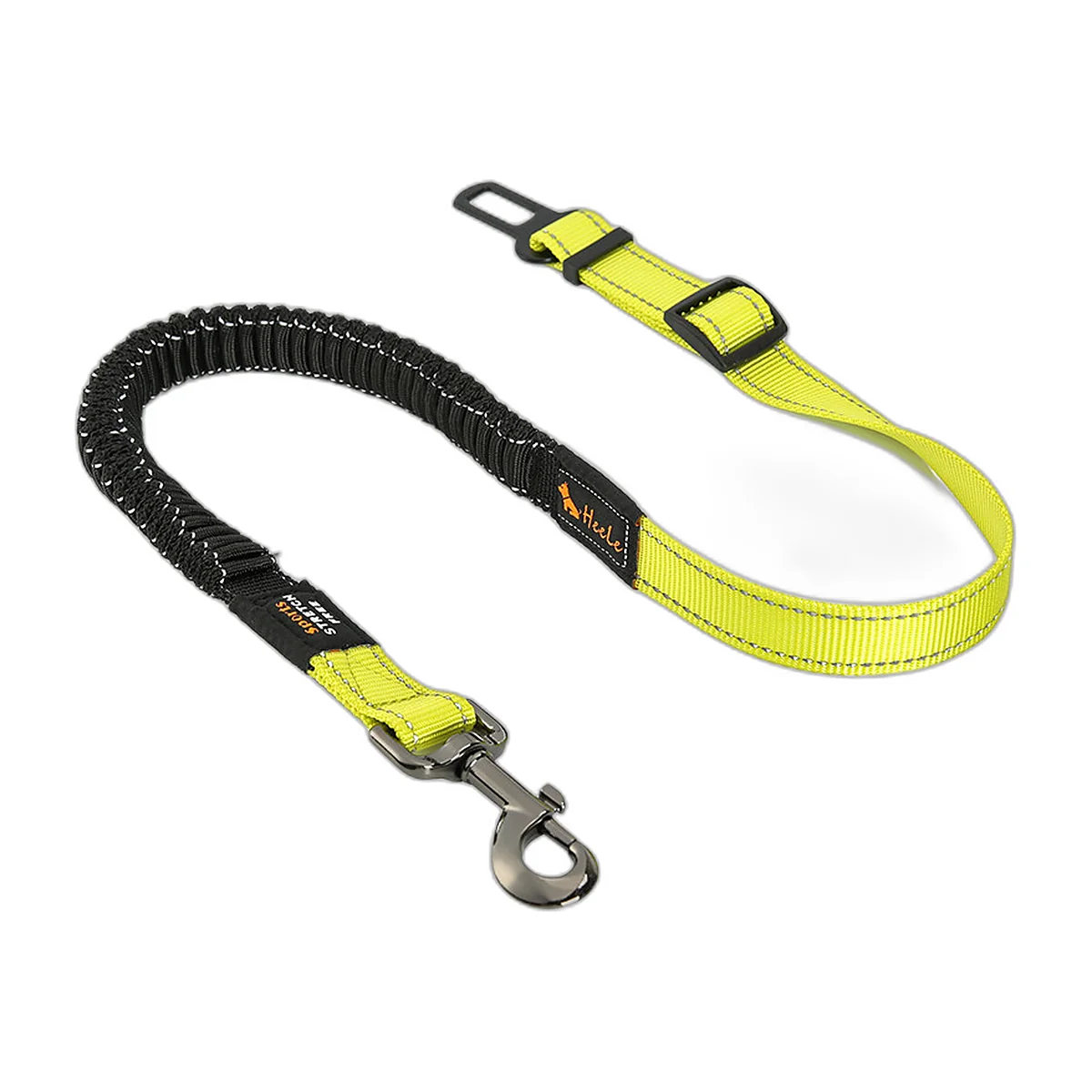
Dog car seat belt with elastic shock absorber
Nylon strap adjustable from 54 to 90 cm, elastic section that softens jolts, tongue that clicks into the car’s seat-belt buckle.
€24.90 VAT not applicable (art. 293 B CGI)
🚚 Delivery in 8 to 15 working days, free from €49 (otherwise €4.90).
↩︎ 14 days to change your mind · 💳 secure Stripe payment · terms of sale
Description
A dog loose on the back seat can climb between the seats, distract the driver or be thrown forward when braking. This strap ties it to the car’s seat-belt buckle: one end clicks in like a normal belt, the other clips onto the ring of a harness.
Length adjusts from 54 to 90 cm so the dog can sit or lie down without reaching the front. An elastic section softens small jolts in bends and braking; the strap is 2.5 cm wide with reflective stitching.
Use it with a harness only, never on a collar (risk to the neck in an impact). It is a restraint accessory: the maker publishes no crash test and it does not replace a secured crate on long trips. Check that the tongue fits your car’s buckles (standard size on most cars).
Specifications
| Length | adjustable 54 to 90 cm |
|---|---|
| Strap width | 2.5 cm |
| Material | nylon, elastic section |
| Fittings | seat-belt tongue + snap hook |
| Weight | 200 g |
| Colour | black, orange or lime green |
Frequently asked questions
Can I attach it to the collar?
No. In a sudden stop all the force would go through the neck. Always clip it to the back ring of a harness.
Is it certified or crash-tested?
The maker publishes no crash test. Think of it as a way to stop the dog moving around the cabin, not as certified protective equipment.
Our guides to choose well
- GPS dog collars: why accuracy varies so much depending on where you walk your dog
A suburban-environment study identifies the factors that make GPS collar accuracy vary: sky availability matters more than vegetation or how close you are to buildings.
- Dog that hates the car: a survey of 907 owners isolates what actually makes the difference
A survey of 907 dog owners measures how common car-travel problems really are, and identifies two factors that matter far more than the rest.