Laying Hens: Feeding, Laying, Winter, Chicks and Hatching
Who it is for: You keep hens in the garden and want to know what to feed them, how much, and what to buy for your number of hens.
- 33 pages
- 16 chapters
- 10 studies (DOI)
- FR + EN
- Edition November 2026
€24VAT included · one-off payment
Get my guide — €24Refunded within 14 days on a simple email, no questions asked
After payment
- Download your PDFs straight away, on the page that opens.
- You also get the link by email, sent by “Planète Pets” (subject “Your download:” followed by the guide’s name).
- Lost it? Find my purchases with your email address.
- No calls, no texts; at most one email, a week later, asking for your review.
For €125 more, Complete library: 64 PDF guides, €2.33 per guide.
- A ration that keeps hens laying: the right feed at each age, the quantity and how long a bag lasts calculated for 2 to 8 hens (113 g per hen per day), and the table showing that at 25% grain the ration loses a quarter of its calcium and drops to 14.4% protein
- A hen that has stopped laying, understood in ten checks: day length calculated month by month in four French cities (never 14 hours from September to April), the moult, age, heat, stress, and the table of what you see, the likely cause and what you do
- Chicks that thrive: the broody hen (more than 95% of her time on the nest according to a study), hatching eggs no older than 7 days, incubator settings and the day-by-day calendar, the brooder week by week (temperature, floor space, feeder) and the feed needed until laying
Checked48 automated checks on every site update (FR/EN parity, internal links, species data, guide PDF files), last checked on 2026-11-2321 sources cited in the guide, including 10 studies with a DOI
Method
- Primary sources: studies with a DOI, official texts
- Every figure linked to its source
- Dated edition, updates included
Card, Apple Pay or Google Pay payment on Stripe’s secure page: your card details never touch our servers. Price VAT included.
“Laying Hens: Feeding, Laying, Winter, Chicks and Hatching” is a 33-page printable PDF guide published by Planète Pets (November 2026 edition), sold for €24 VAT included: 16 chapters, 10 studies cited with their DOI, checklists and fill-in sheets, instant download after payment.
Feed your hens at every age with the ration calculated for your flock, understand what grain and scraps do to the ration, water by temperature, the first egg, day length month by month, the moult, the step-by-step check when a hen stops laying, clean and safe eggs, hatching under a hen or in an incubator, raising chicks, winter, heat, the rooster and the signs that call for the vet, with six printable sheets.
Key facts
- Price
- €24 VAT included, one-off payment
- Format
- A4 PDF, 33 pages, to read or print
- Languages
- English and French (two PDFs)
- Contents
- 16 chapters, checklists, fill-in sheets
- Sources
- 10 studies with verified DOI; 21 sources in all, full list at the end of the guide
- Edition
- November 2026
- Seller
- Lacangel Group (SAS, France), card payment via Stripe
- Guarantee
- 14-day money-back on a simple email
What the guide contains
16 chapters, 33 A4 pages, with tick-box checklists, fill-in sheets and templates. Studies are cited with their DOI. The French edition is included with your purchase.
- Before you start. Who it is for, what the guide contains, what it does not repeat from the coop guide and the chickens course, where the information comes from (10 publications with DOI, official texts, university guides), what it does not do.
- What a hen eats: complete feed, at the right age. Complete feed or grain mix, the table of feeds by age, the calculated table of the ration and how long a bag lasts for 2 to 8 hens, fresh and well-stored feed, the feeder.
- Grains, scraps and treats: what dilutes the ration. The calculated table of the ration by share of grain, the twenty-minute rule, kitchen scraps (Lasters et al. 2022), free-choice calcium (Roberts 2004), grit.
- Water: the first nutrient. The water-to-feed ratio, the calculated table of the flock’s water in cool and hot weather, water points.
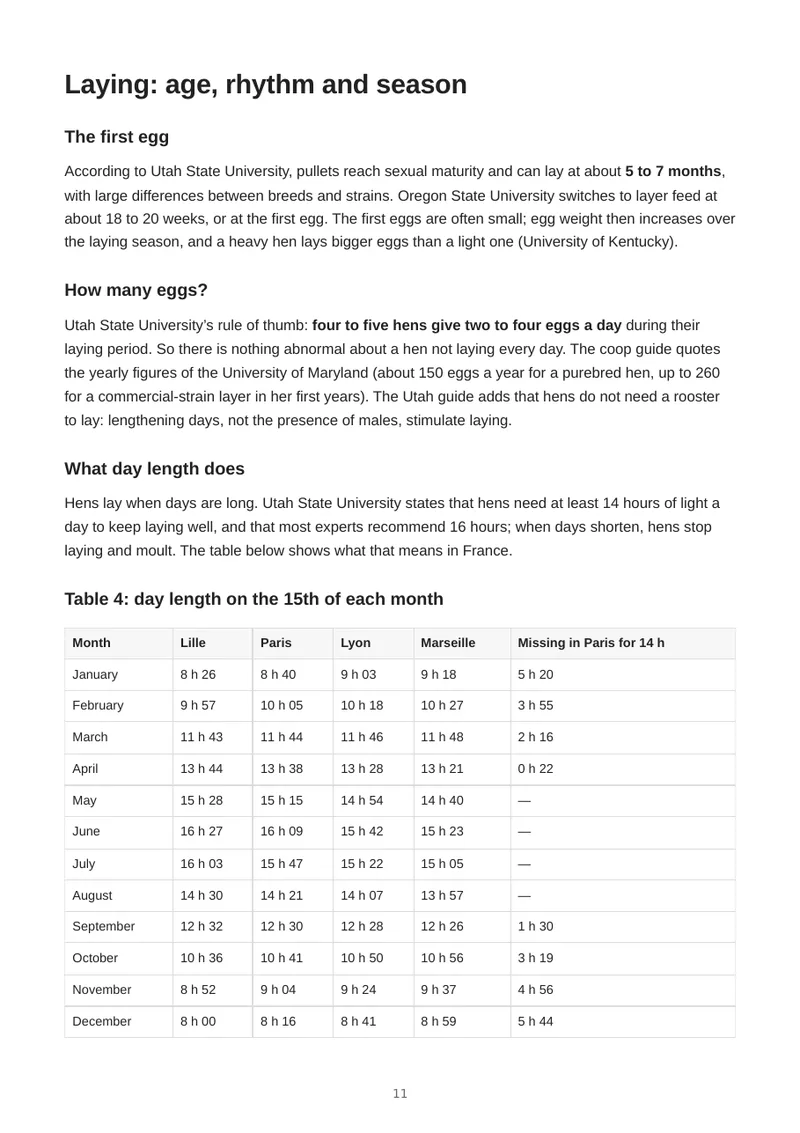
- Laying: age, rhythm and season. The first egg, how many eggs, the calculated table of day length in four French cities, lighting or not in winter, the moult (Berry 2003), age.
- “My hen has stopped laying”: a step-by-step check. The ten checks in order and the table in ten situations: what you see, the likely cause, what you do.
- Eggs: collecting, cleanliness, storage, safety. Collecting and keeping eggs clean (Regulation (EU) 2023/2465), salmonella (Basler et al. 2016), what has been found in garden eggs (Hoogenboom et al. 2016), the Île-de-France health agency recommendation, eggs during a treatment (Regulation (EU) 2019/6).
- The broody hen and natural hatching. Recognising a broody hen (Zadworny et al. 1988), the questions to settle first, fresh fertile eggs (Fasenko 2007), setting up the broody hen, the calendar.
- The incubator. The table of settings, the mistakes that ruin a hatch, the calculated incubation calendar.
- Raising chicks. The brooder table week by week (temperature, floor space, feeder, drinker), getting the heat right, litter and feed, the table of feed until laying, joining the flock.
- Winter and heat. Temperature thresholds for feed and water, heat (Lara and Rostagno 2013), cold, frozen water, litter, combs.
- The rooster, fertile eggs and the neighbours. No rooster needed for eggs, how long eggs stay fertile (Das et al. 2008), cockerels hatched at home, crowing and the neighbours.
- Health: what to watch, when to call the vet. The weekly check, the table of signs and how soon to act, what to write down before calling, vaccination and prevention (Elkhoraibi et al. 2014).
- The calendar of the year. Laying and tasks, period by period.
- Printable sheets. My ration and my water, laying record, my hen has stopped laying, flock health and weight, before calling the vet, tracking a hatch and the chicks.
- Sources. 10 publications with checked DOI, official texts, university guides and composition tables.
Who it is for, and who it is not for
This guide is for you if…
- You keep hens in the garden and want to know what to feed them, how much, and what to buy for your number of hens.
- Your hens have stopped laying, or their shells are thin, and you want to understand why before worrying.
- A hen will not leave the nest, or you want to hatch chicks under a hen or in an incubator.
- You are getting ready for winter or summer and want to avoid frozen water, heat stress and beginner mistakes.
It will not help you if…
- A hen is ill, injured or losing weight: take her to a vet who treats poultry; the guide says what should worry you but makes no diagnosis and gives no medicine or dose.
- You want to build or extend the coop: that is the subject of our backyard coop guide, which this one refers to.
- You want to tame your hens or teach them to go in by themselves: that is the subject of our chickens course.
- You run a commercial flock or sell eggs: the guide is for pet hens.
In pictures
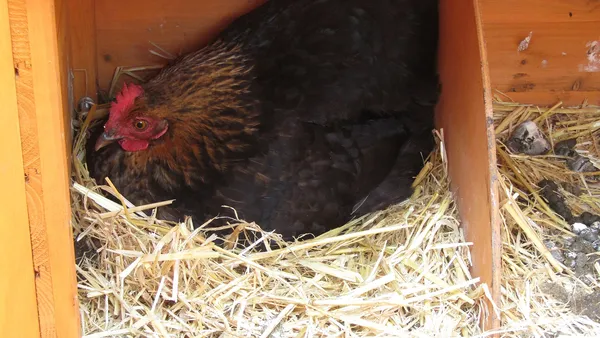

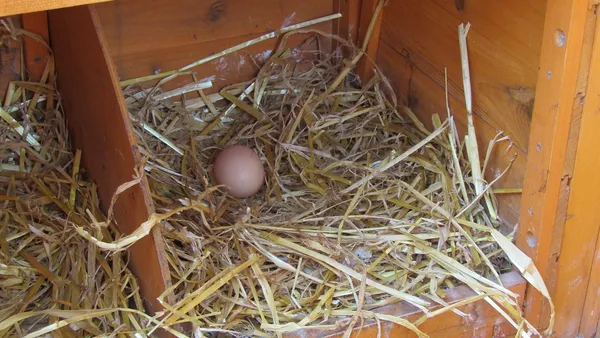

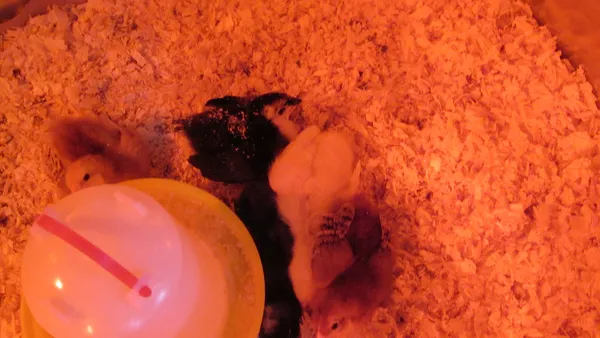

Illustrative photos, published by their authors under free licences.
Free sample
Table 2: the ration when part of what the hen eats is grain
| Share of grain (equal wheat and maize) | Ration protein | Ration calcium | Calcium eaten per day (113 g) |
|---|---|---|---|
| 0% (layer feed only) | 16.0% | 3.50% | 3.97 g |
| 10% | 15.4% | 3.16% | 3.58 g |
| 15% | 15.0% | 2.98% | 3.38 g |
| 25% | 14.4% | 2.64% | 2.99 g |
| One third | 13.8% | 2.35% | 2.67 g |
| 50% | 12.8% | 1.78% | 2.01 g |
Calculation: ration = (1 − share) × layer feed (16% protein, 3.5% calcium, middle of the 3 to 4% range given by Oregon State University) + share × grain mix (9.5% protein, 0.05% calcium, from Feedipedia converted to grain as bought). Calcium eaten = 113.4 g × ration calcium. Real contents vary from one feed to another: read your label.
Pick the right option
| Feature | This guide€24 | Best valueComplete library€149 |
|---|---|---|
| PDF guides | 1 | 64 |
| Pages | 33 | 2518 |
| Studies cited (DOI) | 10 | 414 |
| English and French | ✓ | ✓ |
| Price per guide | €24 | €2.33 |
| Refunded within 14 days | ✓ | ✓ |
| Get my guide — €24 | See what’s inside |
Library: €149 instead of €1460 if you buy the 62 guides sold on their own one by one, a saving of €1311 (+ 2 guides only sold in bundles).
€24 one-off payment, updates included
Get my guide — €24Refunded within 14 days on a simple email, no questions asked
Frequently asked questions
What format is the guide?
A PDF to download right after payment, in English and French, ready to print, with six sheets: my ration and my water, laying record, my hen has stopped laying, flock health and weight, before calling the vet, tracking a hatch and the chicks.
How much does a laying hen eat?
About 113 grams of complete feed a day, a quarter of a pound according to the University of Kentucky. Chapter 2 calculates the amount per day, week and month for 2 to 8 hens, and how long a 25 kg bag lasts: more than two months for two or three hens, whereas feed should be bought fresh, at least every two months.
Why have my chickens stopped laying eggs?
Most often for a normal reason: shortening days (in France, low or no laying from autumn to the end of winter is normal, and it only resumes gradually in spring), the moult, broodiness or age. But also too much grain in the ration, water running out, stress or illness. Chapter 6 gives the ten checks in order and a table in ten situations; sheet 3 is for writing down what you see.
How long does hatching take?
About 21 days, under a hen as in an incubator. Chapter 9 gives the incubator settings (37.2 to 37.8 °C, about 60% then 70% humidity, no turning after day 17) and the calculated day-by-day calendar; chapter 8 explains why hatching eggs should not wait more than seven days.
How is it different from the coop guide and the chickens course?
The coop guide covers housing (floor space, perches, nest boxes, predators, red mites, planning) and the chickens course covers training and the legal framework. This one starts from the hen: what she eats, laying, eggs, broodiness, chicks, winter, heat and health. It refers to the other two without copying them; you do not need them to use it.
Does the guide cover health?
It says what to check every week, which signs should make you call the vet and how soon, and what to write down before calling. It contains no medicine, no treatment and no dose; it only reminds you that eggs from a treated hen are eaten only after the withdrawal period set by the vet.
Where does the information come from?
From 10 publications with DOI checked on Crossref (broodiness, hatching-egg storage, moult, heat, salmonella, pollutants in garden eggs, sperm storage in the hen, a survey of chicken keepers), two EU regulations, the Île-de-France health agency recommendation, guides from the universities of Kentucky, Oregon, Utah, Penn State, New Hampshire and Illinois, and the Feedipedia tables. Advice that comes from practice is flagged as such.
Can I get a refund?
Yes, by simple email to admin@tech-bharat.com within 14 days of purchase, no questions asked.
Seller: LACANGEL GROUP, SAS (French simplified joint-stock company) — SIREN 995 268 018 — registered office: 1 rue Marguerin, 75014 Paris, France — president: Clément Lacaille — EU VAT number FR21995268018 — administration@lacangel.fr. Price VAT included. Digital product delivered right after payment; 14-day money-back commercial guarantee. See the terms of sale.
🩺 Reminder: this page informs, it does not diagnose. For any symptom or health question, your veterinarian remains the only reference.
How it works
Seller: LACANGEL GROUP (SAS), Paris, France, VAT FR21995268018. Prices VAT included. Terms of sale