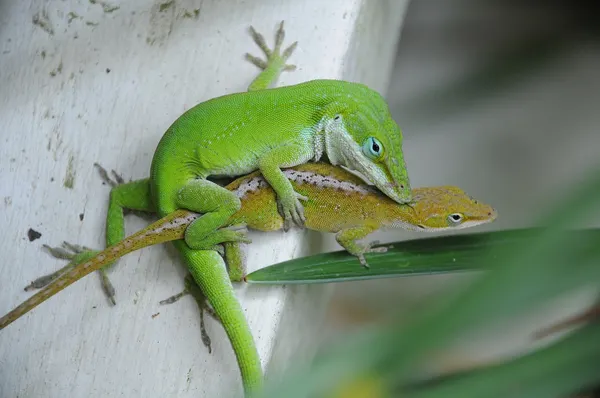
Breeding Green Anoles
Who it is for: You keep a pair or a trio of green anoles and are thinking of breeding them.
- 34 pages
- 13 chapters
- 20 studies (DOI)
- FR + EN
- Edition October 2026
€29VAT included · one-off payment
Get my guide — €29Refunded within 14 days on a simple email, no questions asked
After payment
- Download your PDFs straight away, on the page that opens.
- You also get the link by email, sent by “Planète Pets” (subject “Your download:” followed by the guide’s name).
- Lost it? Find my purchases with your email address.
- No calls, no texts; at most one email, a week later, asking for your review.
For €20 more, Reptile and Terrarium Bundle: 4 PDF guides, €12.25 per guide.
- Before you start: the question of the young males (females alternate the sex of their eggs), sexing an adult from a photo and why a hatchling cannot be sexed
- Laying and incubation with figures from the studies: about one egg every two weeks, 27 to 28.6 °C on moist vermiculite, hatching at around 30 to 34 days, and what temperature changes
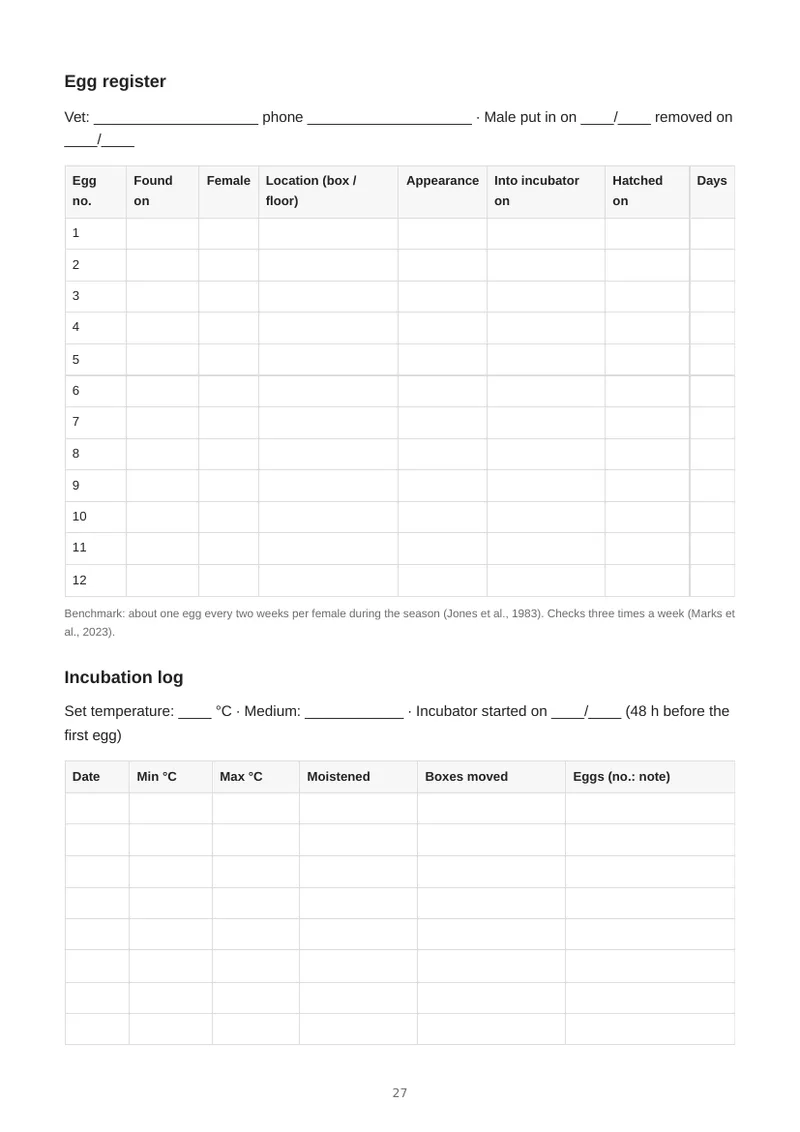
- Printable sheets: cohabitation log, egg register, incubation log, growth chart, hatchling tank checklist, transfer record and care sheet
Checked48 automated checks on every site update (FR/EN parity, internal links, species data, guide PDF files), last checked on 2026-10-2822 sources cited in the guide, including 20 studies with a DOI
Method
- Primary sources: studies with a DOI, official texts
- Every figure linked to its source
- Dated edition, updates included
Card, Apple Pay or Google Pay payment on Stripe’s secure page: your card details never touch our servers. Price VAT included.
“Breeding Green Anoles” is a 34-page printable PDF guide published by Planète Pets (October 2026 edition), sold for €29 VAT included: 13 chapters, 20 studies cited with their DOI, checklists and fill-in sheets, instant download after payment.
Pair or trio, laying box, incubation, hatchling tank, feeding the young and rehoming them properly: what published studies show, with printable sheets to record everything.
Key facts
- Price
- €29 VAT included, one-off payment
- Format
- A4 PDF, 34 pages, to read or print
- Languages
- English and French (two PDFs)
- Contents
- 13 chapters, checklists, fill-in sheets
- Sources
- 20 studies with verified DOI; 22 sources in all, full list at the end of the guide
- Edition
- October 2026
- Seller
- Lacangel Group (SAS, France), card payment via Stripe
- Guarantee
- 14-day money-back on a simple email
What the guide contains
13 chapters, 34 A4 pages, with tick-box checklists, fill-in sheets and templates. Studies are cited with their DOI. The French edition is included with your purchase.
- Before You Begin. Who it is for, what the guide contains, where the figures come from and what it does not do (the vet remains essential).
- Before You Start: Five Questions. Where the young males will live, homes, checking time, the vet, the adults’ condition; and what to do if the eggs are already there.
- Telling Males from Females. Four clues in adults (size, dewlap, tail base, behaviour), why a hatchling cannot be sexed, the photo method.
- Pair or Trio: Cohabitation. Why never two males, pair or trio, step-by-step introduction, signs of a subordinate animal, when to separate, whether to leave the male in.
- The Breeding Terrarium. Parameters, what changes for a group, the laying box in 5 steps and the checking routine.
- The Season and Egg-Laying. One egg at a time, 14 days between ovulations, feeding a breeding female, signs that call for a vet, resting.
- Incubating the Eggs. Collecting an egg, what the studies did (27 to 28.6 °C, 30 to 34 days), the incubator, care, reading an egg, what temperature changes.
- The Hatchling Tank. Never with adults, alone or in a small group, setting up the tank, the first days.
- Feeding and Supplementing Hatchlings. Prey to fit, what insects are worth (calcium, vitamin D), dusting, gut-loading, water, tracking growth.
- Sexing and Separating the Young. What develops between 2 and 6 weeks and the practical separation timeline.
- Rehoming the Young Properly. French rules in detail (thresholds, transfer record, information sheet), what to check wherever you live, choosing the new keeper, never releasing.
- Printable Sheets and Checklists. Pre-pairing checklist, cohabitation log, egg register, incubation log, growth chart, hatchling tank, transfer record, care sheet.
- Sources. Studies with verified DOIs, consolidated official text, CDC page, Planète Pets attribute database.
Who it is for, and who it is not for
This guide is for you if…
- You keep a pair or a trio of green anoles and are thinking of breeding them.
- You found an egg in the terrarium and want to know what to do, today.
- You want to know whether you have a male or a female before putting two animals together.
- You are already raising hatchlings and want to track their growth and rehome them properly.
It will not help you if…
- You are a beginner and have not set up your first anole yet: start with the terrarium setup and day-to-day care.
- You keep another anole or another lizard (brown anole, knight anole, gecko…): the figures in this guide come from studies on the green anole only.
- You want to produce anoles for sale on a regular basis: that may require licences where you live; the guide does not cover them.
- You are looking for a treatment for a female that is not laying: that is the vet’s decision; the guide helps you spot the signs and prepare for the appointment.
In pictures
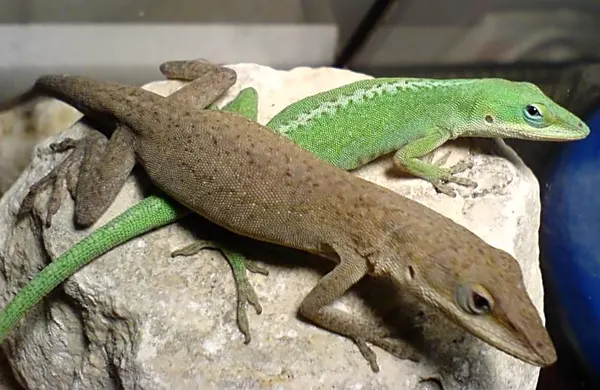

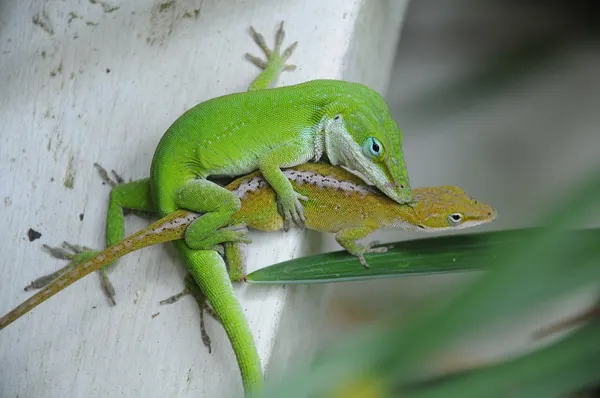

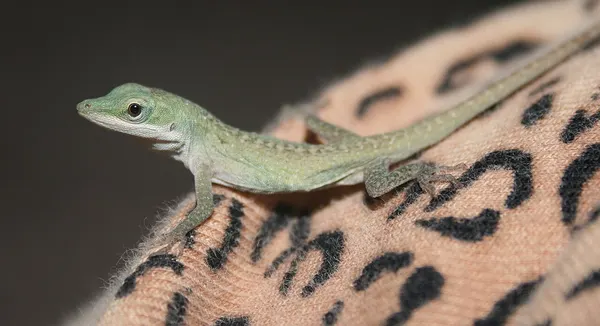

Illustrative photos, published by their authors under free licences.
Free sample
What temperature changes… and what it does not
It does not decide sex. In many reptiles, incubation temperature sets the sex of the young. Not in the green anole, a species with genotypic sex determination (Lovern and Wade, 2003). There is no point looking for a “female temperature”: you will get roughly as many males as females whatever you do (Lovern and Passek, 2002).
It changes duration and growth. Goodman (2008) incubated eggs from four populations at 23.5, 27 and 30 °C. Cooler eggs took longer to hatch, but at hatching neither weight nor snout-vent length differed between treatments. The difference appeared afterwards: over the following eight weeks, young from cooler incubations generally grew more. This effect is invisible on hatching day: only the growth chart reveals it.
Our advice: choose a temperature within the range of the protocols (27 to 28.6 °C), keep it stable and record it. Changing temperature during incubation means losing the only benchmark you have for duration and growth.
Pick the right option
| Feature | This guide€29 | Reptile and Terrarium Bundle€49 | Best valueComplete library€149 |
|---|---|---|---|
| PDF guides | 1 | 4 | 64 |
| Pages | 34 | 187 | 2518 |
| Studies cited (DOI) | 20 | 56 | 414 |
| English and French | ✓ | ✓ | ✓ |
| Price per guide | €29 | €12.25 | €2.33 |
| Refunded within 14 days | ✓ | ✓ | ✓ |
| Get my guide — €29 | See what’s inside | See what’s inside |
Library: €149 instead of €1460 if you buy the 62 guides sold on their own one by one, a saving of €1311 (+ 2 guides only sold in bundles).
€29 one-off payment, updates included
Get my guide — €29Refunded within 14 days on a simple email, no questions asked
Frequently asked questions
What format is the guide?
A PDF to download right after payment, in English and French, ready to print (cohabitation log, egg register, incubation log, growth chart, hatchling tank checklist, transfer record and care sheet included).
Do the figures come from studies?
Yes: every figure comes from a published study on the green anole (with its DOI checked on Crossref or PubMed), the consolidated official text, or the Planète Pets species attribute database. When no reliable source gives a value (winter cooling protocol, powder dose for a hatchling), the guide says so rather than inventing one.
Is it the same content as the “Beginner green anole terrarium” guide?
No. The beginner guide covers setup and day-to-day care. This one starts from settled animals and covers what the other does not: sexing, cohabitation, laying, incubation, hatchlings and rehoming.
Does the guide replace a vet?
No. It helps you spot early the signs that call for an appointment (a female that does not lay, a hatchling that stops growing) and arrive with a useful log. Diagnosis and treatment remain the vet’s.
Can I get a refund?
Yes, by simple email to admin@tech-bharat.com within 14 days of purchase, no questions asked.
Seller: LACANGEL GROUP, SAS (French simplified joint-stock company) — SIREN 995 268 018 — registered office: 1 rue Marguerin, 75014 Paris, France — president: Clément Lacaille — EU VAT number FR21995268018 — administration@lacangel.fr. Price VAT included. Digital product delivered right after payment; 14-day money-back commercial guarantee. See the terms of sale.
🩺 Our hygiene and health advice stays general: it never substitutes for an examination by a veterinarian, the only person qualified to advise on your animal.
How it works
Seller: LACANGEL GROUP (SAS), Paris, France, VAT FR21995268018. Prices VAT included. Terms of sale