Bare tank, plastic plants or substrate: what a study actually found about the water
Published by Planète Pets · managing editor: Clément Lacaille · how our guides are written
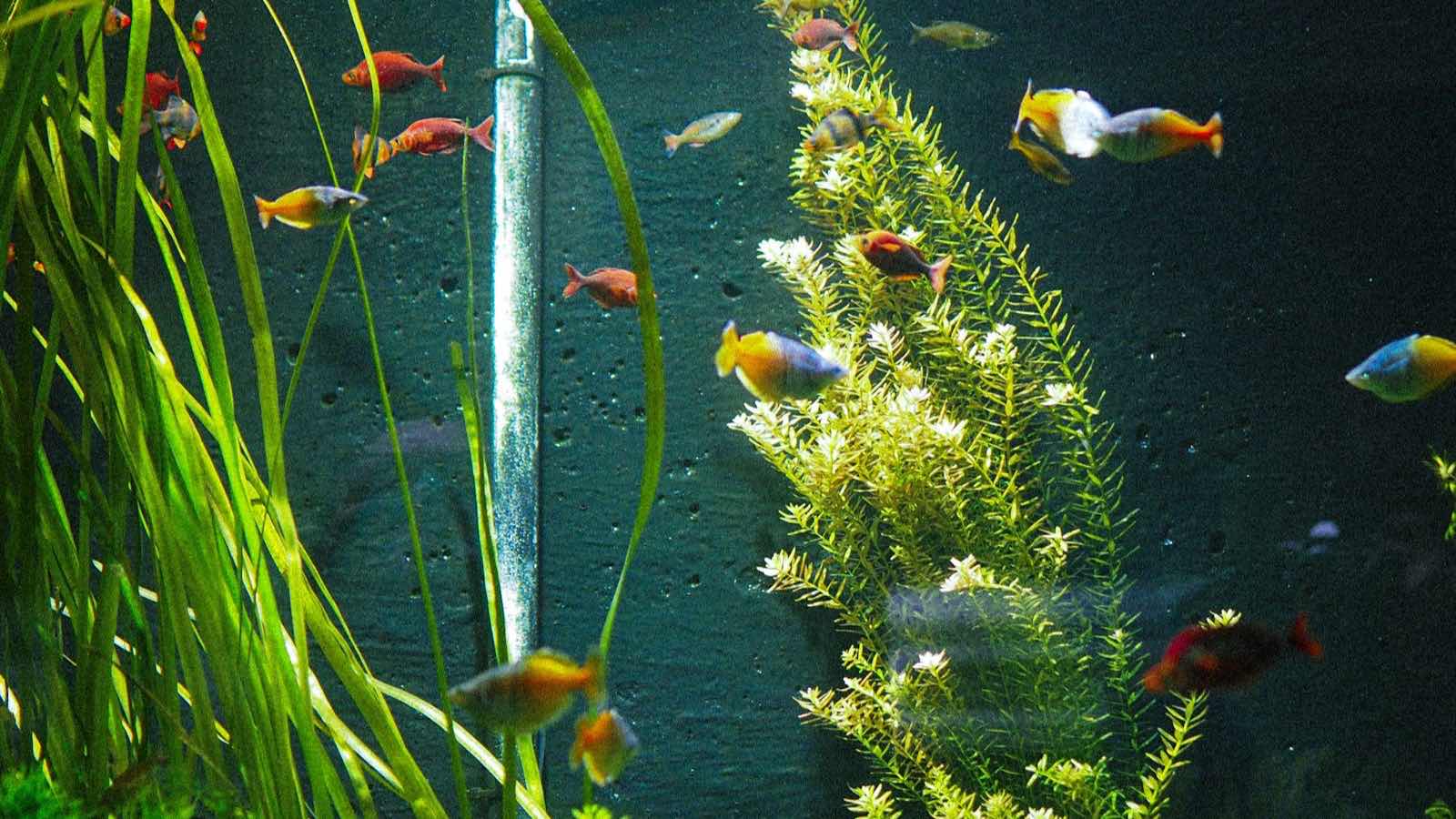
Setting up a new tank raises the question of what goes on the floor fairly early on: gravel, sand, or just a few plastic plants over bare glass? A study compared these options and measured what each one actually does to the water — a useful reference before filling the cart. Our other equipment guides are gathered in the fish accessories section.
Four setups, two seasons, one question
Vanderzwalmen, Sánchez Lacalle, Tamilselvan and a dozen co-authors published an open-access study in Animals in 2022, comparing four setups in tropical freshwater tanks built to mirror home aquarium conditions: bare tank, plastic plants with no substrate, gravel, and sand (see the study). The protocol ran over two seven-week periods at different times of year, tracking pH, total ammonia, nitrate and the presence of Pseudomonas bacteria.
Gravel and sand weigh on the chemistry, plastic plants far less so
The result: it was the tanks fitted with gravel or sand that showed higher pH, more total ammonia and more nitrate, along with a greater presence of Pseudomonas, an opportunistic bacterial genus. Tanks decorated only with plastic plants, with no substrate on the floor, did not stand out from bare tanks in the same way on these parameters. So the common factor behind the two heavier-loaded setups is not decor in general, but specifically a granular substrate on the tank floor: it traps organic matter and hosts its own bacterial community, as covered in our water tests and nitrogen cycle guide.
What this means at decision time
For a nano tank, a hospital tank, or a first aquarium where you want to limit variables at start-up, plastic plants without substrate cover the need for visual hiding spots without the extra organic load the authors measured — an option already recommended for other practical reasons in our hospital and quarantine tank guide. In a lasting planted tank, on the other hand, the benefits of substrate for roots and burrowing fish comfortably justify this measured cost: the choice of material itself is covered in our aquarium substrate and sand or gravel guides, and routine upkeep in our dedicated gravel vacuum guide.
Limits worth keeping in mind
The authors measured a statistical association between substrate and heavier water-quality readings, not a mechanism demonstrated fish by fish: the exact pathway (organic waste build-up, extra bacterial surface area, or both) is still open. Nor does the study argue for giving up on substrate altogether: in a well-maintained tank, its benefits comfortably outweigh this measured bump in organic load. Mostly, it argues for treating the choice of tank floor as a genuine equipment decision, not a purely aesthetic detail.
Frequently asked questions
Is a tank with only plastic plants a good compromise?
For temporary use or a tank where simplicity matters most (hospital, nano tank, breeding tank), yes: it offers hiding spots without the extra organic load associated with substrate in this study.
Should I skip substrate in a lasting planted tank?
No: roots and burrowing species depend on it, and regular maintenance is enough to keep the gap the authors measured between tanks with and without substrate in check.
This guide is part of Planète Pets’s Fishkeeping universe. Our advice is general in nature: for any health concern, your veterinarian remains the only reference.