Shih Tzu: gear and buying guides
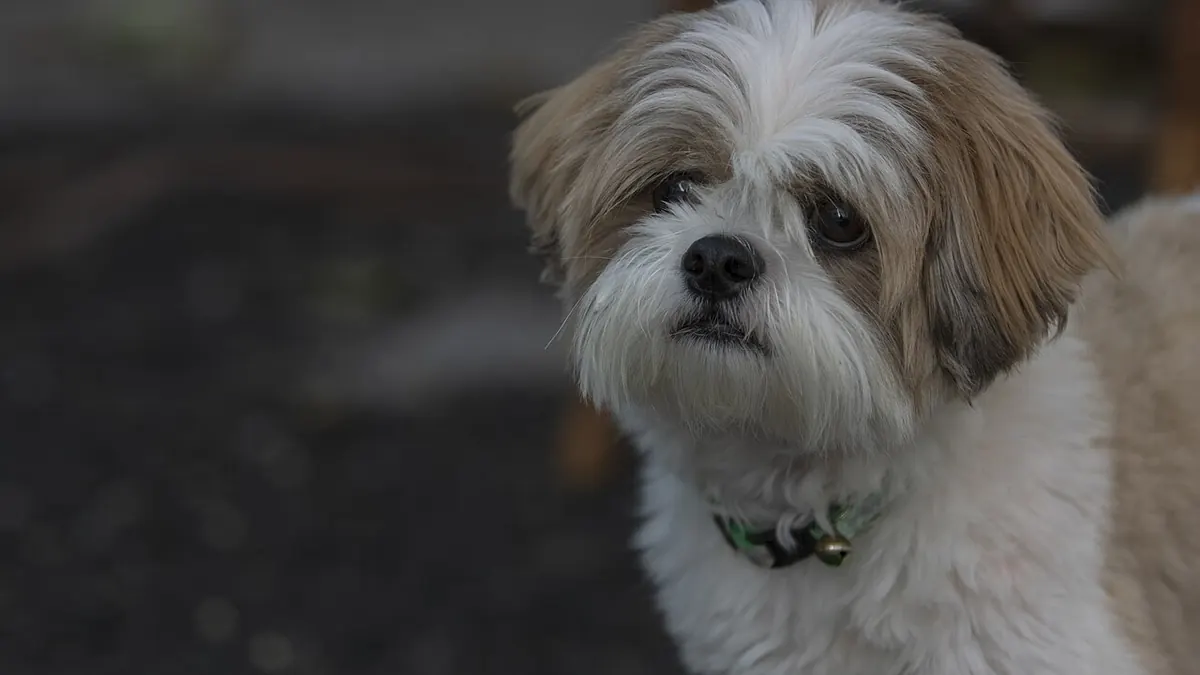

The Shih Tzu is a small companion dog of 4.5 to 8 kg, affectionate and fairly calm, valued for its easy indoor lifestyle. Its long, continuously growing coat and short muzzle require a real grooming budget and gear suited to brachycephalic breeds. It is an ideal flat-dweller, not very sporty but deeply attached to its owners.
Profile : A small dog of 4.5 to 8 kg with a long, continuously growing coat, a short muzzle and moderate energy.
In our shop, for this use: 1.5 m reflective round rope lead with padded handle, for dogs (€20.90) · the whole shop
In our shop, for this use: Folding wire dog crate 24 in (61 cm), single door, with tray ($62.90, ships from the US) · the US shop
We don’t ship products to your country yet; our practical guide downloads anywhere: Raising Your Puppy: The First Six Months (€19)
Species profile
- Lifespan
- 12 to 16 years
- Adult weight
- 4.5 to 8 kg
- Size
- 20 to 27 cm
- Temperament
- An affectionate, fairly calm flat companion, not very sporty but always close to its people.
- Health watch
- breathing problems linked to the short muzzle · corneal ulcers and irritation
🩺 The health watchpoints on this page are for information only: only a veterinarian can examine your animal and make a diagnosis.
Shih Tzu gear, family by family
-
🍖
Food
Allow around 80 to 130 g of kibble per day for a fairly sedentary adult of 4.5 to 8 kg. Its short muzzle makes picking up food harder: kibble shaped for brachycephalic breeds and a shallow bowl make mealtimes easier.
-
🧴
Care & grooming
Daily brushing is essential if the coat is kept long, otherwise painful mats form, and the prominent eyes need regular cleaning with an eye lotion. A groomer visit every six to eight weeks, often charged 40 to 60 €, is standard, with many owners choosing the short puppy cut.
-
🎾
Toys & enrichment
Not very athletic, the Shih Tzu prefers calm play: soft plush toys, small chew toys and lick mats suit it better than intense ball games. Simple treat dispensers keep its mind sharp without leaving it breathless.
-
🏠
Bedding & habitat
A soft size-S bed in a temperate room suits it perfectly: heat-sensitive because of its short muzzle, it needs a cool spot in summer, possibly with a cooling mat.
-
🧳
Travel & safety
Use a harness rather than a collar, as its breathing is already limited by its short muzzle. Avoid travelling in the heat of the day: like all brachycephalic dogs, it is highly vulnerable to heatstroke, and many airlines refuse these breeds in the hold.
-
🧰
Accessories
Its typical kit includes a size-S harness, a pin brush, a metal comb, eye lotion and bands or a clip to keep the topknot out of its eyes. A slow-feeder bowl can help dogs that eat too fast.
🏠 Bed and sleeping setup for a Shih Tzu: size and materials
What bed size for a Shih Tzu?
The maths for a Shih Tzu of 20 to 27 cm at the withers: a bed of about 60 cm, in which it lies fully stretched on its side — the curl is only one of its positions. When torn between two sizes, always take the larger.
Materials and comfort
Demand a zipped cover washable at 60°C, bolster edges as headrests and a base that grips tiled floors.
Where to put it?
The right spot for the Shih Tzu’s bed: a quiet corner, away from foot traffic and draughts, with a view of the room — a dog that sees things coming sleeps deeply. An adult dog sleeps 12 to 15 hours a day: placement matters as much as the bed.
Quick answers
- What bed size suits a Shih Tzu?
- 60 cm of internal length is the right target for its 20 to 27 cm at the withers; if it cannot stretch out fully, it is too small.
- Can a Shih Tzu sleep outside?
- Not advisable: its profile and need for contact make it an indoor dog, with daytime garden access.
See it in the Planète Pets shop: Ice-silk cooling mat for dogs (62 × 50 to 100 × 70 cm) (€40.90) · the whole shop
See it in the Planète Pets shop: Folding 3-step wooden pet stairs for beds and sofas ($75.90, ships from the US) · the US shop
Outside our shipping area? The downloadable practical guide: Raising Your Puppy: The First Six Months (€19)
🧳 Travelling with a Shih Tzu: car, crate and rules
In the car with a Shih Tzu
At 4.5 to 8 kg, the Shih Tzu travels in a rigid crate of about 55 cm placed in the rear footwell or strapped in, or an approved carrier bag for the lightest. An unrestrained dog of this weight becomes a projectile under braking — and a possible fine for distracted driving.
Trains, planes, holidays
Too big for the cabin, the Shih Tzu flies in the pressurised hold in an IATA-approved crate — an ordeal to reserve for unavoidable trips, and one many airlines refuse for brachycephalic breeds, vulnerable to heat and respiratory stress. On trains, a muzzle and lead meet the rules. Get it used to the crate weeks before departure: left open at home with treats inside, it becomes a den rather than a trap.
Identification and good habits
A Shih Tzu travels chipped and vaccinated — EU passport and rabies shot whenever a border or boarding kennel is involved. And in summer, the absolute rule: never alone in the car, where temperatures turn lethal within minutes.
Quick answers
- What crate size for a Shih Tzu?
- Aim for 55 cm long for an adult: it must stand head-up and turn around freely — and for flying, only the model’s IATA dimensions count.
- Can a Shih Tzu fly in the cabin?
- No, it exceeds the cabin limit (8 kg including the bag): it travels in the pressurised hold in an IATA crate — avoid it when you can.
An accessory from our shop for this use: Dog car seat belt with elastic shock absorber (€30.90) · the whole shop
An accessory from our shop for this use: Folding wire dog crate 24 in (61 cm), single door, with tray ($62.90, ships from the US) · the US shop
Our products don’t ship to you yet, but the PDF practical guide is instant: Raising Your Puppy: The First Six Months (€19)
Guides to read
- No-pull front-clip harness for dogs: what does the science actually show?Accessories
Front-clip no-pull harness for dogs: what a recent study measured on pulling force, compared with a plain collar and a prong-style collar.
- Why does my dog eat grass? What the research actually saysCare & grooming
Dog eating grass: what two studies show about how common the behavior is, its link with vomiting, and the cases that should raise concern.
- Reflective vest vs light-up collar for dogs: what's the real difference?Accessories
Dog visibility at night: what pedestrian-conspicuity research reveals about the real gap between a reflective vest and a light-up collar.
- Anxious dog in the car: motion sickness or real fear of the ride?Travel & safety
Dog car travel anxiety: what a veterinary study shows about the signs of travel-related problems and the factors that explain them best.
- BARF raw diet for dogs: what are the real benefits, what are the real risks?Food
Raw BARF diet for dogs: what studies actually show about the claimed benefits, bacterial risk, and real nutritional balance.
- Separation anxiety in dogs: what does research show, what actually helps?Care & grooming
Dog separation anxiety: what a veterinary study reveals about how common it is, its risk factors, and the solutions that actually work.
- Mental activities for dogs in winter: which indoor games actually work?Toys & enrichment
Winter mental enrichment for dogs: what a study shows about scent games and indoor activities that make up for shorter walks.
- Microchip or tattoo: which ID actually gets a lost dog home?Travel & safety
Dog identification: what a study shows about return-to-owner rates depending on whether the dog is microchipped or not.
Free guide: the 10 mistakes new owners make
New dog or cat owner? Our guide walks through the ten classic first-year mistakes — food bowl, vet, training, budget — so you avoid them from day one. Instant access after signing up.
✅ All set! Read the guide now.