Toys for a German Shorthaired Pointer: durability, exercise and enrichment
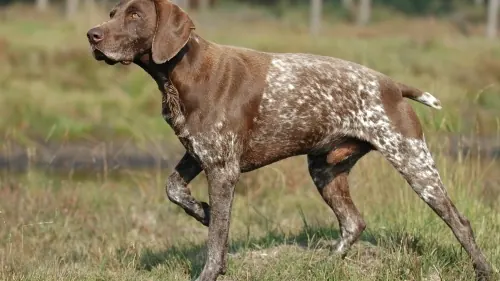

German Shorthaired Pointer: Retrieving is its bliss: balls, training dummies and water games channel its hunting instinct. Add nose work (dummy searches, mantrailing): tiring its brain matters as much as tiring its legs.
To go further, the PDF practical guide: Gundog Training the Positive Way: Whistle, Retrieve, Pointing and Steadiness, Step by Step — 42-page PDF, instant download. Get my guide — €29
In short: Large dog, 53 to 66 cm and 25 to 32 kg, short dense coat, very high energy. A versatile pointing dog, affectionate and blessed with almost inexhaustible energy. Without one to two hours of hard daily exercise it turns destructive: kit it out like an athlete, starting with a long line and a sports harness.
Toys that survive a German Shorthaired Pointer
Its average jaw handles classic toys: standard rubber, ropes and solid balls are enough, keeping an eye on wear. A damaged toy comes out immediately: swallowed pieces rank among the most frequent reasons for canine surgery.
How much daily activity?
An adult German Shorthaired Pointer demands 60 to 120 minutes of real activity each day, and more on good days: this dog was bred to work, and a stroll around the block barely dents it. Canicross, tracking, tug or water games — depending on its tastes — are outlets, not options.
Mental work: the real boredom-buster
Snuffle mats, food-dispensing toys and canine puzzles keep the German Shorthaired Pointer busy on rainy days and while you are out. Start at the easy level: a dog that fails gives up, a dog that wins asks for more. Two or three ten-minute sessions beat an hour on Sunday.
Frequently asked questions
Which toys should I pick for a German Shorthaired Pointer?
Its average jaw handles classic toys: standard rubber, ropes and solid balls are enough, keeping an eye on wear.
How much exercise does a German Shorthaired Pointer need daily?
A fit adult calls for 60 to 120 minutes of genuine daily exertion — a figure adjusted to age, health and the day’s weather.
The guides that apply to you
- Bull Terriers and tail-chasing: what research reveals about this compulsive behaviour
The Bull Terrier is notably overrepresented among dogs that develop compulsive tail-chasing. What a US veterinary study shows and how enrichment helps ease the behaviour.
- Mental activities for dogs in winter: which indoor games actually work?
Winter mental enrichment for dogs: what a study shows about scent games and indoor activities that make up for shorter walks.
- Floating toy for dogs: how to choose one for swimming
Floating dog toy: materials, visibility and safety criteria for risk-free play in the water.
- Labrador Retriever: exercise-induced collapse (EIC) and which games to favour
A genetic mutation identified in the Labrador Retriever causes muscle collapse after intense, repeated exercise. What the landmark study shows and which games suit a carrier dog.