Toys for a Dogue de Bordeaux: durability, exercise and enrichment
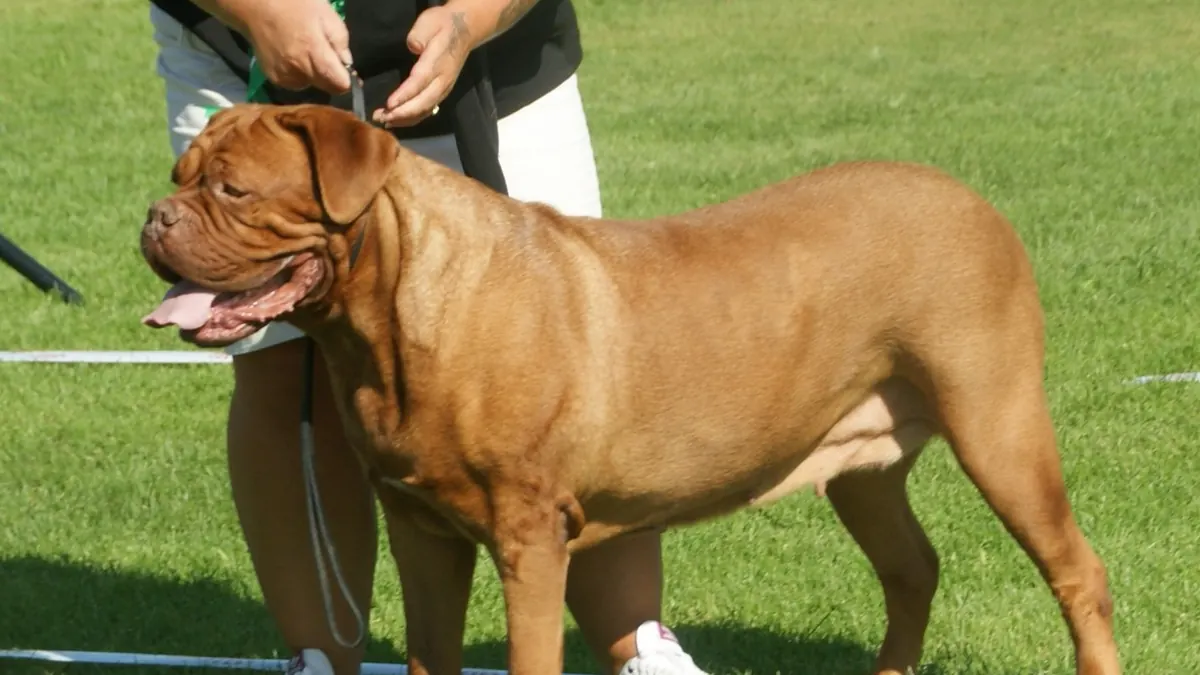

Dogue de Bordeaux: Not very sporty but powerful, it enjoys chewing: solid rubber toys and calm activities like lick mats suit it well. Avoid sustained effort in hot weather, as the short face copes poorly with heat.
To go further, our PDF practical guides: Course: Train Your Dog in 8 Weeks — 2 PDF guides (85 pages in English (86 in French)), in English and French, instant download. Get my bundle — €49
In short: Molosser of 45 kg to 60 kg and beyond, short fawn coat, low to moderate energy. An affectionate, calm molosser, a quiet guardian very close to its family. A massive head, short face and heavy drooling: towels in every room, folds cleaned several times a week and strict heat management set the daily rhythm.
Toys that survive a Dogue de Bordeaux
Its powerful jaw shreds entry-level toys in minutes: go for the heavy-chewer range — solid rubber, nylon, sized bigger than its mouth to prevent swallowing. Inspect the toy basket weekly and bin anything split or gutted — swallowed fragments remain a routine veterinary emergency.
How much daily activity?
Plan 45 to 90 minutes of genuine daily activity: steady, unhurried outings suit it better than long intense sessions.
Mental work: the real boredom-buster
On days without outings, the Dogue de Bordeaux spends itself differently: snuffle mats, kibble dispensers and canine puzzles — always starting easy, since success feeds motivation where failure kills it. Two or three ten-minute sessions beat an hour on Sunday.
Frequently asked questions
Which toys should I pick for a Dogue de Bordeaux?
Its powerful jaw shreds entry-level toys in minutes: go for the heavy-chewer range — solid rubber, nylon, sized bigger than its mouth to prevent swallowing.
How much exercise does a Dogue de Bordeaux need daily?
The cruising range: 45-90 minutes of authentic activity a day, dialled down for seniors and in heatwaves.
The guides that apply to you
- Scent games work better before the walk than after
In detection dogs, finding the target was 1.49 times more likely before 30 minutes of exercise than after — reason enough to rethink the order of walk and nose work.
- Clicker training your dog: a beginner’s plan in 5 sessions
How to start clicker training a dog: charging the clicker, clicking at the right moment, a first exercise, capturing a sit and adding a cue. Plan for the first 5 sessions.
- How to train your dog: where to start (the basics, in order)
Dog training made simple: the principles that work, the order to teach the basics (name, sit, down, recall, loose leash, stay) and an 8-week plan.
- Indestructible or easy-to-chew: what a kennel study reveals about dogs’ real toy preferences
A study compared several toy types and presentation methods with kennel-housed dogs: the toughest, most indestructible toys were not the ones that drew the most spontaneous interaction.