Feeding a Guinea Pig: Why Vitamin C Is a Matter of Life and Death
Published by Planète Pets · managing editor: Clément Lacaille · how our guides are written
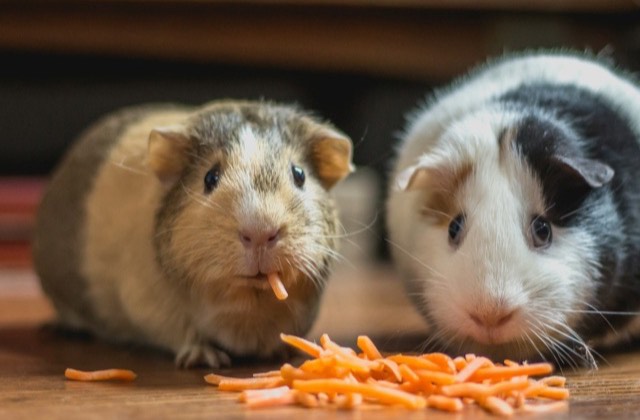
The guinea pig shares a trait with humans that is rare among mammals: its body cannot manufacture vitamin C. It must therefore come from the diet, every single day. A deficiency — known as scurvy — can develop in just a few weeks.
Contents · 4 sections
Daily vitamin C requirements
An adult guinea pig needs roughly 10 to 30 mg of vitamin C per kilo of body weight per day, and more for a pregnant female or a convalescing animal. Know the warning signs of deficiency: lethargy, dull coat, swollen joints, stiff gait, small gum haemorrhages. At the slightest doubt, book an appointment with an exotics vet; scurvy responds well to treatment when caught early.
The guinea pig food pyramid
- Unlimited hay (around 80% of the ration): the absolute foundation, covered in detail in our guide to choosing hay for guinea pigs and chinchillas.
- Fresh vegetables (around 10%): red bell pepper, carrot tops, endive, courgette, fresh herbs.
- Extruded pellets fortified with vitamin C: a small handful per day, around 5 to 12 € per kilo.
- Fruit: an occasional treat only, because of the sugar.
Which foods are rich in vitamin C?
Red or yellow bell pepper is the undisputed champion: one slice a day covers a good share of the requirement. Parsley, broccoli and fennel are useful complements, rotated to vary the calcium intake. One caveat: vitamin C is fragile. In budget seed mixes it degrades quickly once the bag is opened; choose pellets with stabilised vitamin C and use up the bag within two months.
Should you add vitamin C to the water?
It’s a widespread but questionable practice: the vitamin oxidises within hours in water and can alter its taste, discouraging the animal from drinking. Direct intake through vegetables is better — or, on veterinary advice, chewable tablets dosed for guinea pigs (5 to 15 € per box). Also make sure clean water is always available, in a bottle or a bowl depending on your animal’s preference. All our rodent food comparisons are available on Planète Pets.
An accessory from our shop for this use: Wooden hay rack with tray for rabbit, guinea pig and chinchilla (€21.90) · the whole shop
This guide is part of Planète Pets’s Rodents universe. Our advice is general in nature: for any health concern, your veterinarian remains the only reference.