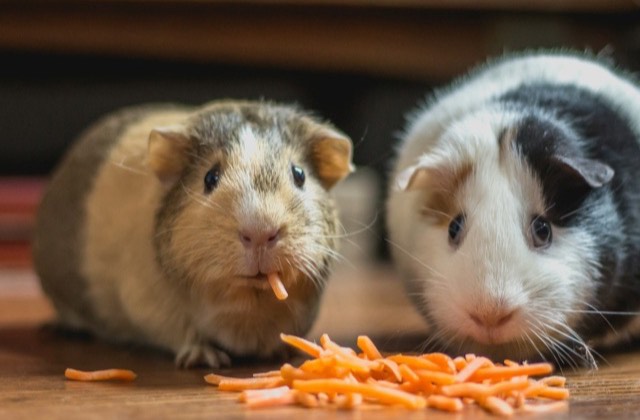
Going away for the weekend: does your rodent need a sitter?
Published by Planète Pets · managing editor: Clément Lacaille · how our guides are written
Can you leave your rodent alone for a weekend? Yes for a hamster, gerbils or mice (48 hours maximum) with serious preparation; no for a guinea pig, which needs a daily visit for its vegetables and a health check. The equipment that makes an absence safe is in our travel and safety category.
Contents · 5 sections
How long can each species cope alone?
- Hamsters, gerbils, mice: 48 h alone, with a doubled ration and two water points.
- Rats: 48 h possible but not advisable — intelligent and social, they cope poorly with a broken routine; a mid-stay visit is ideal.
- Guinea pigs: a daily visit is mandatory (hay, vegetables, droppings check — a 12 h gut shutdown is an emergency).
- Chinchillas, degus: 24 to 36 h maximum, with a check on the room temperature.
How do you prepare the habitat before leaving?
Double the water sources (two bottles checked drop by drop, or a bottle plus a heavy dish), fill the hay rack, spread dry food across several spots and remove any fresh food that would go mouldy. Clean the bedding the day before, check every latch — a rat tests the doors every evening — and stabilise the temperature: room between 18 and 24 °C, shutters half-closed in summer, never a cage in direct sunlight.
What are the care options for a longer absence?
Beyond 48 hours, three options: a friend or relative who visits daily (leave a written instruction sheet and an exotics vet's number), a home pet-sitter (10 to 20 € per visit), or moving the cage to the carer's home — often simpler for a small habitat, with a suitable carrier. Specialised small-pet boarding (8 to 15 € per day) remains rare but exists in cities. All our species-by-species planning guides are on the rodent hub.
Should you take your rodent along for the weekend?
Almost never: travel and a change of surroundings cause more stress than 48 well-prepared hours alone. The exception: a guinea pig with no care option, which should travel in a rigid, ventilated carrier, sheltered from draughts and temperature swings.
Frequently asked questions
Are automatic food dispensers reliable?
For dry seeds, simple reservoir models (10 to 20 €) do the job. Test them for a week before departure: some jam with humidity.
What goes on the carer's instruction sheet?
Exact rations, forbidden foods, warning signs (lethargy, no droppings, noisy breathing) and the exotics vet's contact details with a care authorisation.
Is a connected camera useful?
It is a reassuring comfort at 25 to 40 €, but it never replaces a visit: you cannot spot a blocked water bottle on camera.
An accessory from our shop for this use: Bubble-window carrier backpack for dwarf rabbit, guinea pig or ferret (€47.90) · the whole shop
This guide is part of Planète Pets’s Rodents universe. Our advice is general in nature: for any health concern, your veterinarian remains the only reference.