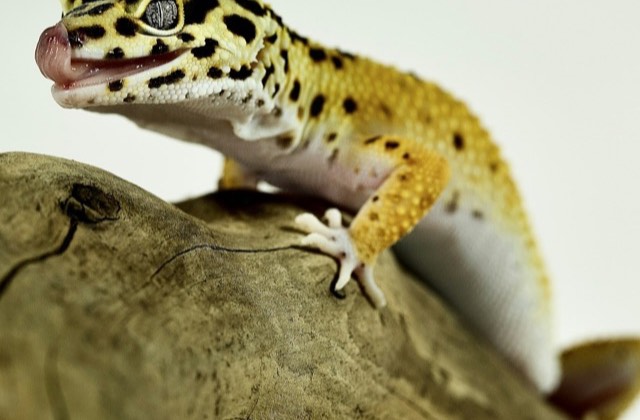
Heat rocks for reptiles: good or bad idea?
Published by Planète Pets · managing editor: Clément Lacaille · how our guides are written
The heat rock is a false good idea in the vast majority of cases: sold for 15 to 30 €, it heats by direct contact, often with no reliable regulation, and causes belly burns that can be severe. Experienced keepers almost always prefer a lamp or a ceramic emitter run on a thermostat.
Contents · 5 sections
Why do heat rocks burn reptiles?
Reptiles are good at sensing heat from above — the sun's — but very poor at sensing contact heat under their belly. An animal can sit for hours on a rock at 45 °C without reacting, right up to a deep burn. Add to that recurring manufacturing flaws: unevenly distributed heating elements creating hot spots, and no built-in thermostat worthy of the name on entry-level models.
Is ground heat natural for a reptile?
Only partly. In the wild, species warm themselves mainly in the sun (heliothermy) or on sun-heated surfaces that cool down at night. A rock that stays hot around the clock, in an otherwise cold enclosure, encourages the animal to stay glued to it instead of thermoregulating by moving around — an impoverished and risky behaviour.
What are the safe alternatives for a basking spot?
- Halogen spot + dimming thermostat (40 to 90 € for the pair): the closest thing to sunshine — see our halogen or ceramic comparison;
- Thermostat-controlled ceramic emitter: heat without light for night-time;
- Heat mat on a thermostat (25 to 50 € for the pair): acceptable on a side wall or under part of the enclosure, never in direct contact;
- A stone placed under the lamp: a plain piece of slate, free of charge, stores the spot's heat with no electricity and no danger.
Are there any cases where it is justified?
Very few: some breeders use one occasionally, always plugged into an external thermostat with the probe resting on the rock, and covered with a thin layer of substrate. If you already own one, that is the only acceptable configuration; otherwise, put those 20 € towards better gear from the reptile accessories section.
Frequently asked questions
How do you recognise a belly burn?
Discoloured, pinkish or browned scales on the underside, blisters, patches that shed poorly. At the slightest doubt, unplug the rock and see an exotics vet.
Is a heat rock with a built-in thermostat reliable?
Entry-level built-in regulation is imprecise and ages badly. Only an external thermostat with an independent probe offers genuine safety.
My snake loves its heat rock — should I remove it?
That is not love, it is thermoregulation by default: offer a regulated overhead basking spot and the snake will abandon the rock on its own within days.
An accessory from our shop for this use: Stick-on digital thermometer for aquarium and terrarium glass (€18.90) · the whole shop
This guide is part of Planète Pets’s Reptiles universe. Our advice is general in nature: for any health concern, your veterinarian remains the only reference.